










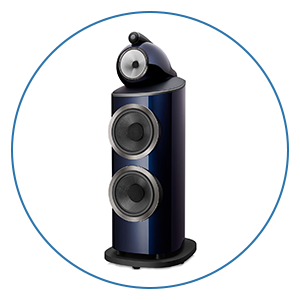


JBL Summit K2
Free Shipping On All Orders, No Minimums.
We offer free 2-day shipping on most products within the continental US.
Weekdays - Orders placed by 2pm EST ship same day. Orders placed after 2pm EST will ship the following business day.
Weekends - Orders placed on Saturday and Sunday will ship Monday.
Orders requiring motor freight delivery may take more than two business days. Once your order has shipped, you'll receive a shipping confirmation email with a tracking number for easy tracking.
Orders for Open Box products ship with free ground shipping within the continental United States.
Orders that contain items that are currently backordered, special order, or out of stock will ship complete once all items are in-stock unless otherwise requested.
If you need it faster, you will have the option of choosing a quicker shipping option when you checkout on the website.
At this time, we do not ship internationally and orders to Hawaii and Alaska may incur an additional shipping charge. Please contact us at 888.899.8776 or email support@audioadvice.com to confirm.
Rerouting and Address Changes
We cannot make ANY address changes once an order is placed. If you are unable to accept delivery of your package as ordered, we will need to cancel your order, return the package to sender and have you replace your order through our website.
Keep the Box
We suggest you keep the shipping box or boxes for at least 30 days. It is actually a great idea to keep boxes for audio products for the life of the product. Having the box and all packing will increase the trade-in value should you decide to move up and they are handy to have should you ever need to send the unit in for repair.
How To Receive a Motor Freight Order
The trucking company will contact you to schedule a convenient time to deliver the order. Please note that you must be present for delivery.
Visually inspect the box to make sure you see no signs of damage. If you notice any damage at all, take some pictures with your phone and make a note of them on the delivery receipt the driver will ask you to sign. If it is obvious that the product is damaged, please refuse the order and contact us immediately at 888.899.8776 or email support@audioadvice.com.
Open your box as soon as possible and inspect the product for damage and contact us if you find anything wrong.
FedEx Freight Service Comparison
| Feature / Service | Scheduled Curbside Delivery | White Glove Delivery |
|---|---|---|
| Scheduled delivery appointment | ✔ | ✔ |
| Delivery location | Ground level only (garage, front door, loading dock) | Room of choice, any floor |
| Delivery team | 1 person | 2 people |
| Placement inside home/business | ✘ | ✔ |
| Upstairs / downstairs delivery | ✘ | ✔ |
| Unpacking | ✘ | ✔ (upon request) |
| Packaging removal | ✘ | ✔ (upon request) |
| Assembly / installation | ✘ | ✘ |
| Old item removal | ✘ | ✘ |
At Audio Advice, we pride ourselves on customer satisfaction. We'll bend over backward to make sure you're 100% satisfied and we won't accept anything less. We offer 30-day hassle-free returns and personalized service from real, live people.
If an item doesn't meet your expectations, you may return or exchange it in its original condition and packaging within 30 days for a full refund, minus shipping fees. Items shipped back in like new condition through standard shipping carriers will incur a minimum $15 return shipping fee. If the items were initially shipped through free scheduled delivery via motor freight (commonly referred to as LTL), returning them will result in return shipping fees starting at $150. These items include but are not limited to, oversized items such as TVs, certain subwoofers, floorstanding speakers, furniture, and most items weighing over 75 pounds. Return fees will also apply for exchanges. We want to treat your system as if it is our own and want you to be completely satisfied with your purchase.
Please see the instructions below. We only accept returns for any product purchased directly from our website. If merchandise is not returned in its original condition or is missing packaging, manuals, accessories or other parts, or the resale value of the product has been impaired, a partial refund will be given and calculated on a case-by-case basis.
Non-Returnable Items
The following items cannot be returned or cancelled:
- Special/Custom Order Items
- Gift Cards
- In-ear headphones cannot be returned once the packaging has been opened due to personal hygiene reasons. Please contact our customer care team if you'd like help choosing.
-
Turntables With a Broken Stylus: All turntables ship out with the stylus intact. If you return a turntable or phono cartridge with a broken or missing stylus you will be subject to a return fee. Please be careful when setting up your turntable and contact us with any questions.
Is It Easy To Return An Item?
Yes, simply give us a call at 888.899.8776 or you can email our support team at support@audioadvice.com. Many times our team of experts can help figure out why the product might not be working like you expected and get things fixed over the phone, so don’t be surprised if we ask a few questions, we love troubleshooting!
If our tech help can not make you happy, we will email over a return shipping label with a Return Number.
Hopefully, you saved all of the original item’s box and packaging inserts. You will want to pack back up your return or exchange in the same way it came out of the original box. Once you have everything packaged correctly, tape the box on the top and bottom to assure it stays together. If Audio Advice shipped the item to you inside a second box, it's a good idea to use that same extra box to help prevent damage on its way back to us. To avoid it accidentally coming back to you, use a magic marker to cross out the old shipping label or just tear it off.
The return shipping label we send you will have our address on it, just make sure you take the box to the right shipper (UPS, FEDEX, or USPS) as per the label.
If you are close to one of our stores, please let us know if it is more convenient for you to return it to us directly. You will still need to get a return number by contacting us and shipping and/or restocking charges may apply.
When Will I See My Refund?
It usually takes around 7-14 days for the refund to show up on the payment method you used. We do inspect all returns for damage and accuracy of the item inside the box before issuing a refund. Some items may be subject to shipping and restocking fees.
Can I Exchange My Purchase For Something Different?
Sometimes those big speakers just don’t fit in the room or you might have bought a small subwoofer and later found out you’d love a bigger one. If you would like to make an exchange within 30 days of receiving your item, just give us a call at 888.899.8776 or email support@audioadvice.com and we will help work out the details. Additional shipping charges and return costs may apply.
How Do I Cancel An Order?
If the item has already shipped out or is a special order item, it is not possible to cancel the order. Please contact us at 888.899.8776 or email support@audioadvice.com to start the return process.
What If I Find Shipping Damage?
We need to know right away about any shipping damage. Please contact us at 888.899.8776 or email support@audioadvice.com within 48 hours of your delivery so we can get the ball rolling on making things right. It’s very helpful to take some pictures and email them to us if possible.
Can I Refuse A Shipment?
You can, but unless the item is damaged, shipping and restocking fees will be deducted from your refund. If your item arrives damaged and you are lucky enough to be there, snap some quick pics and refuse the order. Then contact us so we can get a replacement on the way.
What Happens If My Order Is Defective?
This is actually pretty rare, most consumer electronics work fine out of the box 99.9% of the time. We’d like for you to contact us first by calling 888.899.8776 or email support@audioadvice.com so we can help get to the bottom of things. If your item is indeed defective during the first 30 days, we can usually exchange it for a new, replacement unit.
What About Service After 30 Days?
Audio Advice has a great relationship with all of our brands and can help you with warranty service by the brand after our 30-day guarantee period. Even after the warranty expires, we can arrange for service by the brand on products purchased from Audio Advice. Just call 888.899.8776 or email support@audioadvice.com.
How Do You Determine A Restocking Fee?
You may not believe it, but sometimes we receive items back that were put in the box with zero packaging and are completely destroyed or are missing many of the pieces that came with the item. We also track serial numbers and will get back different serial numbers. We’ve even seen different items than what we shipped out be returned. However, it’s very important to package your return properly so that nothing goes missing or gets damaged in shipping, which will result in a restocking fee or even no refund at all. If a product is opened and the market value of the product is reduced, then a restocking fee may be applied to the cost of restocking and the reduced market value of the product. The bottom line is if you treat us fairly, we will do the same.
Audio Advice strives to provide industry-leading support and service while also maintaining the lowest prices available on products for our customers. We work hard with our vendors to bring our customers the best products at each price point. As a part of that process, we work with our vendors to provide the lowest pricing in our stores and on our website.
Our prices should always be the same as any other authorized dealer, including big-box retailers and major online retailers.
If you believe that you have found a lower advertised price from a legitimate authorized seller, call us and let us know so we can make sure we can correct any inadvertent error on our side. As a matter of policy, we update our prices automatically if a vendor changes its authorized pricing policies, so we generally have the best prices all the time. Increasingly, there are knock-off copies of products online, usually sold by non-authorized dealers.
Please be sure that the item meets the following conditions:
- The item is brand new, in stock, and available for purchase
- The item has the identical model number, color, etc as the item on our site.
- The seller is an authorized dealer
As always, our goal is to provide a terrific customer experience, including industry low prices. We appreciate your support.
Overview
The High Notes

Five Speakers, 80 Years

Triple Compression Drivers

A True Three-Way
JBL Summit K2 Review: Inside JBL's New Flagship Loudspeaker
JBL brought the new Summit K2 to Audio Advice Live this year, marking the first time this speaker had played for a US audience. We'd already spent time with the three smaller Summit models, the Ama, Pumori, and Makalu, but the K2 is a different animal. It impressed us enough on the spot that we asked JBL if we could bring a pair back to our lab for a longer session.
We set that pair up with a full Mark Levinson electronics chain so the amplification could keep up with what the K2 is capable of. Before getting into what we heard, it helps to know where the K2 name comes from, because this speaker is carrying a lot of history.

What Is a JBL "Project Speaker"?
A JBL project speaker is one of a small handful of designs where the company's leadership tells its engineers to ignore budget and price point entirely, build the best speaker possible with existing technology, and invent new technology where none exists yet.
JBL turns 80 this year, and across those eight decades, the company has only built five speakers that carry that designation: the Hartsfield, the Paragon, the Everest, the original K2, and now the Summit series. The Summit K2 is JBL's fifth project speaker, and it carries a name with roughly 40 years of history behind it.
The History Behind the K2 Name
The original Everest, the DD55000, launched in 1985 and was built mainly for the Japanese market, which is why it's still rare to find one in the US or Europe. JBL revisited the design years later with the DD66000, moving to dual 15-inch woofers and a large beryllium dome compression driver. That driver couldn't quite reach the top of the audible range on its own, so JBL added a small supplemental ultra-high-frequency driver to cover the last octave.
The K2 name arrived after Everest as a more attainable flagship, still built without compromise but sized to fit an actual living room. The first version, the K2 S9500, had a concrete-filled base that still shows up in old photos. JBL followed it with the S9800 and S9900. Each generation improved on the last, but the basic architecture carried over from one to the next, and the same industrial designer, Dan Ashcraft, shaped several of these generations, which is part of why the look stayed consistent for so long.
The Summit K2 breaks from all of that. JBL calls it a clean-sheet design, with none of the specific hardware carried over from the previous K2. The compression-driver-and-horn approach that has defined the name since the beginning is still very much here, but everything underneath it is new.
Where the K2 Fits Into JBL's Summit Line
JBL teased the Summit name at the Munich High End show in 2025. Instead of updating the Everest and K2 right away, the company launched three new models built on the same philosophy first: the Ama, a stand-mount; the Pumori, a mid-size floorstander; and the Makalu, the largest of the three. This year, JBL finally brought out the two names people had been waiting for, the Summit K2 and the Summit Everest.
JBL says the Summit project took about six years and resulted in roughly a dozen new patents across the line, and a good number of them show up in the K2.
Design and Build Quality
JBL builds the K2 enclosure with internally offset, multi-braced walls that curve rather than run flat. That curvature pushes cabinet resonances outside the audible range and reduces internal standing waves before they can color the sound. Carbon fiber trim wraps around the baffle near the compression driver array, reinforcing the highest-pressure zone on the cabinet.
The K2 comes in two finishes: a high-gloss black with Summit Platinum accents, or a high-gloss ebony wood veneer with Summit Gold accents. Both sit on custom feet JBL developed with IsoAcoustics to decouple the cabinet from the floor. Pick either one up, or try to, and the build quality becomes obvious fast. Each speaker weighs 239 pounds.

Inside the Driver Array
Compared with the Ama, Pumori, and Makalu, the K2 is a major step up. It's the first speaker in the Summit line built around a 15-inch woofer and a dedicated 10-inch mid-bass driver, and instead of one compression driver, it uses three.
The smaller Summit speakers were designed to deliver deep bass from smaller cabinets, which meant giving up some sensitivity to get there. The K2 has more cabinet volume to work with and comes in at 92dB, close to the 93dB rating of the previous K2 generation. These speakers want a capable amplifier, but they're sensitive enough to work with a wider variety of amps, including some tube designs.
Differential Drive Woofer and Mid-Bass
Both the 15-inch woofer and 10-inch mid-bass driver use JBL's Differential Drive motor design, which runs two voice coils in opposite magnetic gaps, wound in opposite directions. That symmetry matters because a standard single-coil driver behaves slightly differently moving forward versus backward, especially at high excursion, and that asymmetry shows up as distortion. Differential Drive cancels most of it out.
Both drivers also use JBL's HC4 cone, a three-layer sandwich of carbon fiber and pure pulp skins around a closed-cell foam core. The goal is a cone that stays rigid under power without becoming unnecessarily heavy. The woofer uses a half-round surround built to handle deep bass excursion, while the mid-bass driver gets an accordion-style surround with rings of different sizes, letting it move enough to help with bass duties without disturbing midrange dispersion.
The bigger change for this generation is how much less of the frequency range the 15-inch driver has to cover. Older K2 designs asked that woofer to help with part of the midrange too. The Summit K2 is a true three-way, so the 15-inch driver only handles deep bass until the 10-inch mid-bass takes over at 270Hz. JBL says that shift alone gets the new K2 playing roughly 20Hz lower than the outgoing generation, a significant jump for a speaker this size.
Triple Compression Drivers and Sonoglass Horn
Above the mid-bass driver sits the part of this speaker we find most interesting: three of JBL's D2815 compression drivers. Each is a 1.5-inch dual-diaphragm, dual-motor design, so the K2 is running six diaphragms and six voice coils together as a single tweeter section. That gives the speaker the sensitivity and output capability compression drivers are known for while keeping distortion low.
Running three of these drivers together required JBL to build a custom 3-into-1 expansion manifold that lets all three fire into a single horn without smearing the sound. The internal geometry needed to keep those paths acoustically matched is too complex for conventional machining or injection molding, so JBL 3D prints the manifold out of aluminum and finishes it by hand.
That manifold feeds a large-format Sonoglass horn, JBL's proprietary glass-fiber composite, which resists the ringing and coloration that horns made of wood or plastic can add. The horn shape also gives JBL tight control over directivity, meaning less of what you hear comes from sound reflecting off the side walls and more comes straight from the speaker. The crossover from the compression driver array to the dynamic drivers sits at 1,080Hz.
JBL develops parts like this in-house at its Northridge facility, which has its own 3D-printing lab, machine shop, and multiple anechoic chambers on site. That lets the engineering team prototype a horn or waveguide design, test it, and have a revised version back in the chamber within a day or two. The same building houses JBL's pro audio team, and some of the motor and gap-control work on these Differential Drive woofers started as professional touring speaker technology before making its way into the Summit line.
Crossover Network and Wiring
The crossover network tying everything together uses JBL's MultiCap technology, which trades a couple of large capacitors for a larger array of smaller ones wired together. Big capacitors carry more resistance and release stored energy with a slight delay, which can blur transients. Spreading that load across many smaller caps lowers the resistance and keeps the signal moving cleanly to each driver.
JBL keeps the capacitors constantly charged through a small circuit powered by a 9-volt battery, which holds the dielectric in an optimal state and reduces distortion. It's the same basic biasing principle Greg Timbers used decades earlier on the original K2's Charge-Coupled Linear Definition Dividing Network.
The K2 supports single-wire, bi-wire, or tri-wire operation through three pairs of rhodium-plated, carbon-fiber-wrapped binding posts, and JBL upgraded the internal wiring to Ohno Continuous Cast, long-crystal, oxygen-free, silver-plated copper for the run from input to driver. JBL also recommends passive bi-amping or tri-amping when the system and budget allow for it, using separate amplifiers for different sections of the speaker. It takes more gear and setup work, but it can open up the low end noticeably.


How We Tested the JBL Summit K2
For this session, we didn't reach for whatever amp happened to be closest. We paired the K2 with Mark Levinson's new 600 Series electronics: the No. 626 preamplifier and the No. 632 stereo amplifier, both new enough to deserve their own mention here.
The No. 632 is a fully differential, fully discrete, dual-monaural design built on Mark Levinson's Pure Path circuit philosophy, running in Class A/AB with a centrally mounted, isolated toroidal transformer and unusually high bias current, so it needs very little feedback to stay linear across a wide bandwidth. Mark Levinson rates it at 250 watts RMS per channel into 8 ohms, and that current reserve matters on a speaker that dips well below 4 ohms in the bass.
The No. 626 preamp shares the same dual-monaural Pure Path architecture with a discrete R-2R ladder volume control, and it's the first Mark Levinson product built around the new Precision Link III DAC, based on ESS's ES9039PRO chip. Both components share Mark Levinson's new Tectonic industrial design, with a glass center panel and red accent lighting introduced with this generation of the 600 Series. JBL and Mark Levinson both sit under the Harman umbrella, so pairing a new JBL flagship with new Mark Levinson electronics felt like the right way to hear what this speaker can do.
JBL Summit K2 Sound Quality
The first thing that stands out about the K2 is how effortless it sounds. There's an immediacy to a good compression driver and horn combination that's difficult to recreate with a conventional tweeter. Transients hit instantly, vocals have a direct, lifelike presence, and when a recording gets loud, the K2 never sounds like it's working hard. It also isn't an aggressive or shouty horn speaker. The top end is open and detailed while staying controlled and refined.
Hugh Masekela's "Stimela" is almost tailor-made for a speaker like this. The dynamic swings, percussion, and brass show off the scale the K2 is capable of. When Masekela's horn comes in, you get the bite and energy of the instrument without it turning harsh, and the 15-inch woofer gives the whole performance serious weight. What stood out most about the bass was the control. It goes deep and moves a lot of air, but individual notes still start and stop quickly instead of collapsing into one wall of low-frequency energy.
Nils Lofgren's "Keith Don't Go" shows a different side of the speaker. The acoustic guitar has incredible attack and texture, vocals sit naturally in the center of the soundstage, and there's a clear sense of the room around the performance.
That's probably what surprised us most about the K2. A 239-pound JBL with a 15-inch woofer and three compression drivers is expected to play loud, and it can, but it's just as impressive at normal listening levels. It still has that classic JBL sense of dynamics, scale, and physicality, paired with a level of refinement that feels more like a modern reference speaker than a traditional horn design.
Who Should Buy the JBL Summit K2?
If you have the room and the amplification to back it up, the K2 is the speaker to reach for when you want the deepest bass extension and the highest output ceiling in the Summit line below Everest.
The Pumori and Makalu already sound excellent and will fill most rooms without issue, so if your space is on the smaller side, either of those is the smarter buy. But if you're building a reference-level two-channel system or a serious home theater front stage and want JBL's project speaker engineering at its most complete, the K2 is the one.
If even this isn't enough, JBL also launched the Summit Everest, which essentially doubles the K2's driver complement with two 15-inch woofers and two 10-inch mid-bass drivers in a single cabinet. We'll cover that speaker on its own once we've spent real time with it.

We’re Here to Help!
If you have further questions, contact our experts via chat, phone, or email. Or simply visit one of our world-class showrooms to experience speakers, projectors, TVs, and everything in between for yourself before you make a purchase!
If you’re planning your home theater or media room, check out our Home Theater Design page, where we have everything Home Theater related, including our FREE Home Theater Design Tool.
When you buy from Audio Advice, you’re buying from a trusted seller since 1978. We offer Free Shipping, Lifetime Expert Support, and our Price Guarantee. We look forward to serving you!
Frequently Asked Questions
What is a JBL "project speaker"?
How is the Summit K2 different from the previous JBL K2?
How many compression drivers does the Summit K2 use?
What amplifier power does the JBL Summit K2 need?
Does the JBL Summit K2 support bi-wiring or bi-amping?
Is the Summit K2 JBL's flagship speaker?

Details & Specs
Newly Designed Complement of Speaker Drivers
Summit K2 features a newly engineered mid/high-frequency system that combines the output of three patented JBL D2815 1.5-inch (38mm) dual-diaphragm, dual-motor compression drivers with a custom-designed, patent-pending 3-into-1 expansion manifold, precisely mated to a custom large-format Sonoglass High-Definition Imaging (HDI) horn. This mid/high-frequency system delivers exceptional detail and clarity across a wide frequency bandwidth, extending from the 1,080Hz crossover point of the dynamic drivers to beyond the reaches of human hearing.
Anchoring the sound foundation of Summit K2 is a 10-inch (250mm) cast-frame Differential Drive mid-bass driver and a 15-inch (380mm) cast-frame Differential Drive woofer. Both dynamic drivers employ JBL’s triple-layer Hybrid Carbon Cellulose Composite Cone (HC4), constructed from a proprietary formula of carbon-fiber and pure-pulp front and rear skins sandwiching a closed-cell foam core. This advanced cone architecture provides optimal stiffness, overall mass, and structural integrity required for high output, low distortion, and exceptional power handling.
JBL MultiCap Crossover
Controlling signal distribution within Summit K2 is an advanced MultiCap crossover network that supports single-wire, bi-amp/bi-wire, and tri-amp/tri-wire connectivity.
By replacing traditional large capacitors with a greater number of smaller capacitors, this network reduces ESR (Electro-Static Resistance) and minimizes energy loss due to mechanical movement. The result is greater signal transfer to the drivers, increased power handling, enhanced dynamic expression, ultra-low distortion, and exceptional overall clarity.
Crafted from Luxurious Materials
All drivers and crossover components are housed within a meticulously engineered and beautifully finished enclosure featuring internally offset, multi-braced, and damped pre-stressed pressed curved-wall construction designed to minimize internal standing waves. Summit K2 cabinetry is offered in a choice of high-gloss painted black with Summit platinum accents or high-gloss ebony wood veneer with Summit gold accents.
Grounding Summit K2 is a set of custom-designed JBL | IsoAcoustics isolation feet that counteract the vibrational forces generated by the drivers, effectively decoupling the loudspeaker from the supporting surface. This isolation contributes to tighter bass performance, a more expansive soundstage, and imaging defined by greater clarity and spatial precision.
Highlights
- 3x patented D2815 1.5-inch (38mm) Dual-diaphragm, Dual-motor High-frequency Compression Drivers
- Patent-pending Constant Expansion Rate / Phase Coherent 3-into-1 manifold
- Patented custom High-Definition Imaging (HDI) Sonoglass High-frequency Horn
- 10-inch (250mm) Cast-frame, Differential Drive, Triple-layer Hybrid Carbon Cellulose Composite Cone (HC4) Mid-bass
- 15-inch (380mm) Cast-frame, Differential Drive, Triple-layer Hybrid Carbon Cellulose Composite Cone (HC4) Woofer
- MultiCap Crossover Network with Single-wire, Bi-amp/Bi-wire, and Tri-amp/Tri-wire Connectivity
- Finely Crafted and Beautifully Detailed Enclosure with Carbon Fiber Baffle Trim
- Soft-curved Cabinet Walls with Heavily Braced and Dampened Construction
- JBL | IsoAcoustics Adjustable Acoustic Isolation Feet
- Luxurious High Gloss Finishes with Summit Platinum or Summit Gold detailing
| Model | JBL Summit K2 |
|---|---|
| Description | 3-Way, 15-inch (380mm) Floor-standing Reference Loudspeaker |
| High Frequency Control | High-definition imaging (HDI) Sonoglass acoustic horn |
| High Frequency Transducer | Triple, D2815; Dual 1.5-inch (38mm) annular ring Teonex diaphragms, Dual-motor D2 compression drivers mounted to a 3-into-1 manifold mated to the High-Definition Imaging (HDI) horn |
| Mid-Bass Frequency Transducer | JMW250SC 10-inch (250mm), Triple-layer Hybrid Carbon Cellulose Composite Cone (HC4) with dual-inverted spiders, a 3-inch differential drive, dual voice coil motor, cast aluminum frame, and treated-cloth reverse progressive accordion-edge surround |
| Low Frequency Transducer | JW380SC 15-inch (380mm), Triple-layer Hybrid Carbon Cellulose Composite Cone (HC4) with dual inverted spiders fore and aft of the motor, a 4-inch differential drive, dual voice coil motor, cast aluminum frame, and half-forward-roll surround |
| Recommended Amplifier Power (RMS) | 25-600 Watts RMS |
| Frequency Response (-6dB on-axis, anechoic) | 24.6 Hz - 23.5 kHz |
| Frequency Response (-10dB on-axis, anechoic) | 18.2 Hz - 26.5 kHz |
| Sensitivity (2.83V@1m) | 92 dB |
| Maximum SPL | 118.8 dB (calculated) |
| Acoustic Center Height (centered, from floor) | 39.56" (1005mm) |
| Impedance (Nominal / Minimum) | 4 Ohms / 3.27 Ohms (@86.8 Hz) |
| Crossover Frequency(s) / Type / Slope | 270Hz, 1080 Hz/Full MultiCap/Acoustically symmetric 3rd and 4th order, 3-way crossover |
| Internal Wiring | Ohno-Continuous-Cast (OCC) Long-crystal Oxygen-free Silver-plated Copper Wire |
| Controls | Tri-amp / Tri-wire capable with 3-pairs of binding posts |
| Input Type | Rhodium-plated, Silver-coated, Oxygen-free, Pure Copper Core Binding Posts with a Chrome-plated Brass Carbon-fiber wrapped shell and Nylon / Glass-fiber insulators (3 pairs) |
| Enclosure Type | Internally offset multi-braced & damped pre-stressed pressed curved-walls made from sustainably-sourced engineered wood with multi-component lining |
| Enclosure Tuning | Dual rear flared bass ports |
| Enclosure Finish Options | Black High Gloss (BG) Macassar Ebony Wood Veneer with High Gloss (EG) |
| Net Dimensions with grille (HxWxD) | 50.4" x 25.0" x 18.1" (1280.2mm x 635.3mm x 458.7mm) |
| Net Weight (Speaker + Grille) | 239.0 lbs. (108.4kg) |
| Shipping Dimensions (HxWxD) | 59.8" x 35.4" x 37.4" (1,520.0mm x 900.0mm x 950.0mm) |
| Shipping Weight | 454.2 lbs. (206kg) |
| Packed As (Each / Pair) | Each |


