

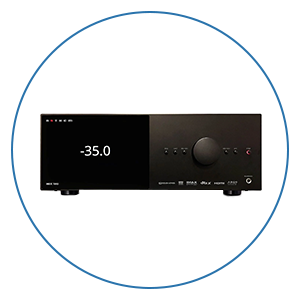



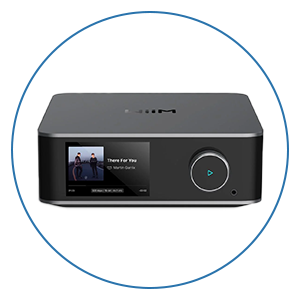









Hegel H150 The Prodigy
Couldn't load pickup availability
Free Shipping On All Orders, No Minimums.
We offer free 2-day shipping on most products within the continental US.
Weekdays - Orders placed by 2pm EST ship same day. Orders placed after 2pm EST will ship the following business day.
Weekends - Orders placed on Saturday and Sunday will ship Monday.
Orders requiring motor freight delivery may take more than two business days. Once your order has shipped, you'll receive a shipping confirmation email with a tracking number for easy tracking.
Orders for Open Box products ship with free ground shipping within the continental United States.
Orders that contain items that are currently backordered, special order, or out of stock will ship complete once all items are in-stock unless otherwise requested.
If you need it faster, you will have the option of choosing a quicker shipping option when you checkout on the website.
At this time, we do not ship internationally and orders to Hawaii and Alaska may incur an additional shipping charge. Please contact us at 888.899.8776 or email support@audioadvice.com to confirm.
Rerouting and Address Changes
We cannot make ANY address changes once an order is placed. If you are unable to accept delivery of your package as ordered, we will need to cancel your order, return the package to sender and have you replace your order through our website.
Keep the Box
We suggest you keep the shipping box or boxes for at least 30 days. It is actually a great idea to keep boxes for audio products for the life of the product. Having the box and all packing will increase the trade-in value should you decide to move up and they are handy to have should you ever need to send the unit in for repair.
How To Receive a Motor Freight Order
The trucking company will contact you to schedule a convenient time to deliver the order. Please note that you must be present for delivery.
Visually inspect the box to make sure you see no signs of damage. If you notice any damage at all, take some pictures with your phone and make a note of them on the delivery receipt the driver will ask you to sign. If it is obvious that the product is damaged, please refuse the order and contact us immediately at 888.899.8776 or email support@audioadvice.com.
Open your box as soon as possible and inspect the product for damage and contact us if you find anything wrong.
FedEx Freight Service Comparison
| Feature / Service | Scheduled Curbside Delivery | White Glove Delivery |
|---|---|---|
| Scheduled delivery appointment | ✔ | ✔ |
| Delivery location | Ground level only (garage, front door, loading dock) | Room of choice, any floor |
| Delivery team | 1 person | 2 people |
| Placement inside home/business | ✘ | ✔ |
| Upstairs / downstairs delivery | ✘ | ✔ |
| Unpacking | ✘ | ✔ (upon request) |
| Packaging removal | ✘ | ✔ (upon request) |
| Assembly / installation | ✘ | ✘ |
| Old item removal | ✘ | ✘ |
At Audio Advice, we pride ourselves on customer satisfaction. We'll bend over backward to make sure you're 100% satisfied and we won't accept anything less. We offer 30-day hassle-free returns and personalized service from real, live people.
If an item doesn't meet your expectations, you may return or exchange it in its original condition and packaging within 30 days for a full refund, minus shipping fees. Items shipped back in like new condition through standard shipping carriers will incur a minimum $15 return shipping fee. If the items were initially shipped through free scheduled delivery via motor freight (commonly referred to as LTL), returning them will result in return shipping fees starting at $150. These items include but are not limited to, oversized items such as TVs, certain subwoofers, floorstanding speakers, furniture, and most items weighing over 75 pounds. Return fees will also apply for exchanges. We want to treat your system as if it is our own and want you to be completely satisfied with your purchase.
Please see the instructions below. We only accept returns for any product purchased directly from our website. If merchandise is not returned in its original condition or is missing packaging, manuals, accessories or other parts, or the resale value of the product has been impaired, a partial refund will be given and calculated on a case-by-case basis.
Non-Returnable Items
The following items cannot be returned or cancelled:
- Special/Custom Order Items
- Gift Cards
- In-ear headphones cannot be returned once the packaging has been opened due to personal hygiene reasons. Please contact our customer care team if you'd like help choosing.
-
Turntables With a Broken Stylus: All turntables ship out with the stylus intact. If you return a turntable or phono cartridge with a broken or missing stylus you will be subject to a return fee. Please be careful when setting up your turntable and contact us with any questions.
Is It Easy To Return An Item?
Yes, simply give us a call at 888.899.8776 or you can email our support team at support@audioadvice.com. Many times our team of experts can help figure out why the product might not be working like you expected and get things fixed over the phone, so don’t be surprised if we ask a few questions, we love troubleshooting!
If our tech help can not make you happy, we will email over a return shipping label with a Return Number.
Hopefully, you saved all of the original item’s box and packaging inserts. You will want to pack back up your return or exchange in the same way it came out of the original box. Once you have everything packaged correctly, tape the box on the top and bottom to assure it stays together. If Audio Advice shipped the item to you inside a second box, it's a good idea to use that same extra box to help prevent damage on its way back to us. To avoid it accidentally coming back to you, use a magic marker to cross out the old shipping label or just tear it off.
The return shipping label we send you will have our address on it, just make sure you take the box to the right shipper (UPS, FEDEX, or USPS) as per the label.
If you are close to one of our stores, please let us know if it is more convenient for you to return it to us directly. You will still need to get a return number by contacting us and shipping and/or restocking charges may apply.
When Will I See My Refund?
It usually takes around 7-14 days for the refund to show up on the payment method you used. We do inspect all returns for damage and accuracy of the item inside the box before issuing a refund. Some items may be subject to shipping and restocking fees.
Can I Exchange My Purchase For Something Different?
Sometimes those big speakers just don’t fit in the room or you might have bought a small subwoofer and later found out you’d love a bigger one. If you would like to make an exchange within 30 days of receiving your item, just give us a call at 888.899.8776 or email support@audioadvice.com and we will help work out the details. Additional shipping charges and return costs may apply.
How Do I Cancel An Order?
If the item has already shipped out or is a special order item, it is not possible to cancel the order. Please contact us at 888.899.8776 or email support@audioadvice.com to start the return process.
What If I Find Shipping Damage?
We need to know right away about any shipping damage. Please contact us at 888.899.8776 or email support@audioadvice.com within 48 hours of your delivery so we can get the ball rolling on making things right. It’s very helpful to take some pictures and email them to us if possible.
Can I Refuse A Shipment?
You can, but unless the item is damaged, shipping and restocking fees will be deducted from your refund. If your item arrives damaged and you are lucky enough to be there, snap some quick pics and refuse the order. Then contact us so we can get a replacement on the way.
What Happens If My Order Is Defective?
This is actually pretty rare, most consumer electronics work fine out of the box 99.9% of the time. We’d like for you to contact us first by calling 888.899.8776 or email support@audioadvice.com so we can help get to the bottom of things. If your item is indeed defective during the first 30 days, we can usually exchange it for a new, replacement unit.
What About Service After 30 Days?
Audio Advice has a great relationship with all of our brands and can help you with warranty service by the brand after our 30-day guarantee period. Even after the warranty expires, we can arrange for service by the brand on products purchased from Audio Advice. Just call 888.899.8776 or email support@audioadvice.com.
How Do You Determine A Restocking Fee?
You may not believe it, but sometimes we receive items back that were put in the box with zero packaging and are completely destroyed or are missing many of the pieces that came with the item. We also track serial numbers and will get back different serial numbers. We’ve even seen different items than what we shipped out be returned. However, it’s very important to package your return properly so that nothing goes missing or gets damaged in shipping, which will result in a restocking fee or even no refund at all. If a product is opened and the market value of the product is reduced, then a restocking fee may be applied to the cost of restocking and the reduced market value of the product. The bottom line is if you treat us fairly, we will do the same.
Audio Advice strives to provide industry-leading support and service while also maintaining the lowest prices available on products for our customers. We work hard with our vendors to bring our customers the best products at each price point. As a part of that process, we work with our vendors to provide the lowest pricing in our stores and on our website.
Our prices should always be the same as any other authorized dealer, including big-box retailers and major online retailers.
If you believe that you have found a lower advertised price from a legitimate authorized seller, call us and let us know so we can make sure we can correct any inadvertent error on our side. As a matter of policy, we update our prices automatically if a vendor changes its authorized pricing policies, so we generally have the best prices all the time. Increasingly, there are knock-off copies of products online, usually sold by non-authorized dealers.
Please be sure that the item meets the following conditions:
- The item is brand new, in stock, and available for purchase
- The item has the identical model number, color, etc as the item on our site.
- The seller is an authorized dealer
As always, our goal is to provide a terrific customer experience, including industry low prices. We appreciate your support.
Overview
The High Notes

Serious Speaker Control

Modern Streaming Done Right

Built to Grow With You
There’s a certain kind of hi-fi component that makes you simplify your whole system without feeling like you are settling. That’s the lane Hegel has been living in for years. Clean industrial design, a “get out of the way” sound, and the kind of control over speakers that usually takes a bigger, heavier amplifier to pull off.

The Hegel H150 is the newest streaming integrated amp in that tradition, stepping in where the well loved H120 sat for a lot of listeners. Hegel’s internal nickname for it is “The Prodigy,” and the idea is pretty straightforward: pull as much of the newer Hegel platform and voicing as possible down into a more attainable integrated, without turning it into a complicated lifestyle box. The H150 is still very much a Hegel. Minimal on the outside, serious where it counts on the inside, and aimed at the person who wants one component to be the hub of a real stereo.
If you have been watching Hegel’s recent direction, especially with their higher-end integrated amps, this one makes a lot of sense. You are getting their latest streaming platform, modern “connect” streaming support like Qobuz Connect, and the kind of speaker grip Hegel is known for, all in a compact chassis and a simple day-to-day experience.
Design and Build Quality
Hegel’s design language is basically Scandinavian understatement, and the H150 does not try to change that. The front panel is clean and purposeful. You get two large rotary knobs, one for source selection and one for volume, with a clear OLED display in the middle. No extra buttons, no clutter, no “feature wall” on the front.
The casework feels like it was built to last. The front panel and dials are machined aluminum with a precise, confidence-inspiring feel, and the top cover is steel with ventilation cutouts. On top, the H150 uses a new vent pattern that gives it a slightly more modern look while still staying on-brand.
It is also a genuinely easy amplifier to place. It is full rack width, but it is not overly tall, and it is not comically deep, which matters if your cabinet is more “living room furniture” than “audio shrine.” And it comes in both black and white, which is a small thing that ends up being a big deal when you are trying to make a system look intentional in a shared space. The white version even has subtle hardware details that add a bit of character without turning it flashy.
That OLED display is readable from across the room, and you can dim it or shut it off entirely, which is exactly what most people end up doing in a dedicated listening room anyway.
Connections and Day-to-Day Usability
The H150 is designed to be the center of a modern stereo, so the connectivity mix is practical.
On the streaming side, you are covered for the big ecosystems. It supports Spotify Connect, Tidal Connect, Qobuz Connect, Apple AirPlay, Google Cast, and UPnP. It is also Roon Ready, which matters if you want a whole-home library experience that still feels “audiophile-first.” For radio and spoken-word listening, the H150 integrates internet radio and podcasts through Airable inside the Hegel Control app, and you can browse a huge catalog of stations without needing a separate tuner.
One important note: Hegel is firmly in the “wired Ethernet” camp. There is no built-in Wi-Fi antenna. If you cannot run a cable to your rack, you can still make it work using common networking solutions like adapters or powerline options, but Hegel’s position is clear. They prioritize keeping noise out of the chassis, and they would rather you use a stable wired connection than introduce more radio-frequency junk into the box.
For physical inputs, the H150 gives you a strong spread of digital and analog. Digital inputs include a coaxial input, two optical inputs, and USB for connecting a computer or streamer, plus Ethernet for network playback. One of the optical inputs is optimized for TV use, and that’s a very “Hegel” approach: instead of chasing HDMI features, they focus on making the connection they did include work as well as it can.

There is also a USB port intended for direct playback from a flash drive or an external USB hard drive. That is a newer direction for Hegel, and it is not just a convenience add-on. The idea is simple: plug in local files, browse them in the app, and play them straight from the amp.
On the analog side, you get both single-ended RCA and a true electronically balanced XLR input. If you have a balanced source, Hegel would absolutely rather you use XLR.
And then there’s the part that surprises people at this level: the H150 includes a moving magnet phono stage. If you are building a modern “one box plus speakers” system but still want a turntable in the mix, that phono input changes the whole value equation. It is not a token feature, either. Hegel has talked openly about putting real effort into lowering noise and getting that phono stage to a standard they were happy attaching their name to.
For outputs, you have a variable analog line output that can be used for adding a subwoofer, feeding powered speakers, or using the H150 as a preamp into a separate power amplifier later. That means the H150 can grow with you if you decide to scale up the system over time.
There is also a headphone output, and importantly, the headphone experience is treated like a real mode of listening. The H150 can maintain separate volume memories for speakers and headphones, so you are not constantly readjusting every time you swap.
The “DAC Loop” Feature, and Why It’s Actually Useful
One of the most forward-thinking features on the H150 is something Hegel calls the DAC loop.
In normal systems, if you add an external DAC later, the setup can get messy. You end up routing sources differently, losing convenience, or giving up the internal streaming features you paid for in the first place.
With the H150, you can send digital audio out through the coaxial digital output, into an external DAC, and then route the analog output of that DAC back into the H150 through the balanced input. Once the DAC loop mode is enabled, the amplifier handles the routing intelligently so you keep the H150’s streaming and input switching experience, but you can upgrade the digital conversion stage whenever you want.
It’s one of those features that sounds nerdy until you realize what it means in real life: buy the H150 now, enjoy it as a complete system hub, and if you ever get the itch to explore higher-end DACs later, you do not have to replace the amp to do it.

Features and Technology Under the Hood
At its core, the H150 is a Class A/B integrated amplifier rated at 75 watts per channel into 8 ohms. On paper, that number looks modest compared to some “big spec” amps, but Hegel has never been about headline wattage for marketing points. Their reputation has been built on control, stability, and low distortion under real speaker loads.
The H150 uses Hegel’s SoundEngine 2 technology, which is a big part of why their amplifiers tend to sound clean and composed without becoming sterile. In plain language, SoundEngine is designed to reduce distortion in real time, including the type of distortion that can show up as transistors hand off the signal during the waveform. That is one reason Hegels often come across as smooth but still highly detailed, especially when the music gets dense.
The other headline number that matters here is damping factor, rated above 2,000. Damping factor is not the kind of spec you hang your whole buying decision on, but it does help explain a consistent Hegel trait: bass that feels tight, controlled, and confident, especially on speakers that can get a little loose or boomy with lesser amps.
Hegel also claims stability down to very low impedance loads, even as low as 2 ohms. That does not mean every hard-to-drive speaker suddenly becomes easy, because power supply strength still matters and 75 watts is still 75 watts, but it does speak to the amplifier’s composure and its ability to remain stable when the speaker load gets challenging.
Inside, the power supply approach stays consistent with Hegel’s priorities. They are focused on keeping noise low and current delivery fast. That includes a substantial toroidal transformer for the main supply, additional attention to local power regulation, and an overall “keep it analog and quiet” mindset. Hegel has also made a point that they avoid internal switching power supplies in this category because of the noise they can introduce.
On the digital side, the H150 includes a DAC that is AKM-based, and the overall digital section is designed to match the character of Hegel’s current-generation products. The supported resolutions cover what most people need in a real system, including up to 24-bit/192kHz PCM over USB input, and high-resolution support across the other digital inputs as well.
Performance
The best way to describe the H150 is that it sounds like a modern Hegel should. It does not put a heavy fingerprint on the music. It does not try to warm everything up to sound “lush,” and it does not sharpen the top end to fake detail. Instead, it leans into clarity, speed, and control, with a background that stays quiet enough that small details come through naturally.
Bass is the first thing most people notice, especially if they are coming from an integrated amp that gets a little soft down low. The H150 has that classic Hegel grip. Kick drums have shape instead of just thump, bass guitar lines are easier to follow, and low-frequency texture stays intact instead of turning into a blob when the mix gets busy. It also avoids the “hi-fi demo trick” of artificially inflated bass that impresses in a showroom but gets tiring at home. The weight is there when it is on the recording, and the control stays consistent.
The midrange is where Hegel tends to win long-term, because it is neutral in a way that makes voices feel honest. Dialogue-heavy content, singer-songwriter recordings, and anything where vocal tone matters tends to sound clean and unforced. You do not feel like the amp is editorializing.
Up top, the H150 is refined rather than showy. You still get air and shimmer when it’s in the material, but it does not push treble energy just to create the impression of detail. That approach makes it easy to listen for hours, which is really the point.
One other thing that comes through in good systems is timing. The H150 keeps transients tidy and rhythmically convincing. That does not sound exciting as a phrase, but you feel it. The system locks in. Stereo imaging becomes more stable. Busy tracks stay separated instead of turning into a wash.
Noise floor is also part of the story. When an amplifier gets quieter, the whole presentation tends to feel more resolved, not because it is “brighter,” but because the small stuff is no longer masked. The H150 has that kind of low-level cleanliness, and it shows up in spatial cues, decay trails, and those little room reflections that make recordings feel real.
Pairing and System Building
The H150 feels especially at home with high-quality standmount speakers and many reasonably efficient floorstanders. It has the control to make compact speakers sound bigger and more confident than you expect, and it has the refinement to avoid turning revealing speakers into a fatigue machine.
At the same time, it’s smart to be honest about system matching. Some speakers are genuinely brutal loads, and while the H150 is stable and well controlled, there are still situations where more power and current delivery will matter. If you are running very inefficient speakers, huge rooms, or speakers with punishing impedance swings, Hegel’s higher-powered integrated models may be the better fit.
The good news is that the H150 does not box you in. Between the variable line output for subwoofer integration and the ability to use it as a preamp, you can build a system that scales. Add a sub later. Add an external power amp later. Add an external DAC later through the DAC loop. The H150 can stay at the center while the rest of the system evolves.
What the H150 Does Not Try to Be
This is worth calling out, because it helps set expectations.
The H150 is not chasing the feature checklist some competitors use to win the “spec war.” You are not getting a big color touchscreen. You are not getting album art on the front panel. You are not getting HDMI ARC. You are not getting Bluetooth convenience. And you are not getting built-in Wi-Fi antennas.
For some people, those omissions are dealbreakers. For the audience Hegel is targeting, it’s the opposite. The H150 is built around the idea that every extra subsystem is another opportunity to inject noise or compromise the signal path. So Hegel sticks to what they consider “essential conveniences” and focuses the budget and engineering where it impacts sound quality and stability.
One practical nitpick: the front display is functional, but it is still very minimal by modern standards. Most of the “rich” browsing experience lives in the app. If you want a front panel that doubles as a mini tablet, that is not this product.

Final Thoughts
The Hegel H150 is what happens when a company with a clear sound philosophy updates the platform around it without losing the plot. It is compact, simple to operate, and genuinely flexible as a system hub. The streaming support is modern in the ways that matter, especially with Qobuz Connect onboard. The phono stage makes it much more “complete” for the person who still spins vinyl. And the DAC loop is the kind of upgrade-friendly feature we wish more integrated amps would adopt.
But the real reason you buy it is the same reason you buy any Hegel: the amplifier section itself. The H150 has that neutral, controlled, low-distortion presentation that makes good speakers sound more like themselves, just with better grip, cleaner dynamics, and a quieter background.
If you want one box that can anchor a serious two-channel system without turning your rack into a stack of separates, the H150 is exactly the kind of product that makes the hobby feel simpler again.
We’re Here to Help!
If you have further questions, contact our experts via chat, phone, or email. Or simply visit one of our world-class showrooms to experience speakers, projectors, TVs, and everything in between for yourself before you make a purchase!
If you’re planning your home theater or media room, check out our Home Theater Design page, where we have everything Home Theater related, including our FREE Home Theater Design Tool.
When you buy from Audio Advice, you’re buying from a trusted seller since 1978. We offer Free Shipping, Lifetime Expert Support, and our Price Guarantee. We look forward to serving you!

Details & Specs
Compact, Modern Design
While the H150 is a full-width amplifier designed to match standard hi-fi components, its depth of just 35 cm makes it easy to place on or into most shelves and media cabinets. Available in both black and white, the H150's clean, understated design complements any interior. Its robust construction includes a thick, precision-milled aluminum front panel and control knobs, with a steel top cover perforated with heat vents, adding to its compact, modern look. A central OLED display provides clear readouts from a distance and can be dimmed or turned off entirely to suit your environment.
Powerful Amplification
The H150's 2x 75 W power rating might seem humble, but do not be fooled. This is no ordinary amplifier. The H150 features a custom class AB amplifier design with Hegel's patented SoundEngine 2 technology, ensuring a class-leading damping factor of 2000 and stable operation down to 2-ohm loads. SoundEngine 2 preserves musical detail and dynamics with stunning clarity, offering an engaging and lifelike listening experience. The H150 is powered by a large, ultra-low-noise toroidal transformer and high-speed capacitors, supplying instantaneous current, giving the H150 the grip and punch to control all but the most demanding loudspeakers with ease. Inside the H150 is a competent, custom-designed, four-layered digital-to-analog converter (DAC). Inspired by the acclaimed Viking CD player, it leverages Hegel's latest digital advancements to extract rich, detailed sound from both connected digital sources and the internal streaming section.
Streaming Made Easy
Out of the box, the H150 supports an extensive range of streaming options: Spotify Connect, Tidal Connect, Qobuz Connect, Google Cast, Apple AirPlay, and UPnP are all built-in, offering seamless access to your favorite services. The list is ever expanding, and automatic firmware updates keep you at the cutting edge as new services appear. The H150 is a modern performer that effortlessly stays ahead of the curve.
Versatile Connectivity
The H150 lets you easily connect your external digital sources. Two optical inputs (one TV-optimized), one coaxial input, a USB-B, and a network port accommodate everything from TVs, streamers, and game consoles to laptops and network nodes. A USB-A socket lets you connect a flash drive or powered hard disk (and even charge a phone or laptop), with library browsing handled by the Hegel Control app. A coaxial digital output can forward signals from the digital inputs to active speakers, a second system, or an external DAC in a DAC-loop mode, upgrading the digital stage without losing the H150's functionality. It's a level of flexibility that's rare in amplifiers at this level.
Analog Excellence
The H150 isn't just great with digital sources. Nothing is left to chance on the analog side either. The H150 has an unbalanced analog RCA input and a true electronically balanced XLR analog input. Most notably, the H150 has a high-quality Moving Magnet phono input that will complement any good MM-based turntable with details and dynamics that are usually reserved for dedicated phono preamps. The amplifier also has a good headphone output and a variable line level output, making it easy to add subwoofers or external power amps.
Ease of Use
The H150 is designed to be as easy to use as possible. Anyone in the household can enjoy the H150 without reading the manual. Input-sensing on digital inputs and streaming wakes the amp and selects the correct source automatically, while the adjustable auto-standby saves energy after you finish listening. Popular TV-remote codes are pre-loaded for seamless volume and power control with your TV remote. Any input can be fixed at a high output level, allowing you to control the volume with any connected device, such as your home cinema receiver or multi-room streamer. Multi-room is of course also offered directly in the amplifier, either via AirPlay, Google Cast, or Roon, and voice commands via Google Home or Apple Home are just a phrase away. Control is also available from the elegant aluminium remote or the free Hegel Control app, which offers full input and volume management, plus built-in internet radio and podcasts powered by airable.
A True Prodigy
The result is an amplifier that makes sophisticated performance accessible to all users. The H150 Streaming Amplifier proves that greatness doesn't only come in large or expensive packages. It's a compact performer whose talent, versatility, and musicality stand out far beyond its peers - a true prodigy.
| Model | Hegel H150 |
|---|---|
| Power output | 2 × 75W into 8 Ω @ 1kHz 1% THD, 100/120/230V AC |
| Minimum load | 2 Ω |
| Analog inputs | 1 × Balanced (XLR), 1 × Unbalanced (RCA) |
| Phono input | 1 × Unbalanced (RCA) for Moving Magnet (MM) |
| Digital outputs | 1 × Coaxial S/PDIF – 24/192 |
| Digital inputs | 1 × Coaxial (RCA) S/PDIF – 24/192, 2 × Optical S/PDIF – 24/96, 1 × USB-B – 24/192, 1 × USB-A 2.0 (USB Drives), 1 × Network – 24/192 |
| Line level outputs | 1 × Unbalanced variable (RCA) |
| Streaming | Spotify Connect, Tidal Connect, Qobuz Connect, Apple AirPlay, Google Cast, airable Internet Radio & Podcast, UPnP (Roon Ready pending certification) |
| Streaming formats | MP3, WAV, FLAC, ALAC, AIFF, AAC, PCM, Ogg |
| Frequency response | 5 Hz – 100 kHz |
| Signal-to-noise ratio | > 100 dB |
| Crosstalk | < -100 dB |
| Distortion | < 0.01% @ 50W 8 Ω 1 kHz |
| Intermodulation | < 0.01% (19 kHz + 20 kHz) |
| Damping factor | > 2000 (main power output stage) |
| Dimensions (W × D × H) | 17" × 12.2" × 3.15" (43 × 31 × 8 cm) |
| Weight | 20.9 lbs (9.5 kg) |


