

Yamaha RX300A and RX500A: First Look at Two New Entry-Level AV Receivers

Yamaha RX300A and RX500A Receivers video cover
Play

Yamaha has not released a new AV receiver in six years. For a brand with one of the most loyal followings in home theater, that is a long time. The RX-V4A and RX-V6A came out in 2020. Before that, the entry-level RX-V385 launched in 2018 and has been sitting at the bottom of the lineup ever since. So when Yamaha reached out to us for an early look at two brand new receivers, we paid close attention.

The RX300A and the RX500A are Yamaha's new entry-level products, arriving this summer and fall of 2026. We think they are just the beginning of a broader lineup refresh. The completely new design direction, combined with the way Yamaha is positioning these two models relative to the products staying in the lineup, points toward more updates coming. These are the first dominoes.

Here is everything you need to know about both receivers, what they do well, where they fall short, and who they are actually built for.

Why This Launch Matters

The RX-V385 has been Yamaha's entry point since 2018. It served many buyers reasonably well, but by 2026, it began to show its age. No Dolby Atmos support. HDMI 2.0 capped at 4K/60. A single subwoofer output. Standard Bluetooth with no Multipoint. For a company with nearly 40 years of AV receiver history and a reputation for taking audio engineering seriously at every price tier, it was not a great look.

The RX300A replaces it at the exact same $399 price with Dolby Atmos, HDMI 2.1 with 4K/120, dual subwoofer outputs, and Bluetooth 5.3 with Multipoint. Yamaha did not raise the price to add any of those things. That is not always what happens when a manufacturer refreshes an entry-level product, and it is worth acknowledging.

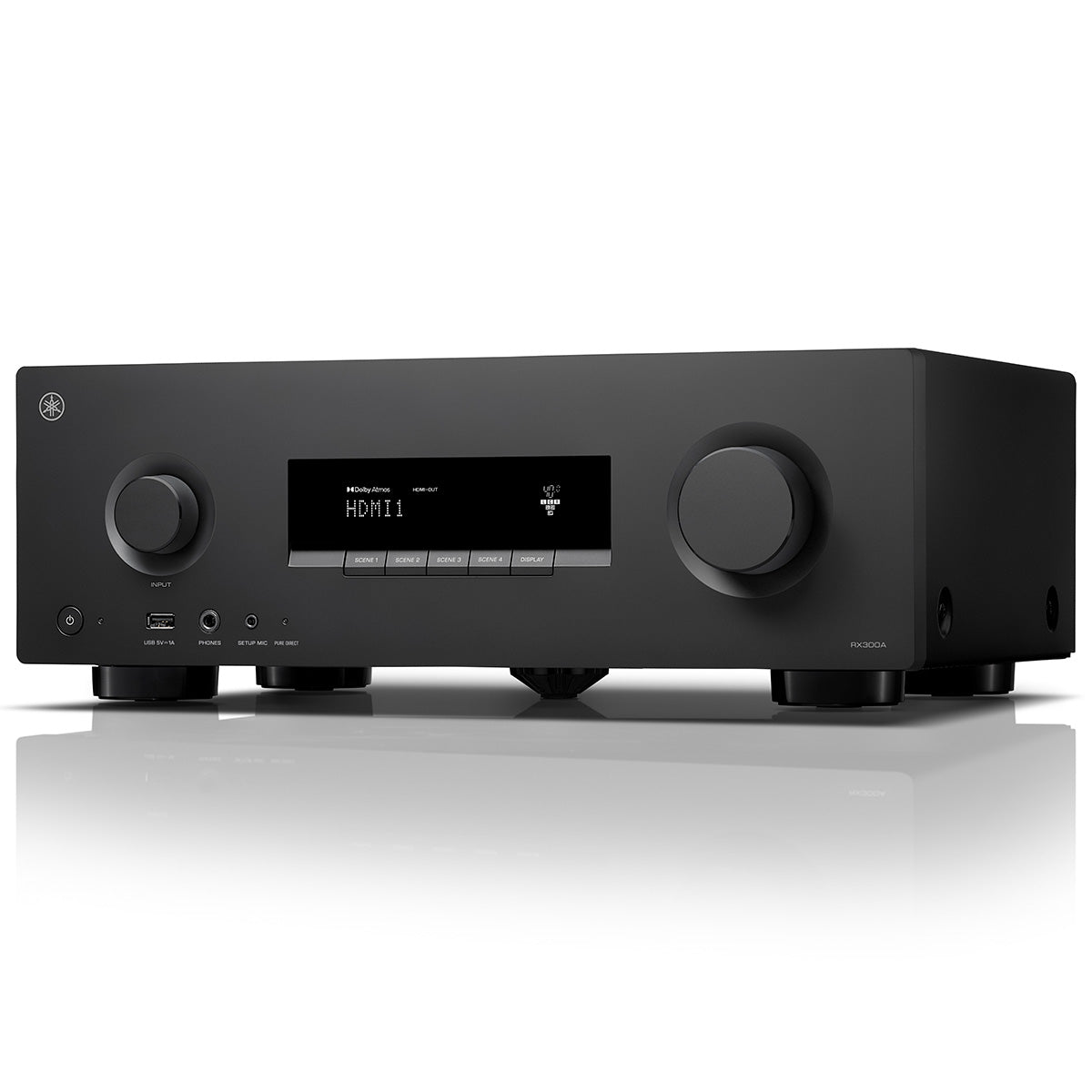
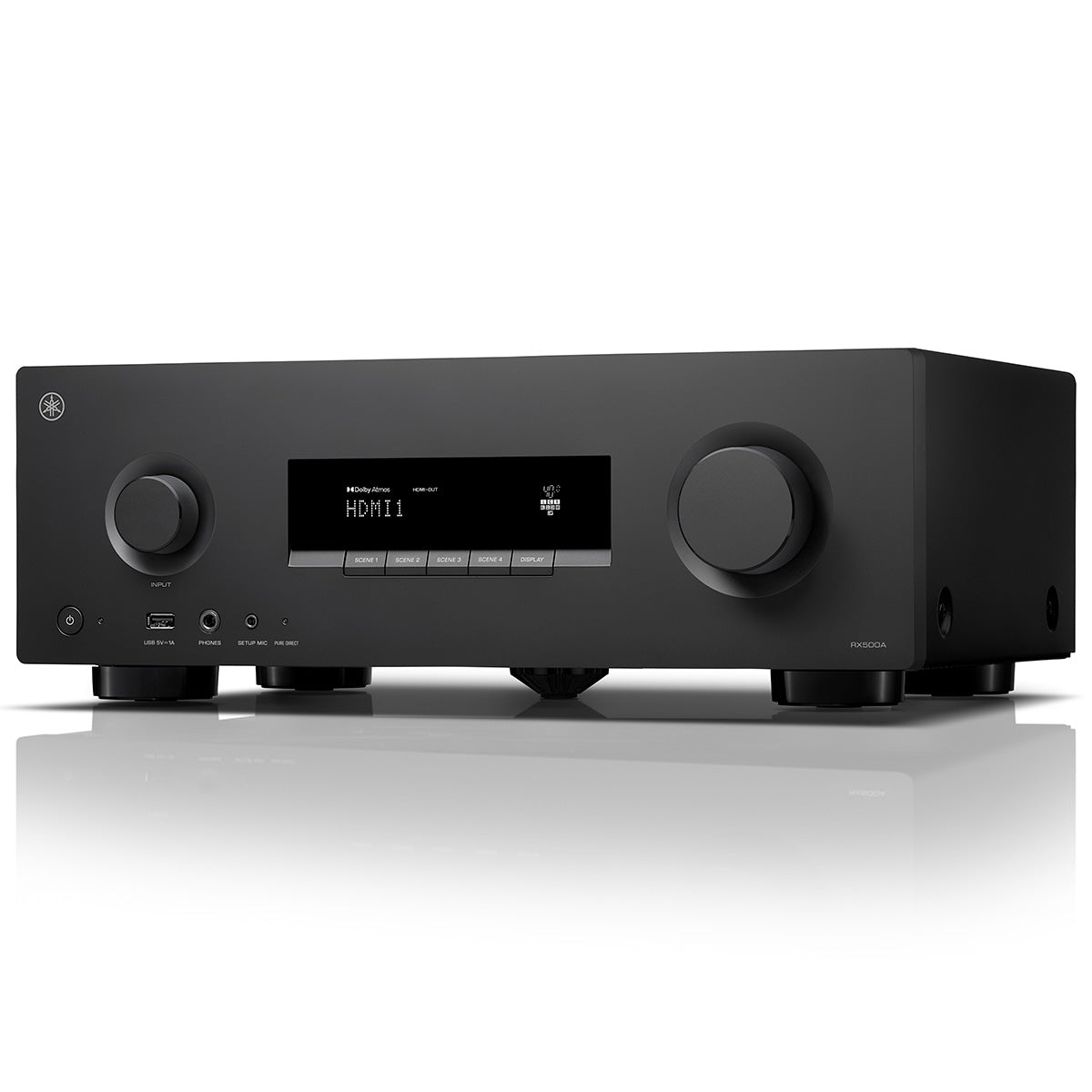
Both new receivers also debut a completely reworked cosmetic design. The familiar Yamaha wordmark on the faceplate has been replaced by the Tuning Fork mark used on their instruments and professional audio products. The front panel is cleaner and more minimal than anything Yamaha has shipped at this price in years, and it genuinely looks more expensive than it is.

Yamaha RX300A: 5.2-Channel AV Receiver

Available June 2026

The RX300A is a 5.2-channel receiver with five amplifier channels and two subwoofer pre-outs. It is the direct replacement for the RX-V385 and holds the same $399.95 price point.

Dolby Atmos and Speaker Layouts

The RX300A supports Dolby Atmos natively, which is a significant upgrade over the V385. You can run it as a standard 5.2 setup with no height speakers, or configure it for immersive audio with overhead channels.

For Atmos with physical height speakers, the receiver supports a 3.2.2 layout: three front channels, two subwoofers, and two height channels. Those height channels can be either in-ceiling speakers or Dolby-enabled up-firing speakers that bounce sound off the ceiling. The trade-off to understand here is that the RX300A has five amplifier channels total, so assigning two to height means giving up rear surround channels. You are moving from a full 5-channel surround layout to a three-channel front plus height configuration. For a first system or a smaller room, that trade-off is often worth it. For someone who wants full surrounds and dedicated height simultaneously, the RX500A is the better answer.
If you are not ready for height speakers at all, the receiver supports DTS Virtual:X. This is a post-processing algorithm that simulates overhead sound from your existing floor-level speakers using psychoacoustic techniques. It gives you a sense of height without additional hardware and works reasonably well as a starting point. It is not the same as actual object-based decoding with physical overhead drivers, but for an entry setup it is a practical option.

HDMI and Video

Four HDMI inputs and one output, all running HDMI 2.1 with 40Gbps of bandwidth. That bandwidth is what enables 4K at 120 frames per second over the connection, which was not possible with HDMI 2.0 on the V385. The output supports eARC, so your TV can return audio to the receiver over the same HDMI cable you are already running for video. No separate optical or coaxial cable needed if your TV supports eARC. Gaming features include ALLM and VRR. Auto Low Latency Mode tells the display and receiver to prioritize low input lag when a game signal is detected. Variable Refresh Rate eliminates screen tearing by syncing the display's refresh rate to the GPU output. Both work through the current generation of gaming consoles.

HDR support covers HDR10, HDR10+, Dolby Vision, and Hybrid Log-Gamma.

Amplifier Power: What the Numbers Actually Mean

The RX300A is rated at 70 watts per channel into 8 ohms with two channels driven simultaneously, measured across the full 20Hz to 20kHz bandwidth at 0.09% THD. That is the FTC standard measurement and the honest number to use when comparing receivers across brands.

You will also see 145 watts listed at 6 ohms with one channel driven. That is a secondary spec that reflects a stress test on a single amplifier channel with the full power supply available to it. It looks more impressive, but it does not reflect how a receiver performs when all channels are running at the same time, which is how home theater actually works. The 70-watt figure is the one that tells you what you are working with.

Seventy clean watts is plenty for a normal living room with speakers in the 85 to 90dB sensitivity range. Where you feel the ceiling is pairing this receiver with inefficient speakers or trying to fill a large room at high volumes. For a starter system in a typical space, it does the job.

The receiver is also bi-amp capable. You can reassign the surround amplifier channels to front left and right, running separate amp channels to the high and low frequency binding posts on speakers that support bi-amping. This removes the passive crossover network inside the speaker from the signal path. You give up surround channels to do it, but it is a useful configuration for a music-focused two-channel setup.

Room Correction

A setup microphone ships in the box. The calibration process measures your room's acoustic response, detects each speaker, and automatically sets distances, level trims, and frequency response corrections. It is straightforward enough for a first-time setup and makes a noticeable difference in how the system comes together in the room.

What is new for Yamaha at this price tier is per-speaker adjustable crossover settings. The crossover frequency is the point at which a speaker hands off bass reproduction to the subwoofer. Previously, entry-level Yamaha receivers applied a single crossover setting globally across all speakers. Being able to dial that in per speaker matters because your front towers and compact surrounds do not have the same bass extension. Setting the crossover appropriately for each speaker produces cleaner bass integration and is something Yamaha had not offered at this price before.

Streaming and Connectivity

The RX300A does not have Wi-Fi. Streaming is Bluetooth only. Competitors like Denon have offered built-in network streaming at this price for a while, so it is a real gap if sending audio from Spotify or Apple Music directly from your network to the receiver is important to you. A streaming stick on one of the HDMI inputs solves the problem, but it is worth knowing upfront.

What the RX300A does have that most competitors skip at this price is Bluetooth Multipoint. Two devices can be paired simultaneously and you switch between them instantly without going through the pairing process again. It is a small convenience that becomes something you rely on once you use it daily.

The two subwoofer outputs both carry the same signal, so balancing dual subs is done through the volume controls on the subwoofers themselves rather than from the receiver. For a starter setup that is completely workable, and two dedicated outputs is cleaner than a Y-splitter off a single connection.

Zone B output lets you run a second pair of passive speakers in another room from the same source playing in the main zone. Volume is controlled from the remote. It is not a fully independent zone, but for background audio on a patio or in a bedroom it works.

Additional connections: two analog RCA inputs, one optical digital input, one coaxial digital input, USB for audio playback from a flash drive, and an FM tuner.

A Note on Build Quality

Yamaha includes their Anti-Resonance Technology Wedge, or A.R.T. Wedge, on both new receivers. It is a fifth foot mounted at the center of the chassis base that works with the four corner feet to disperse mechanical vibration. This feature comes down from Yamaha's higher-end receiver lineup. No competitor at this price offers anything comparable, and it reflects how Yamaha approaches build quality regardless of where a product sits in the range.

Yamaha RX500A: 7.2-Channel AV Receiver

Available September 2026

The RX500A is a new tier in Yamaha's lineup rather than a direct replacement for an existing product. It slots between the RX300A and the existing RX-V4A at $549, and while that positioning looks awkward on paper, the products are different enough that the choice between them comes down clearly to what you prioritize.

Everything covered above about the RX300A applies here: same chassis, same new design, same HDMI 2.1 implementation, same room correction system with per-speaker crossover, same dual subwoofer outputs, same A.R.T. Wedge, same Bluetooth 5.3 with Multipoint.

Here is what changes.

Seven Amplifier Channels and Full Atmos

The RX500A has seven amplifier channels instead of five, giving it a 7.2-channel configuration. That is the difference that resolves the trade-off we described on the RX300A. With seven channels, you can run a full 5.2.2 layout: five surround channels, two subwoofers, and two dedicated height channels, all without giving anything up. You keep the full surround layer and add height on top of it. For a proper Atmos installation with physical overhead sound, the RX500A is the cleaner implementation at this price.
DTS:X Native Decoding

The RX500A decodes DTS:X natively. DTS:X is the object-based DTS format, the equivalent of what Dolby Atmos is on the Dolby side. The RX300A supports DTS Virtual:X processing, which is a different thing: a simulation algorithm rather than actual codec decoding. If you have a 4K Blu-ray library with DTS:X tracks, the RX500A handles those correctly. The RX300A does not.

The full codec list on the RX500A also includes DTS-HD Master Audio and DTS-HD High Resolution, which are the lossless and high-resolution DTS formats used on Blu-ray. The RX300A handles standard DTS but not the lossless upper tier.

Wi-Fi Streaming

The bigger practical addition is Wi-Fi and Ethernet connectivity, which brings a full suite of streaming services: Spotify Connect, AirPlay 2, Google Cast, TIDAL Connect, Qobuz Connect, and internet radio. These protocols are not equal in audio quality.

Spotify Connect streams at 320kbps. The useful thing about it is that the receiver handles the stream directly once you start playback. Your phone becomes a remote control rather than the audio transport, which means you can put it down and the music continues through the receiver's own network connection.

AirPlay 2 supports Apple Lossless at CD resolution. For Apple ecosystem users streaming from Apple Music or locally stored files, it delivers a lossless signal to the receiver without compression.

TIDAL Connect and Qobuz Connect both support hi-res streaming up to 24-bit 192kHz on content mastered at that resolution. The receiver pulls the stream directly from the service and its DACs handle the conversion. If you already subscribe to either service and want hi-res audio going to the receiver without a separate streaming device, these protocols handle it natively.

It is worth understanding the difference between TIDAL Connect on the RX500A and TIDAL access on the RX-V4A. The RX-V4A can reach TIDAL through the MusicCast app, but TIDAL Connect as a dedicated protocol, where you initiate and control playback directly from the TIDAL app, is specific to the RX500A. The same applies to Qobuz Connect and Google Cast.

The Audio Connect App and MusicCast

The RX500A includes the Audio Connect app, a basic companion for network setup and internet radio browsing. It is not MusicCast. If full receiver control from an app, multiroom audio, and access to the wider Yamaha ecosystem matter to you, the RX-V4A at $549 with MusicCast is actually the better product for those priorities, despite costing less than the RX500A.

The RX500A makes a different trade: two extra amplifier channels, native TIDAL Connect, Qobuz Connect, and Google Cast, plus Bluetooth Multipoint, in exchange for the MusicCast ecosystem. Which side of that trade is right depends entirely on how you use the system. For someone who wants a complete Atmos setup and streams music from their phone, the RX500A is the stronger choice. For someone who wants multi-room audio and deep app integration, the RX-V4A is worth considering even though it is a generation old.


RX300A vs. RX500A: Which One Is Right for You


RX300ARX500A
Price$399.95$599.95
AvailabilityJune 2026September 2026
Amplifier Channels57
Max Atmos Layout3.2.2 (trades surrounds for height)5.2.2 (full surrounds + height)
DTS FormatDTS + Virtual:X processingDTS:X native decoding + DTS-HD
Wi-Fi / EthernetNoYes
StreamingBluetooth onlySpotify Connect, AirPlay 2, Google Cast, TIDAL Connect, Qobuz Connect
Bluetooth MultipointYesYes
Room CorrectionYes, per-speaker crossoverYes, per-speaker crossover
HDMI2.1, 4 in / 1 out, 4K/1202.1, 4 in / 1 out, 4K/120
AppNoneAudio Connect (basic)

Choose the RX300A if you are starting with a 5.1 or 5.2 system, are not adding height speakers immediately, and do not need network streaming built into the receiver. At $399 it is a capable, well-built starting point that covers all the modern essentials.

Choose the RX500A if you want full 5.2.2 Atmos with surrounds and height simultaneously, care about native DTS:X decoding, or want music streaming services accessible directly through the receiver without a separate device. The extra $200 over the RX300A is well spent if any of those things matter to your setup.


Who These Receivers Are Not For

Being direct about this is important. Both the RX300A and RX500A are entry-level products. For an Audio Advice customer building a serious home theater with quality speakers, dedicated acoustic treatment, and a multi-thousand dollar system investment, neither of these receivers is the right answer.

The amplifier sections are not sufficient for power-hungry or inefficient speakers. The room correction, while improved over previous entry-level Yamaha products, does not compete with Audyssey MultEQ XT32 or Dirac Live in terms of depth and accuracy. Neither receiver has pre-amp outputs for adding external amplification later. And at 70 watts into 8 ohms, the headroom you need for a large room or demanding speakers is not there.

For that buyer, the conversation starts around $800 to $1,000 and goes up from there. We have covered those products in other videos and our team can help you find the right fit.


Our Take

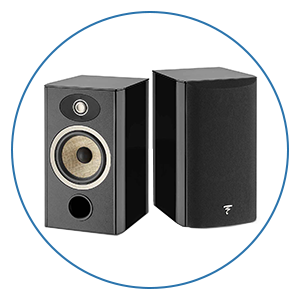
For a first-time buyer stepping into real surround sound, someone setting up a living room or den, or a buyer who wants Atmos and modern HDMI without a significant investment, these are solid products that do what they promise.

Yamaha has been building AV receivers since 1986. They build musical instruments. They have done acoustic work in concert halls and professional PA systems. We reviewed the True X Bar 90A soundbar not too long ago and came away more impressed than expected. That same attention to how things actually sound carries into these receivers. In our testing, the room correction was straightforward enough that a first-time setup went smoothly, and it made a noticeable difference in how the system came together in the room. Both receivers sound good for what they are, with that characteristic Yamaha sound that their fans know well. There is a reason people trust the name, and even at this price you can hear it.

Pair either one with a speaker package in the $500 to $1,000 range in a normal living room and you have a system that will perform well above what most people expect at this combined price. The RX300A in particular, at $399 with Atmos and HDMI 2.1, represents a real step forward over what Yamaha has been offering at this price for the past several years.