How They Sound
A Hands-On Comparison
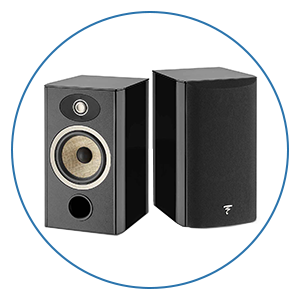
We paired both models with a set of Klipsch RP-600M II bookshelf speakers and started with "Sultans of Swing" by Dire Straits, a recording that's essentially a masterclass in guitar texture and stereo imaging and rewards an amplifier that can resolve fine detail without smearing transients.
Through the RP-600M II on the Y-40, the opening guitar had real bite, with clean and immediate pick attack that confirmed the Axign platform is doing its job on transients. The Klipsch horn tweeter is already quite revealing, and the Y-40 fed it cleanly enough that the detail came through without ever turning harsh. Mark Knopfler's guitar sat slightly right of center exactly where it should, and when the full band came in, the soundstage held its shape rather than collapsing. The low end stayed controlled and fast rather than bloated.
Switching to the Y-50 on the same track, the biggest difference wasn't volume. It was headroom. Even at moderate listening levels, the amplifier felt like it had more in reserve, and that ease at the top of the dynamic range is something an experienced listener will notice even without pushing the volume. The soundstage opened up slightly and the bass carried a touch more weight without losing its tightness.
The second track was "The Chain" by Fleetwood Mac, specifically for the bass line in the breakdown section, one of the most recognizable low-end moments in rock and a solid stress test for bass control and dynamic contrast. On the Y-40, the bass came in with authority. It was clean and punchy, and it didn't blur into the lower midrange the way some Class D designs can when the bass gets demanding. The drum hit right before the full band re-enters landed sharp and physical, and the guitars on top had presence without crowding each other. Through the Y-50, the bottom end on that same bass line carried more weight and body, and the dynamic jump from the quiet breakdown back into the full arrangement felt more dramatic, again pointing back to that headroom advantage.
It's worth noting that the RP-600M II is a high sensitivity speaker, which actually makes a strong case for the Y-40. You won't feel like you're leaving power on the table with this pairing. Where the Y-50's extra power becomes meaningful is when you move to larger, less sensitive speakers, like a floorstander rated around 87 or 88 decibels in a bigger room. That's where 250 watts versus 150 watts into 4 ohms turns into something you can actually hear.
Onkyo Muse Y-50 vs Onkyo Icon A-50
At the $1,499 price point, Onkyo also offers the Icon A-50, which gives you two very different paths to a complete one-box system. The Muse Y-50 is the modern pick, using Axign Class D technology to deliver 250 watts from a sleek, four inch chassis that fits almost anywhere, ideal if you want high resolution streaming and serious power without visual bulk.
The Icon A-50 is built for someone who wants a traditional, full-size component. It swaps the compact Class D design for a classic Class AB amplifier and adds Dirac Live, one of the most capable room correction systems available. Both eliminate the need for a separate streamer, DAC, or phono preamp, so the choice comes down to whether you value the Muse's compact, high power efficiency or the Icon's classic sound and room tuning precision.
Which One Should You Buy?
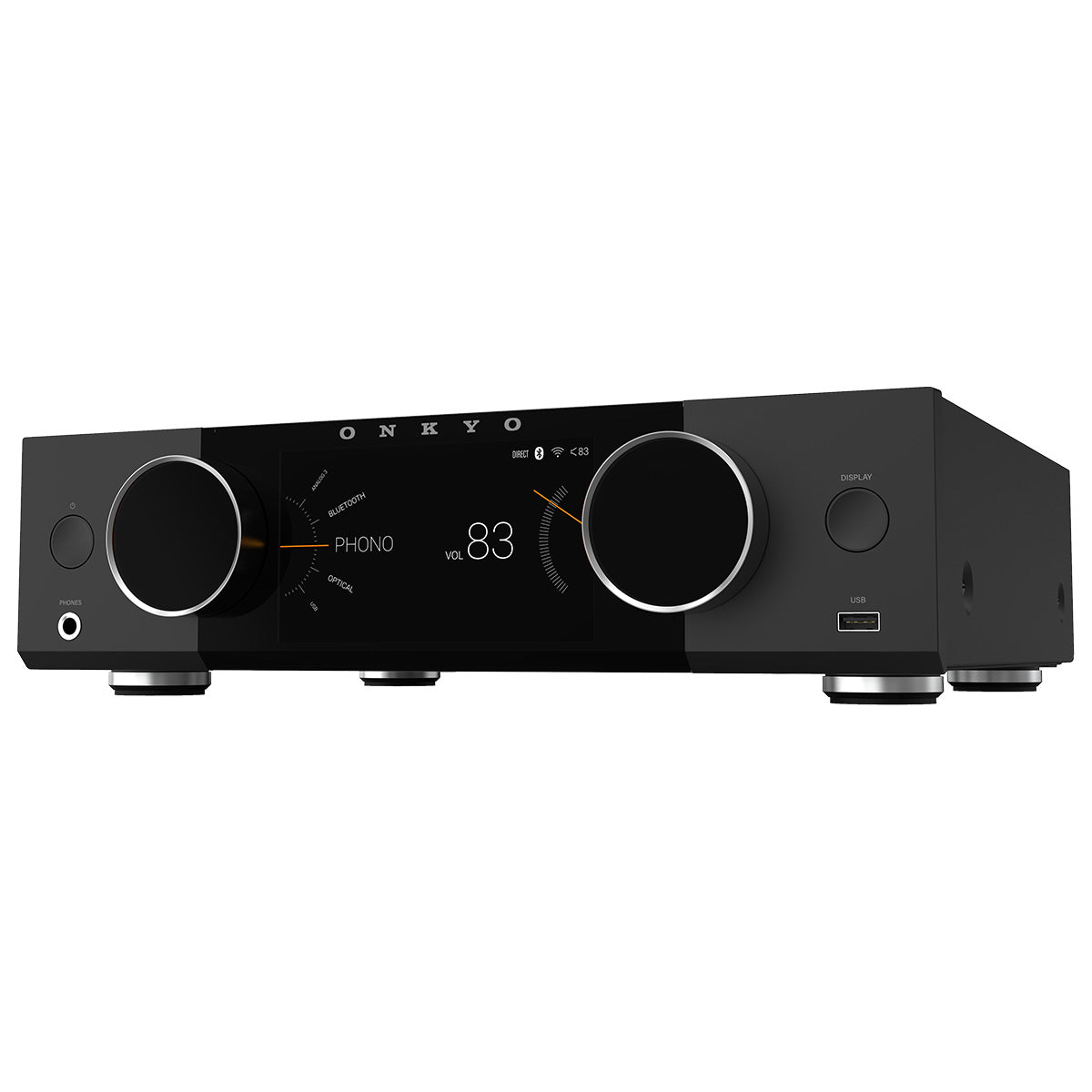
The Y-40 at $999 is for someone who wants to simplify without giving anything up. If you've got a turntable, a streaming setup, maybe a TV in the loop, and you want it all running through one clean, good looking box with enough power for a solid pair of bookshelf speakers, the Y-40 covers it.
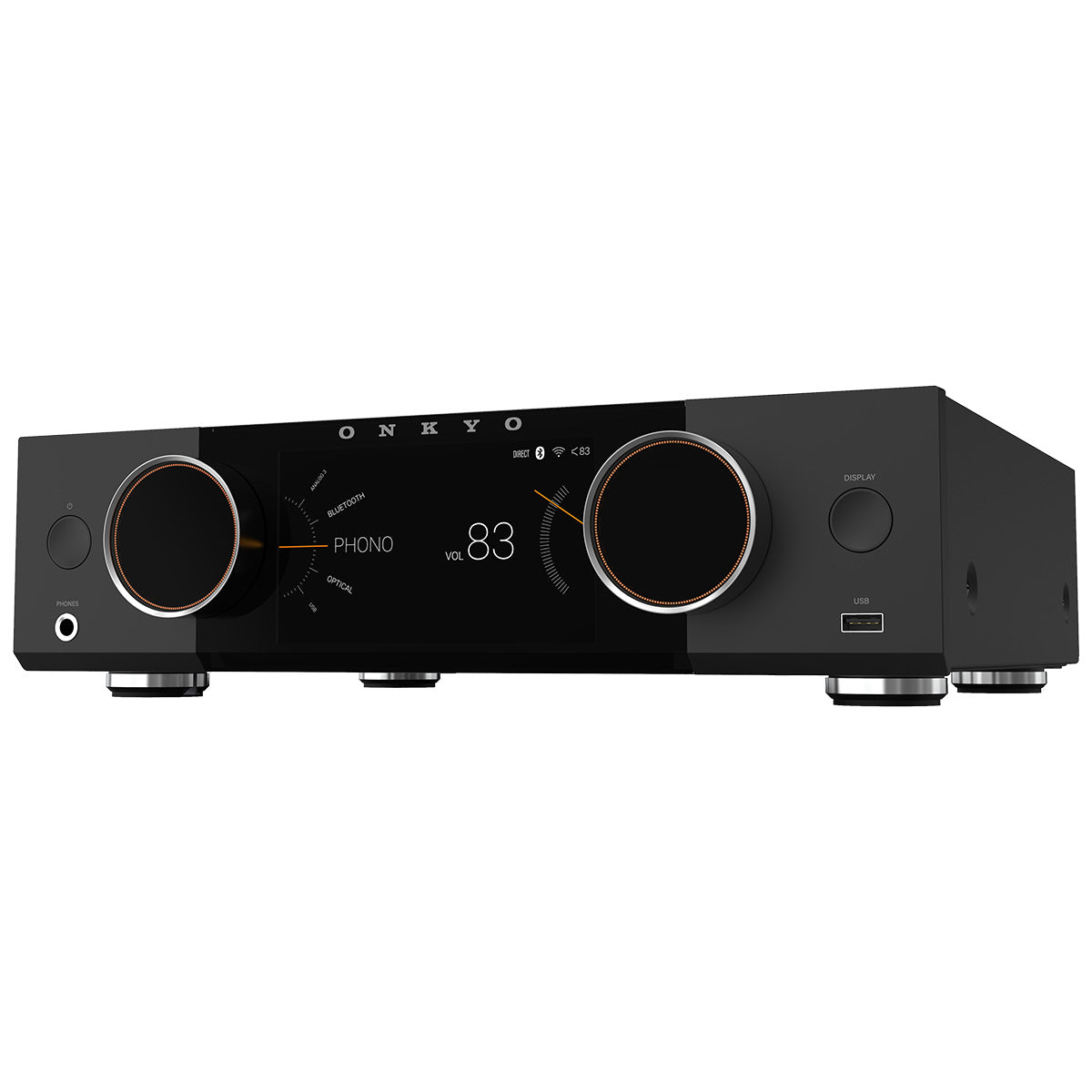
The Y-50 at $1,499 is for someone with a bigger room, more demanding speakers, a moving coil turntable setup, or anyone who wants room correction and a proper subwoofer output built in. It's the more complete product, and having spent time with both, the power difference is clear and audible once you pair it with the right speakers.