
Onkyo Icon Series: The Return of a Legend

youtube cover image
Play

Premium stereo separates are back, and Onkyo is swinging big

For nearly 80 years, Onkyo has played a major role in home audio, powering everything from college parties to serious home theater systems. In more recent years, they’ve been especially strong on the cinema side, with their RZ receivers earning a reputation for performance and reliability. At the same time, their dedicated two-channel components haven’t been the focus, at least not in the way longtime Onkyo fans might expect.

That starts to change with Onkyo’s latest lineup.

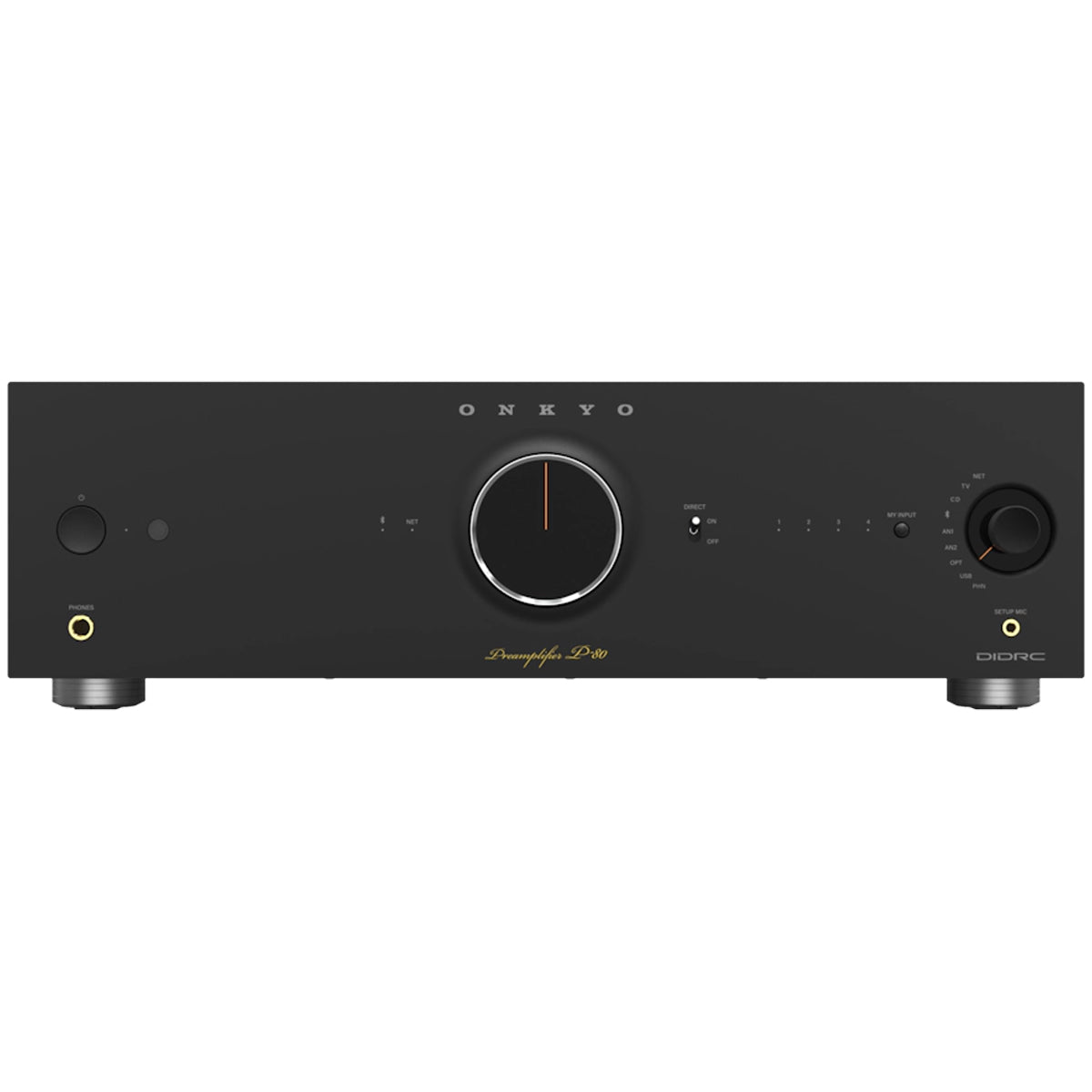
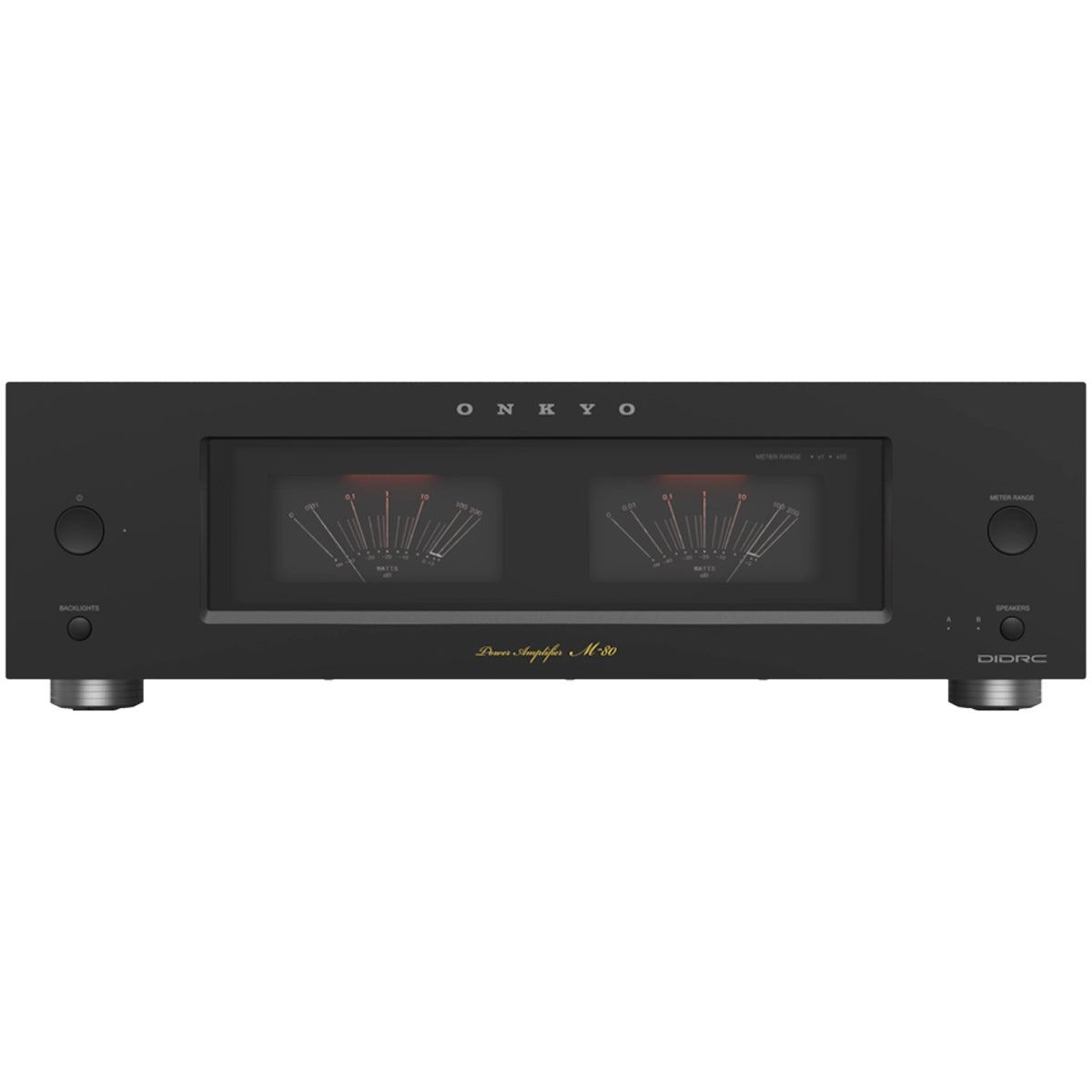
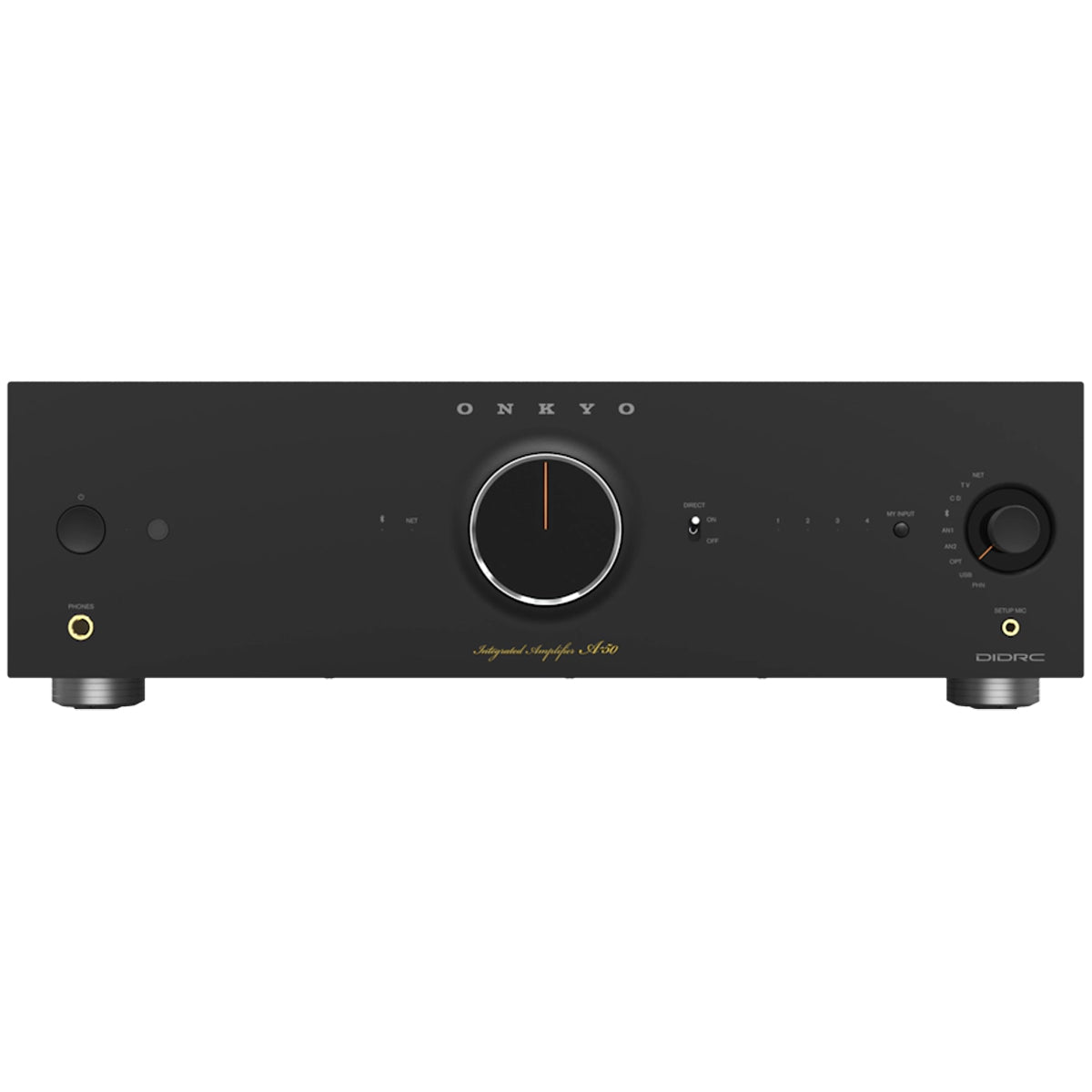
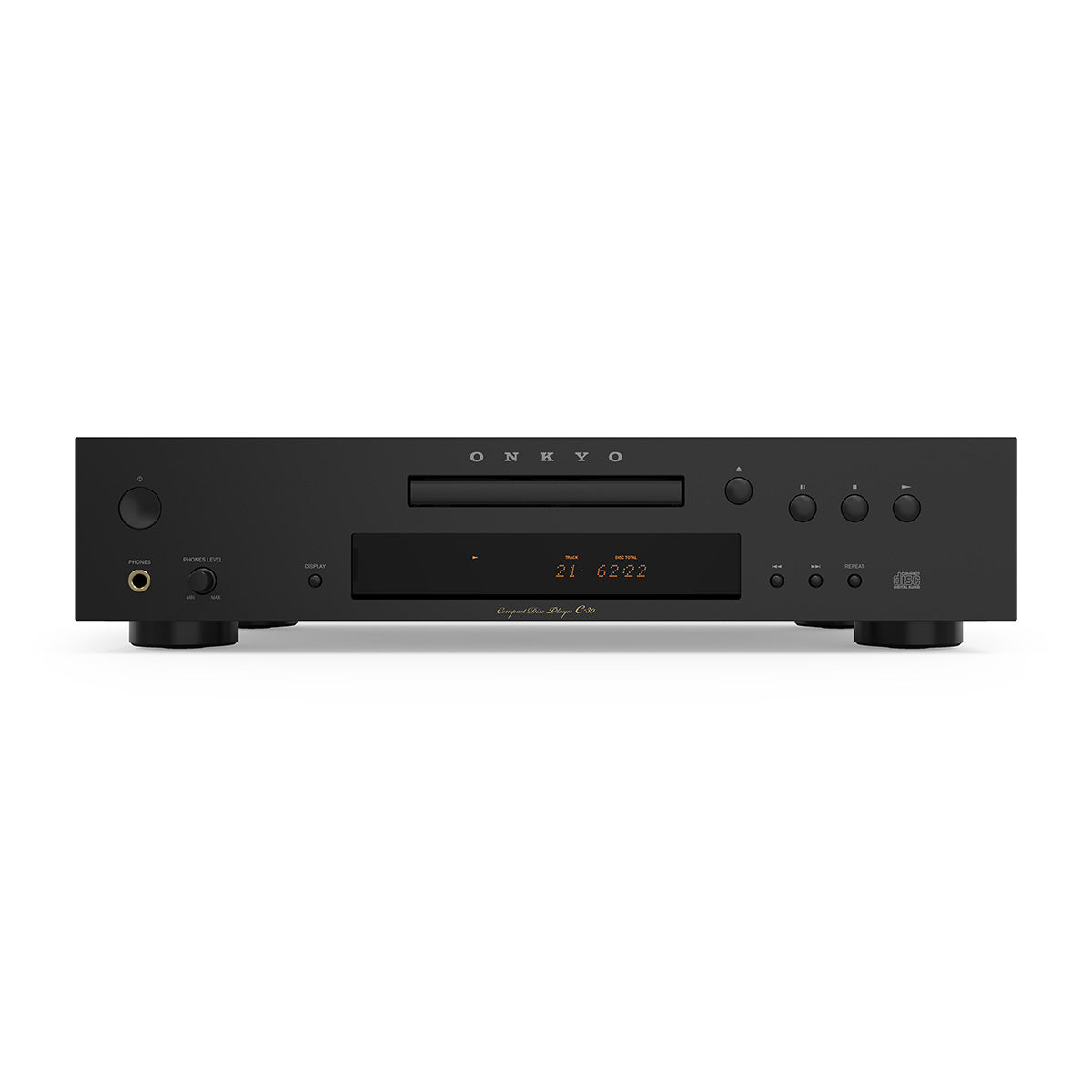
Between the upcoming Muse streaming amplifiers, which we’ll be reviewing soon, and this new flagship Icon Series, it’s clear the brand is making a renewed push into the premium audiophile space. The Icon Series includes the P-80 network preamplifier, M-80 power amplifier, A-50 network integrated amplifier, and C-30 CD player, a lineup that signals a more serious return to traditional two-channel separates and high-performance stereo systems.

To us, this feels like more than a simple comeback. It reflects a renewed focus on how Onkyo approaches design and engineering at the highest level. We’ve been spending time with these components to see whether they can capture the character and musicality of classic analog gear while still meeting the expectations of modern digital systems.

Let’s dive in.

Onkyo Icon Series

Quick Verdict

The Onkyo Icon Series is Onkyo’s flagship two-channel lineup built for modern hi-fi systems that still prioritize classic, emotional sound. What makes it special is how confidently it blends old-school build quality and serious amplifier design with the features people actually want in 2026, including streaming, HDMI ARC for TV audio, and Dirac Live room correction. If you’ve been waiting for Onkyo to deliver a true premium stereo lineup again, the Icon Series feels like the most meaningful step they’ve taken in years.


Quick Take: What Is the Onkyo Icon Series?

The Onkyo Icon Series is a premium stereo lineup designed to cover three different types of listeners: people who want modern separates, people who want a “one-box” integrated solution, and people who still love physical media.

It includes four components:


If you want a stereo setup that feels like classic hi-fi but works like a modern system, this lineup is clearly built for you.

Key Features at a Glance

Across the Icon Series, the big themes are sound quality first engineering, premium build, and modern usability. Here are the features that stand out most:

  • Dirac Live Room Correction built in (P-80 and A-50)
  • HDMI ARC for easy TV integration (P-80 and A-50)
  • Roon Ready streaming plus Chromecast built-in and Works with AirPlay 2
  • Support for Spotify Connect, TIDAL Connect, Qobuz Connect, and Amazon Music
  • MM and MC phono support for turntables
  • High-current amplifier design for better grip, control, and dynamics
  • Fan-less chassis designs focused on silent operation and low noise

Why the Icon Series Matters Right Now

A lot of modern audio gear is convenient, but not always satisfying. Streaming has never been easier, but plenty of systems feel lightweight, app-first, and disposable. The Icon Series goes in the opposite direction.

This lineup is about making premium stereo fun again. The build feels substantial. The controls feel deliberate. The engineering is clearly aimed at sound quality first. And when you combine that with modern streaming support, HDMI ARC, and room correction, you end up with something that fits real listening habits without losing the “special” feeling that great hi-fi should have.


A Legacy Built on Sound Creation

To truly appreciate what Onkyo has achieved with the Icon Series, it helps to understand where they came from.

The story begins in 1946, amidst the post-war reconstruction of Japan, when Takeshi Godai founded the Osaka Denki Onkyo Company. His vision was about more than just electronics. It was a mission to elevate Japanese craftsmanship and help heal the spirit of the nation through the universal language of music.

That foundational belief, that music is a vessel for emotion, is deeply embedded in the DNA of the Icon Series.

These components were developed at the Premium Audio Company Technology Center, where veteran engineers worked together to create products intended to become the new icons of the Onkyo brand. Along the way, the designs were subjected to more than 150 rigorous tests, covering everything from internal circuit stability to software reliability, ensuring the brand’s legacy of durability carries forward into this new generation.

Onkyo Icon Series

Design and Build Quality

Sophisticated Style You Can Feel

In today’s audio world, there are more ways to interact with a system than ever. Touchscreens and app-based control can be genuinely convenient, especially for streaming. But there’s still something satisfying about a component that feels substantial in your hands, with controls that have real weight and precision.

Onkyo leans into that idea with a design philosophy they call refined style you can feel.


Built Like it’s Supposed to Last

When you approach any component in the Icon Series, the first thing you notice is the build quality. The engineers have employed a three-piece housing construction consisting of two aluminum side panels and a heavy-duty steel top panel.

This hybrid material approach is not merely aesthetic. It significantly increases rigidity and improves seismic resistance, deadening external vibrations that could otherwise microphonically degrade the audio signal. In simple terms, the heavier and more rigid enclosure helps isolate the internal circuitry, keeping noise and vibration from getting in the way of the music.


The Details are Where it Feels Premium

The front panels are crafted from aluminum with an elegant sandblasted finish. That reduces glare for a clean, matte look that works beautifully in a dark listening room. It also adds a subtle texture when you touch the controls, which is the kind of detail you don’t appreciate until you use it daily.

Beneath the surface, the attention to detail continues with a unique oval chassis design featuring pressed lines that strengthen the bottom plate to help disperse vibration. Even the knobs and buttons have been tuned for tactile response, so when you turn the volume dial on the A-50 or select an input on the P-80, it feels purposeful and precise.


The Engineering That Defines the Icon Series

While the design feels classic, the technology is built for modern sources. Onkyo’s sound has always been known for a blend of warmth and dynamic impact, and the Icon Series leans into that through two core technologies: DIDRC and Three-Stage Inverted Darlington Circuitry.


DIDRC: Smoothing Digital without Losing Detail

The challenge with modern digital audio is often what you can’t hear directly. Digital-to-analog conversion can generate ultra-high-frequency noise far above the range of human hearing. Even though you can’t “hear” a 100kHz signal, that energy can still create intermodulation effects that fold back down into the audible range.

That’s what can make some digital sources feel slightly sharp, smeared, or fatiguing over long listening sessions.

To combat this, Onkyo developed DIDRC, Dynamic Intermodulation Distortion Reduction Circuitry. It’s a discrete signal control circuit designed to eliminate that ultra-high-frequency noise so streaming and CD playback sound smoother and more natural, without taking away clarity. You will find DIDRC implemented in the critical stages of the P-80 preamp, the driver stage of the M-80 power amp, and the A-50 integrated amplifier.


Inverted Darlington Circuitry: the High-Current Grip that Makes Speakers Come Alive

Speakers aren’t a fixed load. Their impedance changes as the music plays, and that can challenge an amplifier when the track gets dynamic. This is where amplifiers can start sounding thin, compressed, or sloppy in the bass.

The Three-Stage Inverted Darlington Circuitry in the M-80 and A-50 is designed specifically for high current delivery and strong control. It provides a massive, instantaneous current supply to keep the speaker drivers under control, especially during big swings in dynamics. It also allows the amplifier to operate with very low negative feedback, meaning it stays more stable and less affected by back-EMF, the electrical energy that speakers can send back into the amplifier.

Combine that with fan-less designs, custom 10,000uF capacitors, and careful mechanical isolation, and you get amplification that sounds powerful, controlled, and composed.


The Components: What You Get in the Icon Series

Onkyo Icon P-80

Onkyo Icon P-80 Network Preamplifier

The P-80 is the modern command center of the lineup. It’s designed for listeners who want a true preamp foundation, but also want the convenience of a modern streamer built in.

P-80 Key Features and Connectivity

On the analog side, you get three pairs of RCA inputs and a dedicated phono stage that supports both moving magnet and moving coil cartridges. This isn’t a basic add-on phono input. The moving coil circuit is designed as a discrete component to accurately reproduce tiny cartridge signals without distortion.

On the digital side, you get coaxial, optical, and USB-A inputs. But the feature that’s going to matter most in a lot of homes is HDMI ARC. That lets you integrate your TV audio seamlessly, so your stereo system can handle both music and movies without needing a separate soundbar, and you can keep volume control through your TV remote.

As a streamer, the P-80 supports Spotify Connect, TIDAL Connect, Qobuz Connect, Amazon Music, and it’s Roon Ready. It also includes Chromecast built-in and Works with AirPlay 2, so you can cast from just about any device.

And then there’s Dirac Live Room Correction. The P-80 includes Dirac Live to help correct the biggest acoustic problems in your room, especially in the bass. It comes with the limited bandwidth version (20Hz to 500Hz), with a full bandwidth upgrade available.

Onkyo Icon P-80 & M-80

Onkyo Icon M-80 Power Amplifier

The M-80 is built for one job: driving speakers with authority while staying clean and composed when the music gets demanding.

It’s rated at 130 watts per channel into 8 ohms and 200 watts into 4 ohms, which gives it the kind of headroom that makes systems feel effortless. The output stage uses transistors in a parallel push-pull configuration, which doubles current capability and improves control, especially in the low end.

M-80 Connections and System Matching

The M-80 includes both RCA and XLR balanced inputs, making it a perfect partner for the P-80’s balanced outputs. That balanced signal path also helps reduce noise and keep the system clean when you’re working with longer cable runs or complex setups.

Internally, Onkyo didn’t take shortcuts here. It uses copper bus bars for low-resistance power flow and the same rigid chassis construction to suppress vibration.

Onkyo Icon A-50

Onkyo Icon A-50 Network Integrated Amplifier

Not everyone wants separates, and plenty of listeners shouldn’t feel like they need them. That’s why the A-50 is such a big deal.

It combines the intelligence of the P-80 with the muscle of the M-80 in one elegant chassis, giving you a premium “just add speakers” system without sacrificing performance.

The A-50 delivers 110 watts per channel into 8 ohms and 180 watts into 4 ohms, and it uses the same Inverted Darlington circuitry and high-current power supply approach found in the M-80.

It’s also fan-less, using an extruded aluminum heat sink, so the system stays silent.

A-50 Features that Make it Easy to Live With

You get HDMI ARC, full streaming support including Roon Ready and Chromecast built-in, a quality MM/MC phono stage, and Dirac Live Room Correction.

That combination is rare in this category. The A-50 is one of the few integrated amps that can legitimately anchor a premium stereo system, handle TV audio like a pro, and still feel like a true audiophile component.

Onkyo Icon C-30

Onkyp Icon C-30 CD Player

Streaming might be the default today, but CDs are still a ritual, and a lot of people still have physical libraries they love.

The C-30 is Onkyo honoring that format properly.

The star feature is Onkyo’s VLSC, Vector Linear Shaping Circuit. Standard DACs rely on analog filtering to smooth out the digital signal, but that can introduce phase distortion and noise. VLSC uses a proprietary algorithm to generate a smoother waveform between sampling points, helping remove pulse noise for cleaner output.

The C-30 also uses a high-precision clock rated at plus or minus 10 parts per million, helping preserve timing, imaging, and clarity. It supports standard CDs, CD-R, CD-RW, and MP3/WMA discs, and it shares the same vibration-resistant chassis design language as the rest of the Icon Series.

How the Icon Series Sounds

When you sit down to listen to the Icon Series, the first word that comes to mind is emotion. Onkyo’s engineers tuned these units to go beyond a flat frequency response. They wanted the sound to be felt.

With the P-80 and M-80 separates connected to reference floorstanding speakers, the first thing that stands out is the silence. The background feels pitch black, which helps micro-details like breath, cymbal decay, and guitar texture come through naturally.

When the music gets dense or dynamic, the Inverted Darlington output stage shows its strength. Separation stays intact, the soundstage remains stable at higher volumes, and bass stays tight and controlled without turning bloated.

Switching to the A-50 integrated, the family resemblance is obvious. The separates still deliver a little extra width and grip in the lowest octave, but the A-50 gets impressively close, which is exactly what you want from a flagship integrated.

Dirac Live also makes a real difference in normal rooms. After calibration, the boominess that often shows up in living rooms tends to drop away, leaving cleaner bass, a more open midrange, and a more effortless presentation.

Onkyo Icon Series

Onkyo A-50 vs P-80 + M-80: Which Should You Buy?

This is the decision most people will make, and the good news is there isn’t a wrong answer. It’s really about how you want to build your system.

If you want the cleanest path to a premium setup, the A-50 is the simplest and most complete solution. You get streaming, HDMI ARC, Dirac Live, a phono stage, and serious power in one box. It’s the kind of component you can build around for years without feeling like you compromised.

The P-80 and M-80 separates are for the listener who wants more flexibility and a little more ultimate performance. Separates give you more freedom to upgrade pieces over time, optimize your signal chain, and squeeze out the last bit of soundstage width and low-end control, especially with speakers that demand more current.

Here’s the simplest way to choose:

Choose the A-50 if you want:
  • One-box simplicity with serious performance
  • Streaming, HDMI ARC, and Dirac Live built in
  • A system that works beautifully for both TV and music
  • A premium stereo setup without needing extra boxes or cables

Choose the P-80 + M-80 if you want:
  • Maximum flexibility and upgrade potential over time
  • Balanced connectivity end-to-end
  • The most scale, grip, and separation the lineup can deliver
  • A classic separates experience with modern streaming and room correction


Which Icon Series Component Should You Choose?

Choose the P-80 + M-80 separates if:

You want maximum flexibility, balanced connectivity, and the ability to fine-tune your system over time. This is also the best route if you plan to do system upgrades in phases.


Choose the A-50 integrated if:

You want a premium one-box solution with streaming, HDMI ARC, Dirac Live, and serious power, all without losing the feel of a high-end stereo system.


Choose the C-30 CD player if:

You love physical media and want the cleanest, most refined way to enjoy your CD library through a modern hi-fi system.

FAQ: Onkyo Icon Series Questions People Ask Most

Does the Onkyo P-80 support Dirac Live?
Yes. The P-80 includes Dirac Live Room Correction, with a limited bandwidth version included (20Hz to 500Hz), plus an option to upgrade to full bandwidth.

Does the A-50 include Dirac Live too?
Yes. The A-50 also includes Dirac Live Room Correction, giving it a major advantage as a one-box solution in real rooms.

Does the Icon Series support HDMI ARC?
Yes. HDMI ARC is included on the P-80 and A-50, letting you route TV audio through your stereo system and control volume with your TV remote.

Is the P-80 Roon Ready?
Yes. The P-80 is Roon Ready and also supports Chromecast built-in and Works with AirPlay 2.

Is the A-50 Roon Ready?
Yes. The A-50 is also Roon Ready and supports Chromecast built-in and Works with AirPlay 2.

What is DIDRC and what does it do?
DIDRC is Onkyo’s Dynamic Intermodulation Distortion Reduction Circuitry. It’s designed to reduce ultra-high-frequency noise that can come from digital audio processing, helping streaming and digital sources sound smoother and more natural.

Can the A-50 replace a soundbar?
In many systems, yes. With HDMI ARC and strong amplification, the A-50 can act as the heart of a premium TV and music setup, especially if you pair it with great speakers.

Is the M-80 stable into 4 ohms?
The M-80 is rated at 200 watts per channel into 4 ohms, and its design is aimed at high current delivery and control, which is a great sign for demanding loads.

What is VLSC on the C-30?
VLSC is Onkyo’s Vector Linear Shaping Circuit. It’s designed to reduce pulse noise and create a cleaner analog waveform from digital sources like CDs.


Final Verdict: The Legend Is Back

The Onkyo Icon Series is a return to form in the best way. It blends the build quality and tactile satisfaction of classic hi-fi gear with modern features that matter, including streaming, HDMI ARC, and Dirac Live.

Whether you build a dedicated listening room around the P-80 and M-80, simplify your system with the A-50, or rediscover your CD library with the C-30, this lineup feels like it was made for people who still care about the emotional connection music can create.

And that’s what makes it exciting.


We’re Here to Help!

If you have further questions, contact our experts via chat, phone, or email. Or simply visit one of our world-class showrooms to experience speakers, projectors, TVs, and everything in between for yourself before you make a purchase!

If you’re planning your home theater or media room, check out our Home Theater Design page, where we have everything Home Theater related, including our FREE Home Theater Design Tool.

When you buy from Audio Advice, you’re buying from a trusted seller since 1978. We offer Free Shipping, Lifetime Expert Support, and our Price Guarantee. We look forward to serving you!