

NAD C 359S & C 569 Review: Classic Hi-Fi Meets Modern Streaming and CD Playback

NAD C 359S & C 569 Review video cover
Play

More than 16 million CDs were sold in the United States during the first half of 2026. According to Luminate's 2026 Midyear Report, CD sales reached 16.3 million units, an increase of 16% compared with the same period in 2025. That's a pretty impressive number in a world where streaming has become the primary way most people listen to music.

And while streaming is incredibly convenient, there's still something special about pulling a favorite album off the shelf, putting it into a CD player, and enjoying the entire recording from beginning to end.

That's exactly the kind of listening experience NAD is embracing with two new components: the NAD C 359S integrated amplifier and the NAD C 569 CD player.

The C 359S is a $1,299 streaming integrated amplifier that combines traditional Class AB amplification with BluOS high-resolution streaming, HDMI eARC, and connections for your favorite analog and digital sources. The $999 C 569 is a dedicated CD player featuring an ESS Sabre DAC and advanced digital processing technologies borrowed from NAD's more expensive models.

Together, they create a modern stereo system that can handle streaming music, vinyl records, CDs, and even your TV audio, all through the same pair of speakers.

We've been spending time with both components here at Audio Advice, and in this review, we'll explore what makes them interesting, how they performed in our listening tests, the speakers we'd recommend pairing with them, and whether it makes sense to purchase one or both.

NAD C 359S & C 569

NAD's Classic Design with Modern Technology

NAD was founded in 1972 with a simple philosophy: make great hi-fi sound more affordable. The original NAD 3020 amplifier, introduced in 1978, became the product that really put the company on the map. It eventually sold more than a million units, which is remarkable for a stereo amplifier. It wasn't particularly flashy or loaded with features. Instead, it focused on delivering excellent sound and giving music lovers an affordable foundation for a stereo system they could enjoy for years.

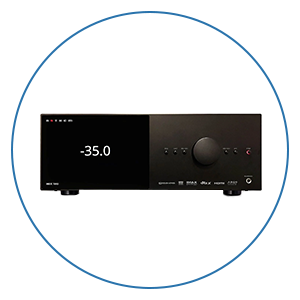
Looking at the new C 359S, you can see that NAD hasn't forgotten those roots. The amplifier features NAD's familiar black finish, a large volume knob with LED indicators, and dedicated bass, treble, and balance controls on the front panel. We appreciate having those physical controls, especially when you're sitting down for a listening session and want to make a quick adjustment without opening an app. If a recording sounds a little bass-heavy, simply reach over and turn it down.

The matching C 569 CD player follows the same traditional approach, with a front-loading disc tray, dedicated playback controls, and a 3.7-inch color display that can show album and track information when CD-Text is available.

Both components feel solid and well-built, and sitting next to each other, they look like a classic NAD stereo system. But the technology inside is quite different from the amplifiers and CD players of the past.

NAD C 359S Integrated Amp

NAD C 359S

Traditional Class AB Amplification with a Modern Twist

One of the most interesting things about the C 359S is its amplifier design. A lot of modern streaming amplifiers use Class D amplification, including several of NAD's own models. But the C 359S uses a traditional Class AB output stage. That's an interesting choice at this price, especially considering you're also getting a complete BluOS streaming platform, HDMI connectivity, and a wide range of analog and digital inputs.

Now, Class AB isn't automatically better than Class D. NAD makes some excellent Class D amplifiers, and both technologies can deliver outstanding sound. What's interesting about the C 359S is how NAD has combined a traditional amplifier topology with a more modern power supply.

Many conventional Class AB amplifiers use large transformers and linear power supplies. Instead, NAD paired the C 359S's Class AB output stage with a high-current switching power supply adapted from technology developed for its flagship Class D amplifiers.

The result is an amplifier that uses Class AB for its audio output stage while taking advantage of modern switching power supply technology. NAD has also paid close attention to its internal circuit layout, using a multilayer board design to help separate the power supply and digital electronics from sensitive analog signals.

This becomes especially important when you consider everything happening inside the same chassis. You've got a phono preamp, a network streamer, digital processing, and a stereo power amplifier all working together. The goal is to keep unwanted noise and interference from affecting the music.
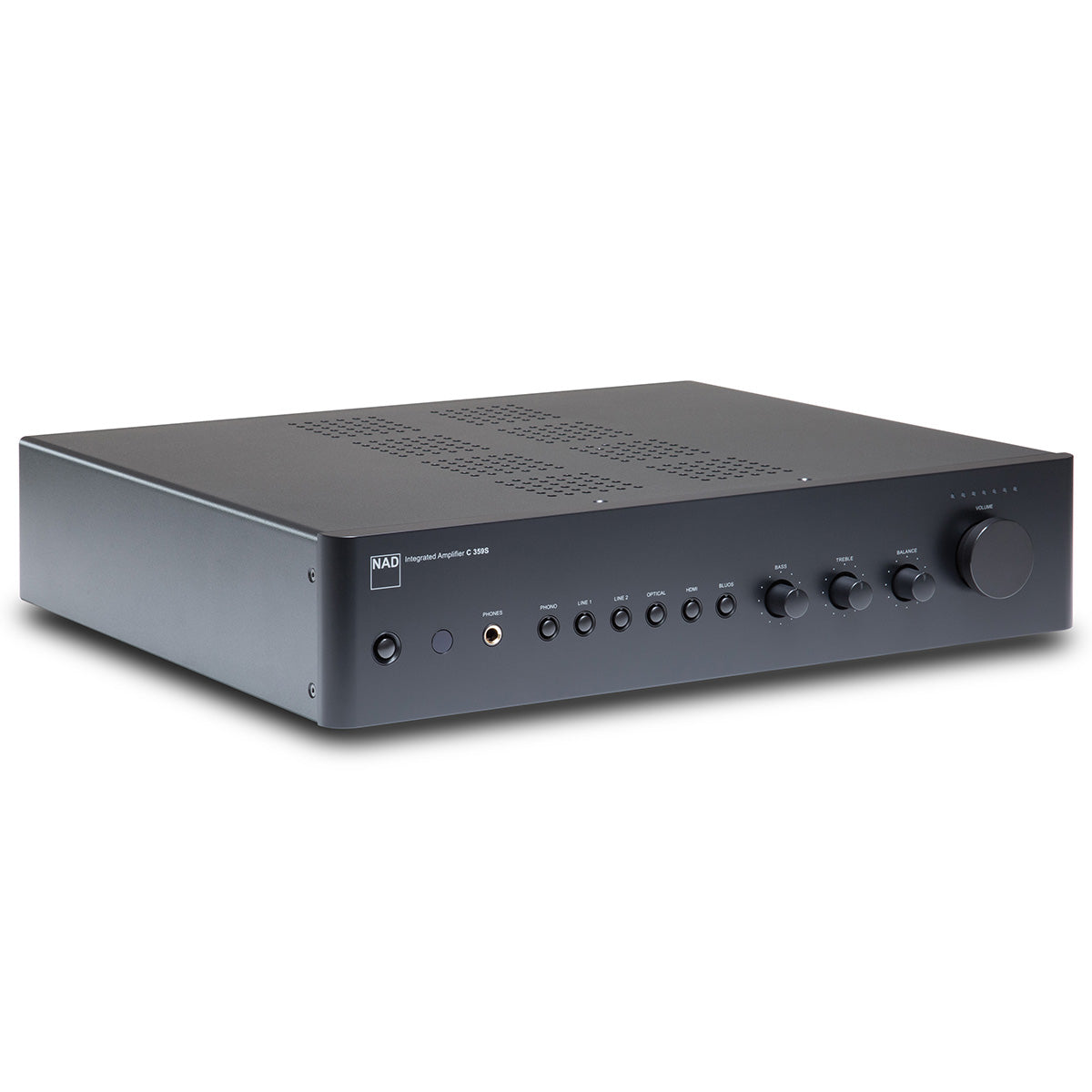
NAD C 359S Integrated Amplifier

$1,299.00

How Much Power Does the NAD C 359S Have?

NAD has always focused on how its amplifiers handle real-world speaker loads rather than simply advertising the biggest wattage number possible.

The original 3020 was rated at just 20 watts per channel into 8 ohms, but it could deliver considerably more power for short bursts into a 4-ohm load.

The C 359S continues that approach with some impressive specifications:

  • 70 watts per channel into 8 ohms, continuously, with both channels driven
  • 120 watts per channel into 4 ohms, continuously, with both channels driven
  • 144 watts of dynamic power into 4 ohms for brief musical peaks

That 120-watt continuous rating into 4 ohms is particularly important when you're considering speakers that demand more current from an amplifier. It gives the C 359S flexibility to work with a wide range of bookshelf and floorstanding speakers.

NAD has also included Soft Clipping, a feature that dates back to the original 3020. When an amplifier is pushed beyond its available power, the waveform can begin to clip and create harsh distortion. Soft Clipping is designed to make that transition less abrupt, reducing the harshness of the resulting distortion. It doesn't give the amplifier additional power, but it's a useful feature if you occasionally push your system toward its limits.

BluOS Streaming, HDMI eARC, and Connections for Your Entire Stereo System

While the amplifier design is interesting, what really makes the C 359S appealing is how easily it can become the centerpiece of an entire stereo system. If you enjoy vinyl, there's a dedicated moving-magnet phono input, allowing you to connect a compatible turntable without purchasing a separate phono preamp. There are also two RCA line inputs for additional components and an optical digital input.

One of our favorite features is HDMI eARC. This allows you to connect a compatible TV directly to the C 359S and use your stereo speakers for television audio. With HDMI control enabled, you can even adjust the volume using your regular TV remote.

For someone who wants excellent music playback and a significant improvement over their TV's built-in speakers, this is a particularly convenient solution. And when it comes to streaming music, you don't need to purchase another component.

BluOS is already built into the C 359S, giving you access to high-resolution music up to 24-bit/192kHz through compatible streaming services and music stored on your home network. Supported options include Spotify Connect, TIDAL Connect, Qobuz Connect, AirPlay, and Roon Ready integration. BluOS also supports multi-room playback, so if you've already got compatible Bluesound speakers in another part of the house, you can group them with the C 359S and keep the music playing as you move between rooms. There's also Bluetooth with aptX HD for convenient wireless listening from compatible devices, a headphone output for private listening, and BluOS preset buttons on the remote.

We especially like those presets because sometimes you just want to press a button and start enjoying music without reaching for your phone.

Adding a Subwoofer to the NAD C 359S

Another feature we really appreciate is the dedicated subwoofer output and optional 80Hz high-pass filter. Let's say you've got a pair of bookshelf speakers you love, but you wish they had a little more impact when a kick drum hits or a deep bass line comes in. Adding a powered subwoofer can make a big difference.

When you enable the C 359S's 80Hz high-pass filter, it reduces the deep bass being sent to your main speakers. That means their smaller woofers don't have to work as hard reproducing the lowest frequencies, potentially giving them more headroom and improving clarity.

The subwoofer output sends a full-range signal, so you'll need to adjust the crossover on the subwoofer itself. We'd start around 80Hz and make adjustments based on the speakers and room. If your speakers already produce strong bass on their own, you can also leave the high-pass filter disabled and blend the subwoofer in at a lower frequency.

For more detailed guidance, check out our guide to setting up and calibrating a subwoofer.

NAD C 569

NAD C 569 CD Player

Bringing Your Music Collection Back to Life

With the C 359S handling streaming, vinyl, and TV audio, the matching C 569 adds something that's becoming increasingly popular again: dedicated CD playback. The C 569 sits between NAD's more affordable C 538 and its flagship C 589 CD player.

And while it certainly looks like a traditional CD player, NAD has included some advanced digital technology that makes it more interesting than simply adding a disc drive to your system. The C 569 uses a tray-loading transport with an NXP-based servo system that manages disc speed, focus, and tracking during playback.

It also supports gapless playback, which is especially important for live albums and recordings where one track flows directly into the next. There's nothing worse than listening to a great live performance and hearing an unexpected pause between songs. But the most interesting part of the C 569 is what happens after the information is read from the disc.
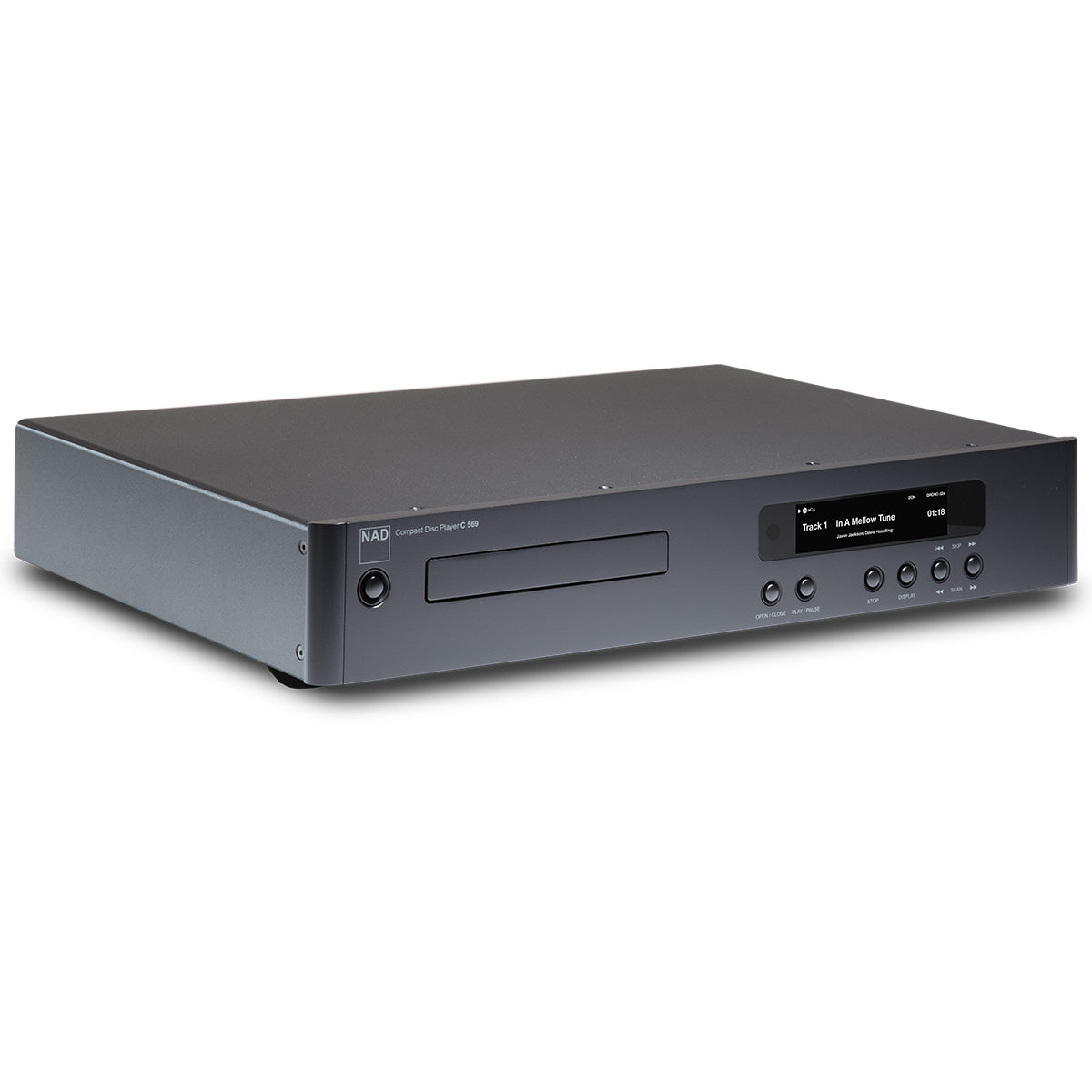
NAD C 569 CD Player

$999.00

ESS Sabre DAC, Dynamic Digital Headroom, and QRONO d2a

The C 569 features an ESS Sabre ES9039Q2M digital-to-analog converter, along with a carefully designed analog output stage. NAD has focused on keeping signal paths short, using symmetrical left and right channel layouts, and incorporating dedicated power regulation to help reduce unwanted noise. The player also includes two technologies borrowed from the more expensive C 589: Dynamic Digital Headroom and QRONO d2a.

Dynamic Digital Headroom (DDH) addresses a problem called inter-sample clipping. Some CDs are mastered with digital samples very close to the maximum allowable level. When the DAC reconstructs those samples into an analog waveform, the resulting signal can briefly exceed that level and potentially create distortion.

Dynamic Digital Headroom is designed to provide additional room for those peaks, helping reduce clipping during playback.

QRONO d2a focuses on another part of digital conversion. It's a digital filtering technology designed to improve the timing behavior of the reconstructed signal, particularly around fast musical changes such as the attack of a piano note or the strike of a drum.

Both features work with standard CDs, so you don't need specially recorded music to benefit from the technology. The C 569 also supports MQA CDs for anyone who has those discs in their collection.


Listening Impressions: How Do the NAD C 359S and C 569 Sound Together?

For our listening tests, we paired the C 359S and C 569 with DALI speakers and spent time listening to familiar recordings. One track we kept returning to was Daft Punk's "Giorgio by Moroder."

It's a great recording for evaluating a stereo system because it starts with a spoken introduction before gradually building into a much more complex arrangement of drums, bass, keyboards, and synthesizers. As the music builds, there's a lot happening at once, and a good system needs to keep those instruments organized without losing the energy of the performance. That's something we really enjoyed about this NAD combination. The kick drum stayed distinct, the bass line remained easy to follow, and even as we increased the volume, the system maintained the separation we were looking for. We had enough headroom for the listening levels we wanted, and the music remained engaging as the arrangement became more complex.


Best Speakers to Pair with the NAD C 359S

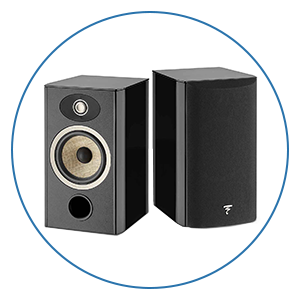
One of the advantages of the C 359S is its ability to drive a wide range of bookshelf and floorstanding speakers. We particularly enjoyed pairing it with DALI, and there are several models we'd recommend depending on your room size, listening preferences, and budget. For a typical living room, we'd start with the DALI SONIK 3 bookshelf speakers, priced at $1,200 per pair. They feature a 7-inch woofer and offer a good balance of size and bass capability.

If you're working with a smaller room or want something more compact, the DALI SONIK 1 is another excellent option at $900 per pair. For a more affordable system, we'd also consider the DALI KUPID at $600 per pair. It's a compact, less sensitive 4-ohm speaker, making the C 359S's ability to deliver 120 watts per channel into 4 ohms particularly useful. And if you've got a larger room and prefer floorstanding speakers, the DALI OBERON 7 at $2,000 per pair gives you more bass extension and output capability.

The best choice will ultimately depend on your room size, listening distance, and how loud you like to play your music.

Whichever speakers you choose, don't underestimate the importance of placement. Even relatively small adjustments to speaker spacing and distance from the walls can make a noticeable difference in bass performance and stereo imaging.

Before spending money on new equipment, we'd encourage you to experiment with the speakers you already own. You might be surprised by how much improvement you can get without purchasing anything.

Our 2-Channel Speaker Setup Guide walks through the process in more detail, including speaker spacing, listening position, and ways to get a more focused stereo image.

NAD C 359S vs. Bluesound POWERNODE: Which Is Better for Your System?

If you're considering the C 359S primarily for streaming music and TV audio, another amplifier worth looking at is the Bluesound POWERNODE N331. At $1,299, the POWERNODE offers a similar all-in-one approach, with BluOS streaming and HDMI eARC in a considerably smaller chassis.

However, the POWERNODE uses Class D amplification, rated at 100 watts per channel into 8 ohms in stereo. It can also power a center-channel speaker, making it especially interesting for someone who wants to expand beyond a traditional two-channel system.

We'd lean toward the POWERNODE if you're primarily interested in a compact streaming system for music and TV. The C 359S makes more sense if you want a traditional stereo amplifier with a moving-magnet phono stage, multiple wired sources, physical tone controls, and Class AB amplification.

You can also explore more options in our Best Compact Streaming Amplifiers guide.


Is the NAD C 569 Worth It Over a Less Expensive CD Player?

On the CD player side, it really comes down to how you plan to connect the player and how important its internal DAC is to your system.

If you're simply looking for a reliable way to play CDs through the digital input of an amplifier you already enjoy, the NAD C 538 at $499 is a more affordable option.

But if CDs are a regular part of your listening and you want to take advantage of the C 569's ESS Sabre DAC, upgraded analog output stage, Dynamic Digital Headroom, and QRONO d2a technology, we think the additional investment is worth considering.

The C 569 is particularly appealing for someone building a dedicated stereo system around quality speakers and an integrated amplifier.


Final Thoughts: A Classic Stereo System for the Way We Listen Today

What we like most about the NAD C 359S and C 569 is that they don't force you to choose between traditional hi-fi and modern convenience.

With the C 359S, you're getting a capable Class AB integrated amplifier that can handle everything from your turntable and television to high-resolution streaming through BluOS.

With the C 569, you've got a dedicated CD player that brings some of NAD's more advanced digital processing technology to a familiar, straightforward listening experience.

We especially appreciate how easily these two components fit together. You can spend an evening discovering new music through a streaming service, then pull a favorite CD off the shelf and listen to an entire album without changing anything about your system.

And with the right pair of speakers, you've got a stereo that can provide years of listening enjoyment.

For anyone building a new two-channel system, we'd start with the C 359S and invest in the speakers that make the most sense for your room. If your CD collection is still important to you, the C 569 is a great way to make those albums part of your everyday listening again.

Sometimes, the best stereo system isn't the one with the most features or the largest number of components. It's the one that makes you want to sit down, press play, and enjoy your favorite music.


We're Here to Help!

If you're considering the NAD C 359S, C 569, or building a new stereo system, our team of experts is here to help. Whether you need advice on speaker matching, amplifier power, CD playback, or getting the most out of your listening room, we're happy to guide you through the process.

You can contact our experts through chat, phone, or email, or visit one of our world-class showrooms to experience some of the finest audio equipment available.

If you're building a stereo system from scratch, our How to Build a Hi-Fi Stereo System guide is another great place to start. And if you're planning a larger home theater or media room, explore our Home Theater Design page, including our free Home Theater Design Tool.

Why Buy From Audio Advice?

When you purchase from Audio Advice, you're buying from a trusted seller serving music and home theater enthusiasts since 1978.

We offer Free Shipping, Lifetime Expert Support, and our Price Guarantee, so you can shop with confidence knowing our team is here to help before and after your purchase.

We look forward to serving you!

Frequently Asked Questions

Does the NAD C 359S Have Built-In Streaming?

Yes. The NAD C 359S has BluOS built in, supporting high-resolution music playback up to 24-bit/192kHz through compatible streaming services and local network libraries. You don't need a separate network streamer.

Can You Connect a Turntable and TV to the NAD C 359S?

Yes. The C 359S includes a moving-magnet phono input for compatible turntables and HDMI eARC for connecting a television. This allows you to use the same stereo speakers for vinyl playback, streaming music, and TV audio.

Is the NAD C 359S a Class AB or Class D Amplifier?

The C 359S uses Class AB amplification with a high-current switching power supply based on technology developed for NAD's Class D amplifiers. Its output stage is Class AB, not Class D.

Can the NAD C 569 Be Used with Another Amplifier?

Yes. The C 569 includes RCA analog outputs for connecting to an amplifier or preamplifier with a line-level input. It also offers optical and coaxial digital outputs for systems with compatible digital inputs or external DACs.

Does the NAD C 359S Need a Subwoofer?

Not necessarily. The C 359S can power bookshelf or floorstanding speakers in a traditional two-channel system without a subwoofer. However, its dedicated subwoofer output and optional 80Hz high-pass filter make it easy to expand into a 2.1-channel system if you want deeper bass.