
Marantz Cinema 50 & 60 Series 2: Everything That's New, and Is It Worth Upgrading?

Marantz Cinema 50 & 60 Series 2 Overview video cover
Play

Marantz just gave two of our most popular home theater receivers a refresh. The Cinema 50 and Cinema 60 have both moved to what Marantz calls Series 2, and we wanted to go through everything both units offer, the amp section, the DAC, the room correction, the streaming, all of it, and tell you exactly what changed from the originals and whether it's worth upgrading.

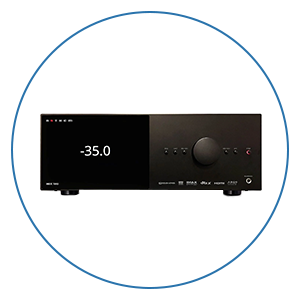
Marantz Cinema 50 Series 2
Marantz Cinema 60 Series 2

What Changed in Series 2

The New DAC

Marantz upgraded the DAC section on both units to a 32-bit, 8-channel design, switching from the Texas Instruments chips in the originals over to Cirrus Logic. It's actually the exact same DAC chip in both receivers, the Cinema 60 just needs one of them to cover its 7.1, or 8 total, channels, while the Cinema 50 uses two of them to handle all 15 of its processed channels across 11.4. There's also a new switchable DAC filter setting on both units if you want to fine-tune the top end slightly.


Dirac Live Comes to the Cinema 60

The bigger change, and the one we think matters most, is Dirac Live. When these receivers first launched, Dirac Live was a Cinema 50 exclusive. With Series 2, Marantz opened that upgrade path to the Cinema 60 as well, though it's worth being precise here: the 50 gets the full Dirac Live suite, Room Correction, Bass Control, and Active Room Treatment, while the 60 only gets the Room Correction tier.


Everything Else That's New

  • On-screen channel level monitoring on both units, so you can watch each speaker's level while dialing things in
  • A redesigned web control interface, which is also rolling out to original Cinema 50 and 60 owners through the latest firmware update
  • AMD FreeSync now covers 1440p, not just 4K, which matters since a lot of PC gamers actually run 1440p instead of 4K for higher frame rates without needing a top-tier graphics card
  • Dolby Atmos Channel Expander and Center Bi-Amp Mode, both exclusive to the Cinema 50, covered in detail below

Channel count and wattage are unchanged on both units, so if you were hoping for more channels or more power out of this update, that's not what it's about. Both units still carry the same 5 year parts and labor warranty Marantz backs the whole Cinema Series with.

What Both Receivers Share

The Sound Masters

Marantz still trains a small group of engineers it calls Sound Masters, people with the ear to catch details most of us would never notice. It's a short list of people who've held that title over the years, names like the legendary Ken Ishiwata and the current Sound Master, Yoshinori Ogata. Every product goes through them before it ships, and they won't sign off until it meets Marantz's own standard for what their gear is supposed to sound like. Both the Cinema 50 and 60 Series 2 went through that same process.


Amplifier Design & Power

Both units use current feedback amplifier topology rather than the more typical voltage feedback design, which gives them a faster settling time and wider bandwidth, and both amp sections are fully discrete, no chip amps anywhere in the signal path.

Marantz also guarantees at least 70 percent of rated power on all channels with 5 channels driven at once, not just the 2-channel number most brands put on the box. Most AVR power specs are only tested with 2 channels running at once, since that's an easier load for any power supply to handle. Once you're actually watching a movie with 5, 7, or 9 channels firing together, the number a receiver can sustain sometimes drops below what's advertised, since not every power supply is built to hold up under that kind of load. Publishing a guaranteed floor under full multichannel use is a nice bit of transparency you don't see from every brand.

Both include a Pure Direct mode that bypasses the video circuitry and tone controls entirely for the cleanest possible 2-channel signal path, and both let you bi-amp your front left and right speakers using the extra channels for more control. Marantz's MDAX2 compressed audio enhancer is on both as well, cleaning up the artifacts from lower bitrate streams or older Bluetooth sources.

Marantz Cinema 50 Series 2 front panel view
Marantz Cinema 50 Series 2 back panel view

Audio Formats

Beyond Dolby Atmos and DTS:X, both units cover the full spread of Dolby and DTS formats: TrueHD, Atmos Music, DTS-HD Master Audio, Neural:X, and Virtual:X. Both also include a virtual height speaker mode that simulates height channels if you don't have in-ceiling or upfiring speakers installed. It's not as good as actual height speakers, but it's a nice option if you can't add them.


Gaming Features

Both get ALLM, variable refresh rate, and Quick Frame Transport for reduced latency, on top of the 1440p AMD FreeSync support mentioned above.


Network, Streaming & Connectivity

Both connect over Wi-Fi, Bluetooth, or a wired Ethernet connection, and through HEOS, both support 2 independent zones. Streaming covers basically every major service:

  • Spotify Connect, Tidal Connect, Qobuz Connect
  • Pandora, SiriusXM
  • Amazon Music, Amazon Music HD
  • Deezer, iHeartRadio, SoundCloud, Mood Mix
  • AirPlay 2, Internet Radio via TuneIn
  • Roon Ready certified

On the audio quality side, both support gapless playback, FLAC and WAV up to 192kHz/24-bit, ALAC at the same resolution, and DSD up to 5.6MHz, plus a built-in AM/FM tuner and a USB-A input if you still keep music files on a drive. Both support Bluetooth retransmission to wireless headphones with independent volume control, handy for late-night viewing without waking the house.


Design, Build & Setup

Both units keep the look Marantz has used across this generation, the circular porthole OLED display, carbon fiber side panels, and a symmetrical layout tracing back to the Model 30 and Model 40 stereo components. From the outside, aside from the Series 2 badge and new copper screws on the side and rear panels, they're basically identical to the originals.

The setup software walks you through the entire installation on your TV or projector screen, showing exactly where and how to make every speaker connection, then verifies it with audio test tones. It's one of the best setup walkthroughs of any receiver, easy enough for a total beginner to get right. Both units also show that on-screen channel level monitoring in real time while you're dialing things in.

Marantz Cinema 60 Series 2

Cinema 60 Series 2

Power & Processing

It's a 7 channel amplifier section rated at 100 watts per channel, measured across the full 20 Hz to 20 kHz audio band at 0.08 percent distortion with both channels driven, not just the easy 1kHz spec some brands quote. Processing goes up to 7.1 channels, so you get full preamp outputs if you want to add an outboard amplifier down the road, though we do still wish Marantz gave it a bit more processing on board for extra surround channels at this price. You get 4 analog inputs and 2 subwoofer outs, wired in parallel like the original, so there's no independent level or crossover adjustment between the two.


Video, Room Correction & Build

On the video side there are 6 HDMI inputs, 3 of which pass a full 8K at 60 hertz or 4K at 120 hertz, and 2 HDMI outputs that run in parallel, so you can keep something like a TV and a projector both permanently connected without swapping cables.
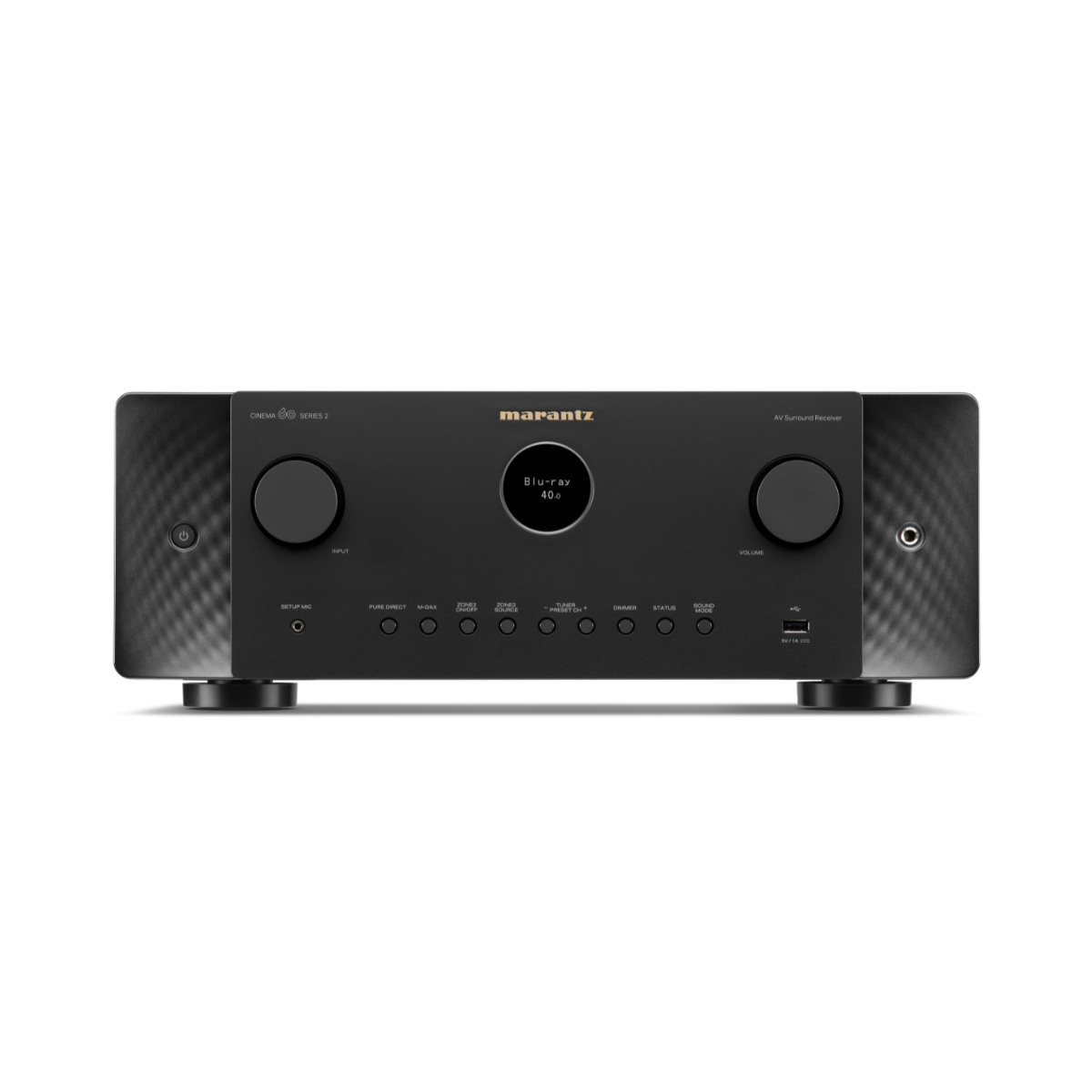
Room correction is Audyssey MultEQ XT, which includes Dynamic EQ and Dynamic Volume, plus the new Dirac Live Room Correction upgrade, Room Correction tier only, not the full Bass Control and Active Room Treatment suite the 50 gets. You get 7 speaker terminals around back with standard screws rather than gold plated ones, and the front panel isn't the solid metal you get on the 50.

We see the Cinema 60 as the right AVR for someone who wants a great sounding system but plans to keep the speaker count around 5 or 7. It's priced at $1,800, the same as the original.

Marantz Cinema 50 Series 2

Cinema 50 Series 2

This is the one we think Marantz put the most into.

Power & Bass Management

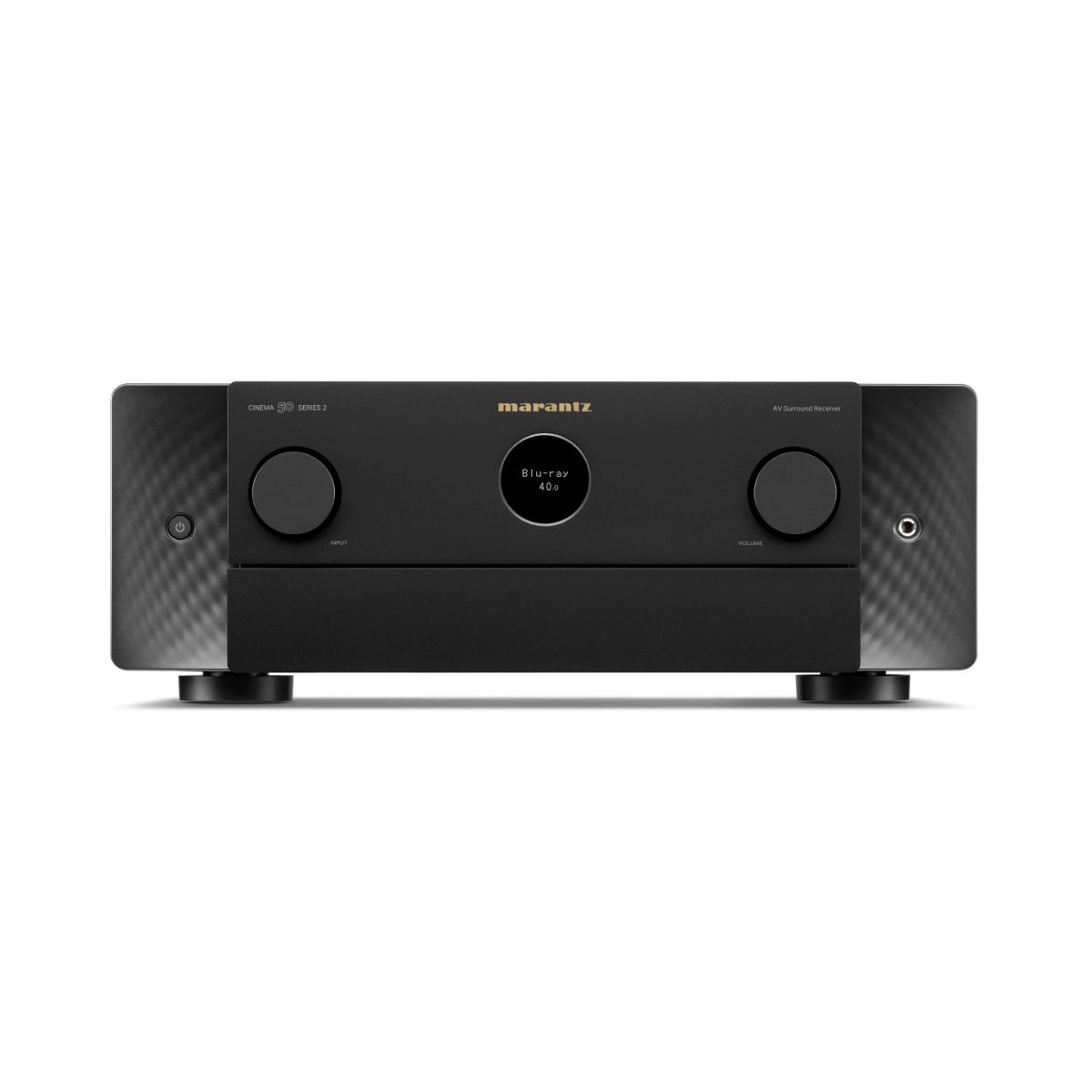
It's a 9 channel amplifier section at 110 watts per channel, same measurement standard across the full audio band, and there's a clear jump in dynamics between this and the 60, from the larger power supply. Processing goes all the way to 11.4 channels, so you've got full preamp outputs across the board, 5 analog inputs instead of 4, and 4 independent subwoofer outputs instead of 2. You can run those in standard mode, sending the same low frequency signal to all 4, or in directional mode, which routes the bass from whichever main speaker is closest to each individual sub, something we've mostly only seen on processors that cost several times as much. On top of that shared bass management, the 50 adds Bass Sync, which keeps the timing between your subs and main speakers properly aligned.
Video & Exclusive Formats

On HDMI you get the same 6 inputs, but on the 50 all 6 support that full 8K at 60 hertz and 4K at 120 hertz pass-through, and you get 3 outputs instead of 2, two of those running in parallel for a TV and a projector like the 60, plus a dedicated Zone 2 output that can feed a completely different source to a second room. You also get Auro 3D and IMAX Enhanced, both exclusive to this model, along with 360 Reality Audio and MPEG-H.


Dolby Atmos Channel Expander

There's also a new feature exclusive to the 50 called Dolby Atmos Channel Expander. A lot of channel-based Atmos content, think live sports or cable broadcasts, isn't mapped to your specific speaker layout, and without this, overhead information can end up parked on just one height position while the rest of your height speakers sit idle. Channel Expander spreads it across your whole height array instead. It's limited to 9-channel-and-up receivers for a reason, you need enough height positions actually installed for there to be anything to spread across, which is exactly why this is a 50 exclusive.


Room Correction & Build Quality

Room correction steps up to Audyssey MultEQ XT32 instead of the 60's base XT, plus Audyssey LFC, a low-frequency containment feature that reduces how much bass leaks through walls and floors into other rooms of the house. Dirac Live continues here exactly as it always has, still an optional paid upgrade, but it's the one that gets the full suite, Room Correction, Bass Control, and Active Room Treatment.

Build quality steps up too, with gold plating on both the RCA jacks and the speaker binding posts, a clock jitter reducer the 60 doesn't have, and a full metal front panel. Series 2 also brings Center Bi-Amp Mode exclusively to the 50, on top of the front left and right bi-amping both units share, so the center channel can get its own dedicated amplification too, particularly handy if you're running a simpler 5.1 setup on the 50's 9 channels and would rather put those extra amps to work than leave them idle. There's also the amp routing option, where you can add an outboard 2-channel power amp and assign it to your front mains, your rears, or a single pair of Atmos speakers.

With everything this unit does, from the 4 independent subs to Auro 3D and IMAX Enhanced to that extra layer of room correction, this is still the one that's tough to beat at its price point. It's priced at $2,800, the same as the original.


Is It Worth Upgrading?

If you already own an original Cinema 50 or 60 and you're happy with how it sounds, we wouldn't rush you into replacing it. The amplifier section, the channel count, and the processing are all unchanged, so you aren't losing capability by holding onto what you have.

Series 2 makes the most sense if you're buying new and want the most refined version of the platform, or if that DAC upgrade matters enough to you to justify it. The Cinema 60 is the one worth a closer look. If Dirac Live was ever the reason you considered stepping up to the 50, Series 2 just removed that reason. And since both units are priced the same as their predecessors, you're getting everything above without paying a premium for it.


What About the Cinema 70s?

Marantz gave the Cinema 70s the same core update: an upgraded 32-bit, 8 channel DAC and a new optional Dirac Live Room Correction upgrade path it didn't have before, all while keeping its 7.2 channels at 50 watts per channel exactly the same. We'll have a full review of it shortly, so keep an eye out.


Full Specs Comparison

 Cinema 50 Series 2Cinema 60 Series 2
Amplifier channels97
Power per channel110W100W
Processing channels11.47.1
DAC32-bit, dual 8-channel (Cirrus Logic)32-bit, single 8-channel (Cirrus Logic)
AudysseyMultEQ XT32 + LFCMultEQ XT
Dirac LiveRoom Correction, Bass Control, Active Room TreatmentRoom Correction only
Subwoofer outputs4, independent2, parallel
Analog inputs54
HDMI inputs6 (all 8K/60, 4K/120)6 (3 of 6 support 8K/60, 4K/120)
HDMI outputs3 (2 parallel + dedicated Zone 2)2 (parallel)
Speaker terminals11, gold plated7, standard
Front panelFull metalNot metal
Exclusive to this modelAuro 3D, IMAX Enhanced, 360 Reality Audio, MPEG-H, Dolby Atmos Channel Expander-
Bi-ampFront L/R + Center Bi-Amp ModeFront L/R only
Bass SyncYesNo
Clock jitter reducerYesNo
Price$2,800$1,800

Frequently Asked Questions

What's new in the Marantz Cinema 50 Series 2 and Cinema 60 Series 2?

Both get a new 32-bit DAC, a redesigned web control interface, on-screen channel level monitoring, and AMD FreeSync support extended to 1440p. The Cinema 60 gains Dirac Live room correction for the first time. The Cinema 50 adds Dolby Atmos Channel Expander and Center Bi-Amp Mode, both exclusive to that model.

Does the Cinema 60 Series 2 have the same Dirac Live as the Cinema 50 Series 2?

No. The Cinema 60 only supports the Room Correction tier of Dirac Live. The Cinema 50 supports the full suite: Room Correction, Bass Control, and Active Room Treatment.

Is the Marantz Cinema 50 Series 2 worth it if I already own the original?

The amplifier section, channel count, and processing are unchanged, so if you're happy with your original Cinema 50, there's no capability being left on the table by not upgrading. Series 2 is most worth it for new buyers or anyone who specifically wants the new DAC.

How much does the Marantz Cinema 50 Series 2 cost?

$2,800, the same price as the original Cinema 50.

How much does the Marantz Cinema 60 Series 2 cost?

$1,800, the same price as the original Cinema 60.

Is the Cinema 70s getting a Series 2 update too?

Yes. It gets the same 32-bit DAC upgrade and a new Dirac Live Room Correction option, while keeping its original 7.2-channel, 50-watt-per-channel amplifier section unchanged.


We're Here to Help!

Contact experts via chat, phone, or email, visit showrooms, or use the FREE Home Theater Design Tool.

Trusted seller since 1978. Free Shipping, Lifetime Expert Support, Price Guarantee.