

JBL Cove M1, P1, and X1: A Complete Guide to JBL's New Whole Home Speaker Lineup

JBL Cove M1, P1, and X1 Overview video cover
Play

JBL's new Cove lineup marks the company's biggest push into whole home audio yet. Three wireless speakers, the Cove M1, Cove P1, and Cove X1, share one platform but are built for three different jobs. The M1 is a compact speaker for smaller rooms, the P1 adds a battery and weather resistance for indoor and outdoor use, and the X1 is the largest and most powerful of the three, built to anchor a bigger room on its own.

We got early samples of all three ahead of the official September 2026 launch and tested them, including how they pair with JBL's soundbars for home theater duty. Here's what each model does, how they work together, how they compare to Sonos, Bluesound, and Denon, and which one fits your home.

Rather than three sizes of the same speaker, JBL designed these as three pieces of one system. You can run a single speaker on its own, stereo pair two of the same model, use certain Cove speakers as wireless surrounds with a compatible JBL soundbar, or spread them through the house and control everything from one app.

JBL Cove Speaker Grouping

What Is the JBL Cove Lineup?

All three Cove speakers connect to a home Wi-Fi network and set up through the JBL One app. Setup takes three steps: select the speaker in the app, confirm it using the physical Moment button on top, and connect it to Wi-Fi. Once a speaker is on the network, you don't need the JBL One app open to play music. You can cast directly from AirPlay on an iPhone, Google Cast on Android, or play straight through Spotify Connect, Tidal Connect, or Qobuz Connect. The whole lineup is also Roon Ready.

The JBL One app itself is where you group speakers into rooms, build stereo pairs, set up home theater configurations with a compatible soundbar, adjust sound settings, and run room calibration.

Every Cove speaker shares the same physical controls: a play button that handles pause, skip, and previous track with one, two, or three presses, volume up and down, a Bluetooth pairing button, and JBL's Moment button. The Moment button does two things. Press it once with nothing playing and it pulls up a saved preset, an ambient sound, a personalized playlist, a radio station, or your recent Spotify listening through Spotify Tap. Long-press it while music is already playing on another Cove speaker in the house, and that audio jumps to the speaker you pressed, no phone required. JBL calls this Music Follows Me.

All three models also use JBL's Constant Sound Field technology to keep the tonal balance consistent as you move around a room, and each speaker can tune itself to the space it's in using a microphone on the back and the JBL One app. Every Cove speaker runs Bluetooth 5.3 and supports Auracast for broadcasting audio to compatible headphones.

JBL Cove M1: The Compact Whole Home Speaker

The Cove M1 is the smallest and simplest speaker in the lineup. It stands about seven inches tall, weighs around three and a half pounds, and comes in black or white. It plugs into the wall, there's no battery inside, so once you place it, that's where it stays.

Inside, the M1 uses a 3.0 channel setup: three 20 millimeter tweeters and a 4 inch woofer, powered by 110 watts total. Frequency response runs from 55 Hz up to 20 kHz. The M1 is the only speaker in the Cove lineup that doesn't support Dolby Atmos Music, which fits its role as the entry point into the system rather than the flagship.

The M1 is built for bedrooms, offices, kitchens, and other smaller spaces. Buy a second one to create a stereo pair. It can also work as a wireless surround speaker paired with a compatible JBL soundbar and subwoofer, adding physical rear-channel audio to a home theater setup without running speaker wire across the room.
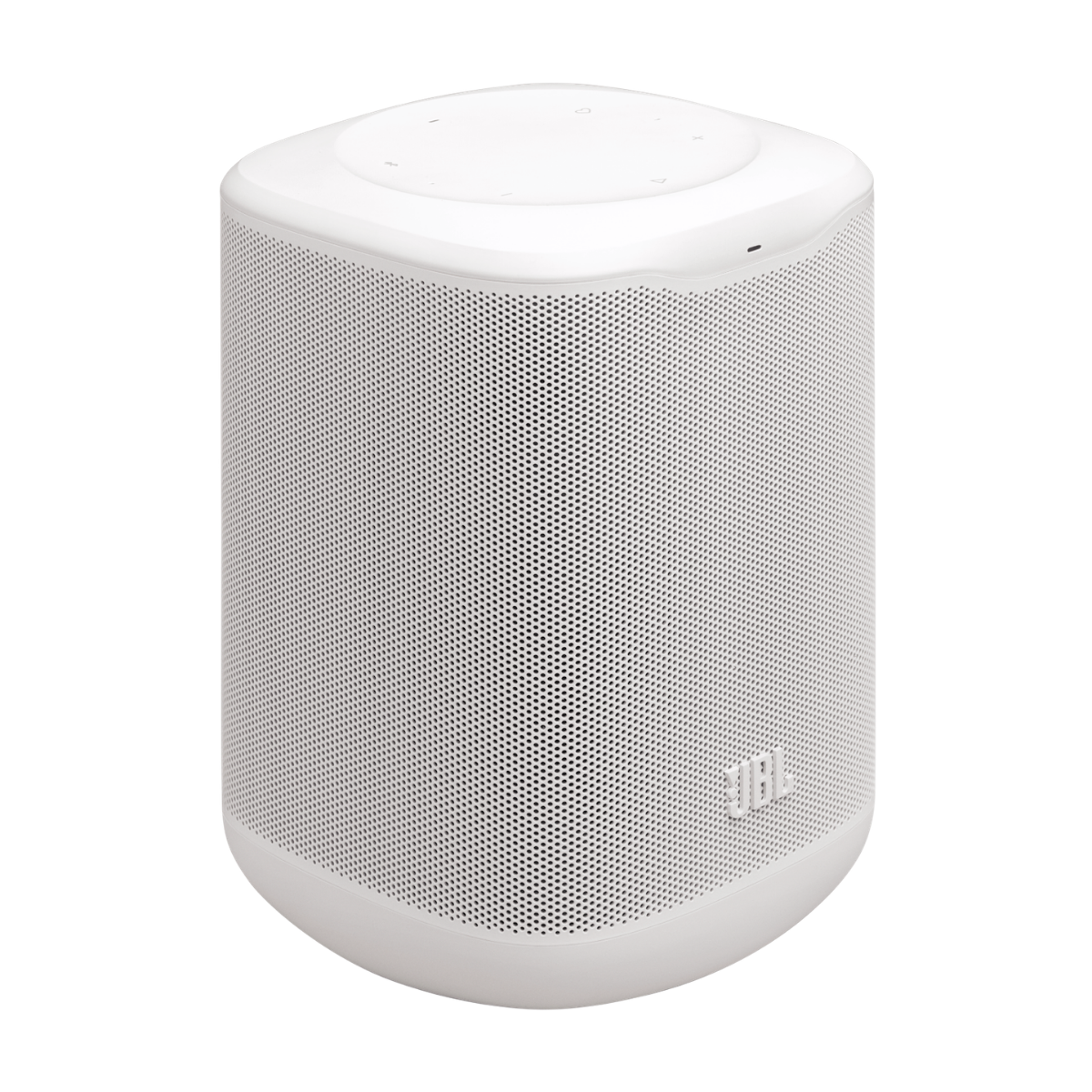
JBL Cove P1 next to a swimming pool

JBL Cove P1: The Portable Dolby Atmos Speaker

The Cove P1 isn't a bigger M1, it's the portable speaker of the family. It weighs a bit over seven pounds, has a built-in handle, ships with a charging dock, and carries an IP56 rating for dust and water resistance, enough to handle rain, dust, and pool splashes.

Inside is a 4,800 milliamp hour battery rated for up to 14 hours of playback, though battery life in day-to-day use runs closer to 10 hours depending on volume. That's still enough for a full day outside. Hold the power button on top for five seconds to shut the speaker down fully when you're not using it.

The P1 steps up the driver count to five: one 20 millimeter tweeter, three 30 millimeter tweeters, and a 4 inch woofer, putting out 120 watts total. Frequency response reaches down to 50 Hz. Unlike the M1, the P1 supports Dolby Atmos Music through its up-firing driver, and it's the only Cove speaker with Alexa built in.

The P1 works well as the speaker that moves with you, living on its charging dock inside, then heading to the patio, pool, or backyard when you need it. If you're still in Wi-Fi range, it stays part of the whole home system. Out of range, pair it over Bluetooth instead. It's rated to operate between 32 and 104 degrees Fahrenheit, so it's built for a normal outdoor hangout, not for sitting through a hard freeze or extreme heat.

Two P1 units can form a stereo pair, and like the M1, the P1 can serve as a wireless surround speaker with a compatible JBL soundbar. Because of its up-firing driver, using P1 units as surrounds is a step up over the M1 for Atmos-based home theater, since the driver can bounce height effects off the ceiling.
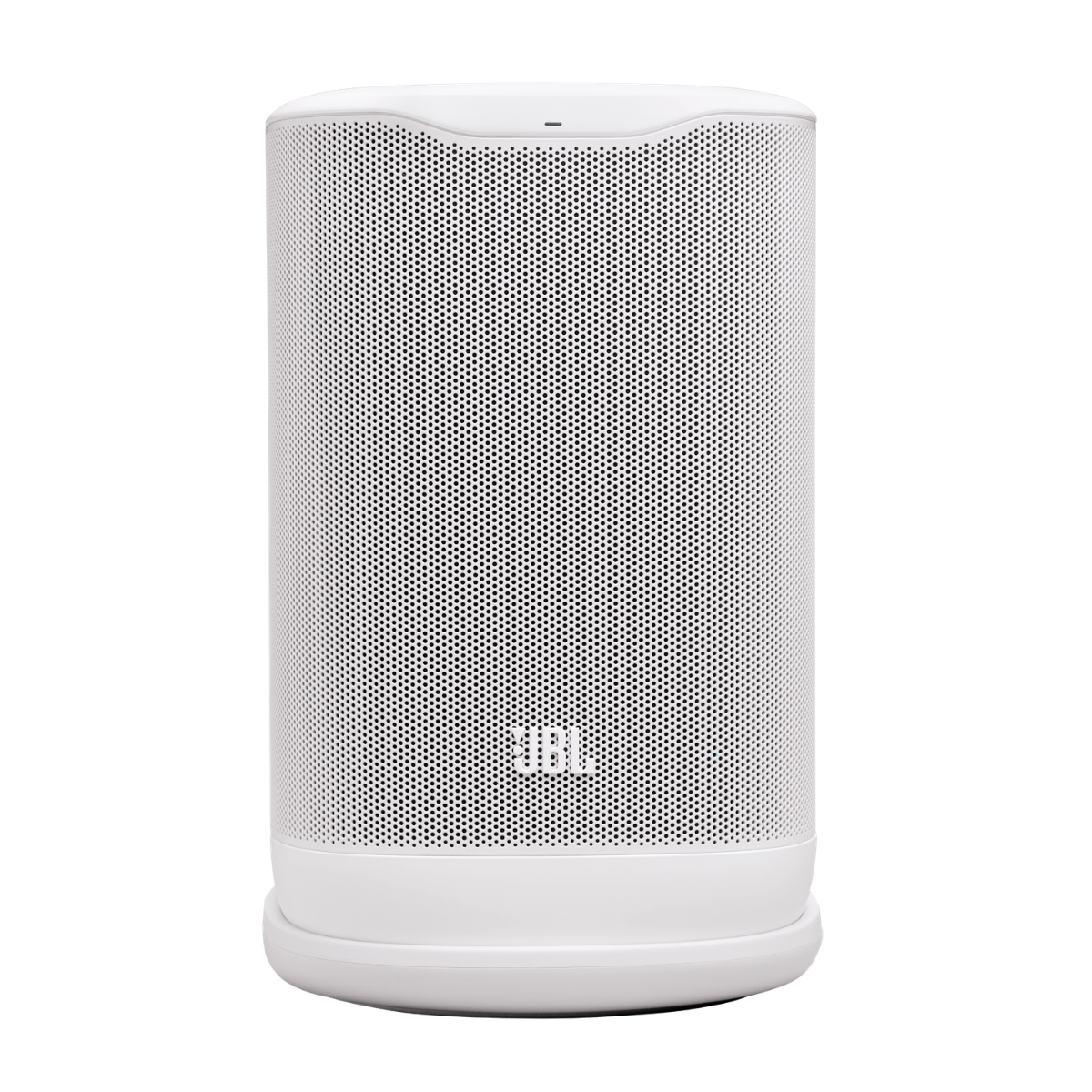
JBL Cove X1

JBL Cove X1: The Biggest Cove Speaker

The Cove X1 is the largest speaker in the lineup, designed for someone who wants more output and bass from a single unit rather than a multi-speaker setup. It weighs almost 11 pounds, sits wider and lower than the M1 or P1, and skips both a handle and a battery since portability isn't the goal. It's built to anchor a living room, den, or larger kitchen.

Inside are six drivers: four 30 millimeter tweeters and two larger woofers, rated at 200 watts total, the most powerful speaker in the Cove lineup by a wide margin. Frequency response reaches down to 45 Hz, the deepest bass extension of the three, and the X1 supports Dolby Atmos Music through its own up-firing driver.

Run one X1 on its own to fill a room, or pair two together for left and right stereo separation with more output and bass than the smaller models offer.

One caveat worth knowing before you buy: the X1 currently cannot be used as a surround speaker with a JBL soundbar. That's a notable gap, since a pair of X1 units behind the couch with a flagship soundbar like the Bar 1300XMK2 could make for a serious home theater setup. JBL may add that support down the road, but as of this lineup's September 2026 launch, it isn't there.
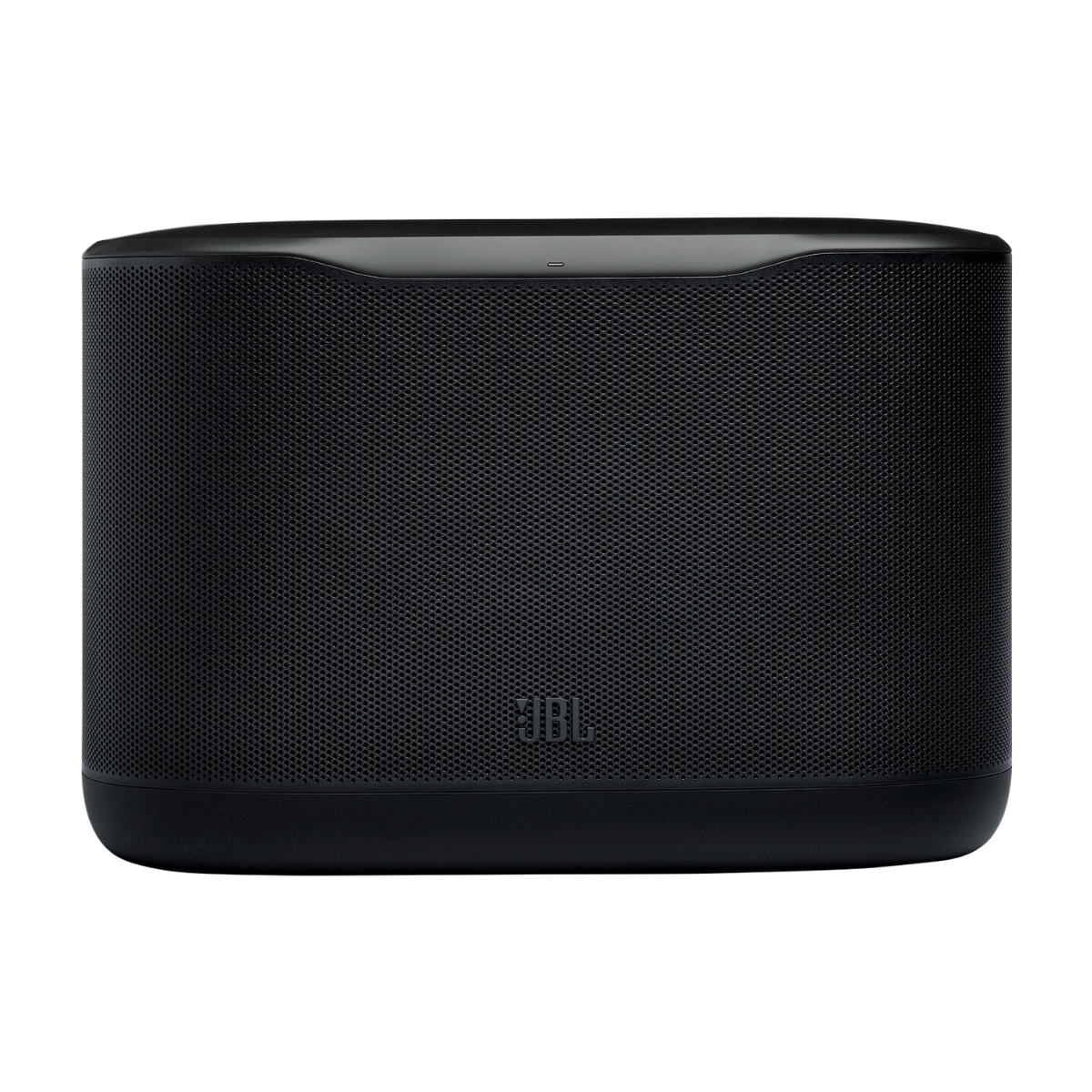
JBL Cove Specs Comparison

 Cove M1Cove P1Cove X1
Best forBedrooms, offices, smaller roomsIndoor/outdoor, patio, poolLiving rooms, larger spaces
Drivers3 x 20mm tweeters, 1 x 4" woofer1 x 20mm tweeter, 3 x 30mm tweeters, 1 x 4" woofer4 x 30mm tweeters, 2 larger woofers
Power110W120W200W
Frequency response55 Hz–20 kHz50 Hz–20 kHz45 Hz–20 kHz
Dolby Atmos MusicNoYesYes
Alexa built inNoYesNo
BatteryNoneUp to 14 hrs ratedNone
IP ratingNoneIP56None
Works as soundbar surroundsYesYesNot currently supported
WeightAbout 3.5 lbsAbout 7+ lbsAbout 11 lbs
MSRP$279.95$479.95$539.95

Can JBL Cove Speakers Be Used as Surrounds With a Soundbar?

Two of the three can. The Cove M1 and Cove P1 both work as wireless surround speakers when paired with a compatible JBL soundbar, configured as a distinct home theater setup through the JBL One app rather than synced music playback alone. The P1's up-firing driver makes it the stronger surround option of the two for Atmos-based content, since it can bounce height effects off the ceiling the way the M1 can't.

The Cove X1 does not currently support this. It can join a whole home group for synchronized music alongside a JBL soundbar, but it can't be assigned as a surround channel in a home theater setup.

JBL Cove P1 with soundbar in a living room

How Does JBL Cove Compare to Sonos, Bluesound, and Denon HEOS?

JBL isn't launching Cove into an empty category. Sonos is the name most people will compare it to first, but Bluesound's BluOS platform and Denon's refreshed HEOS-powered Home lineup are established options too.

Against Sonos, the closest match to the Cove M1 is the Era 100, priced around $249, making the M1's $279.95 MSRP about $30 more. Both are aimed at the same bookshelf and countertop use case, so the decision likely comes down to ecosystem and features rather than price.

The P1 is harder to line up directly, since Sonos doesn't have one speaker built to do everything the P1 does. At $479.95, it's essentially the same price as the Atmos-enabled Era 300, but the Era 300 stays plugged in while the P1 adds a battery, handle, charging dock, and IP56 rating. If portability matters more, the better comparison is the Move 2 at $499, which offers up to 24 hours of battery life against the P1's 14-hour rating. Sonos wins on battery life there, but the Move 2 doesn't support Dolby Atmos Music, and it can't be used as a surround speaker in a home theater setup the way the P1 can.

The X1 runs $539.95, about $60 more than the Era 300, and it's the Cove model built for someone who wants JBL's biggest standalone speaker rather than portability, with the most power and deepest bass extension in the lineup.

Beyond Sonos, Denon's refreshed Home lineup, the Home 200, Home 400, and Home 600, runs $399, $599, and $799 respectively, all pricier than their closest Cove counterparts. Bluesound's BluOS ecosystem leans further into the hi-fi side of the category and tends to appeal to a different kind of buyer than someone shopping for lifestyle Wi-Fi speakers.

Sonos still has the advantage of an established ecosystem that a lot of people already own. Denon ties into the larger HEOS platform. Bluesound appeals more to traditional hi-fi listeners. All three are solid options with different priorities, and JBL's advantage is a lineup where each speaker has a clearly different job while still working as one system, with a direct tie-in to JBL's existing Bar MK2 soundbars.

One place JBL still has room to grow: Sonos and Bluesound both let you bring passive speakers or an existing stereo system into their ecosystems, through products like the Sonos Amp and Port or the Bluesound Powernode and Node. JBL doesn't have an equivalent in the Cove lineup yet. A streaming amplifier or standalone streamer would be a natural next step if JBL wants to bring two-channel systems and architectural speakers into the same platform.

JBL Cove X1 in a living room

Which JBL Cove Speaker Is Right for You?

  • Cove M1: A bedroom, office, or kitchen speaker on a budget, or a pair of stereo speakers in one room.
  • Cove P1: A speaker that needs to move between indoors and outdoors, or the stronger surround option for an Atmos-based home theater.
  • Cove X1: A living room or den that needs one powerful speaker to fill the whole space, or a stereo pair with strong low-end output.

A full Cove system might put an M1 in the bedroom, an X1 in the living room, and a P1 on its charging dock ready for the patio, all controlled from the same app and able to hand music between rooms with a single button press.

JBL Cove FAQ

When does the JBL Cove lineup launch, and how much does it cost?

JBL Cove launches in September 2026. MSRP is $279.95 for the Cove M1, $479.95 for the Cove P1, and $539.95 for the Cove X1.

Can JBL Cove speakers be used as surrounds with a soundbar?

The Cove M1 and Cove P1 can both be used as wireless surround speakers with a compatible JBL soundbar. The Cove X1 does not currently support this.

How long does the JBL Cove P1 battery last?

JBL rates the P1 at up to 14 hours of playback. In day-to-day use, expect closer to 10 hours depending on volume.

Do JBL Cove speakers support Dolby Atmos Music?

The Cove P1 and Cove X1 both support Dolby Atmos Music through an up-firing driver. The Cove M1 does not support Dolby Atmos.

Do I need the JBL One app open to play music?

No. Once a Cove speaker is set up on your Wi-Fi network, you can stream to it directly through AirPlay, Google Cast, Spotify Connect, Tidal Connect, or Qobuz Connect without opening the app. The JBL One app is for setup, grouping speakers, building stereo pairs and home theater configurations, and customizing the Moment button.

How does JBL Cove compare to Sonos?

The Cove M1 costs about $30 more than the Sonos Era 100. The Cove P1 costs about the same as the Sonos Era 300 but adds a battery, handle, and IP56 rating that the Era 300 doesn't have. The Cove X1 costs about $60 more than the Era 300 and offers more power and deeper bass extension.


Ready to Hear the JBL Cove Lineup for Yourself?

Our team has spent hands-on time with the Cove M1, P1, and X1 ahead of launch, and we're happy to help you figure out which one fits your home. Contact our experts by chat, phone, or email, visit one of our showrooms nationwide, or try our free Home Theater Design Tool.

Audio Advice has been a trusted seller since 1978, and every order comes with Free Shipping, Lifetime Expert Support, and our Price Guarantee.