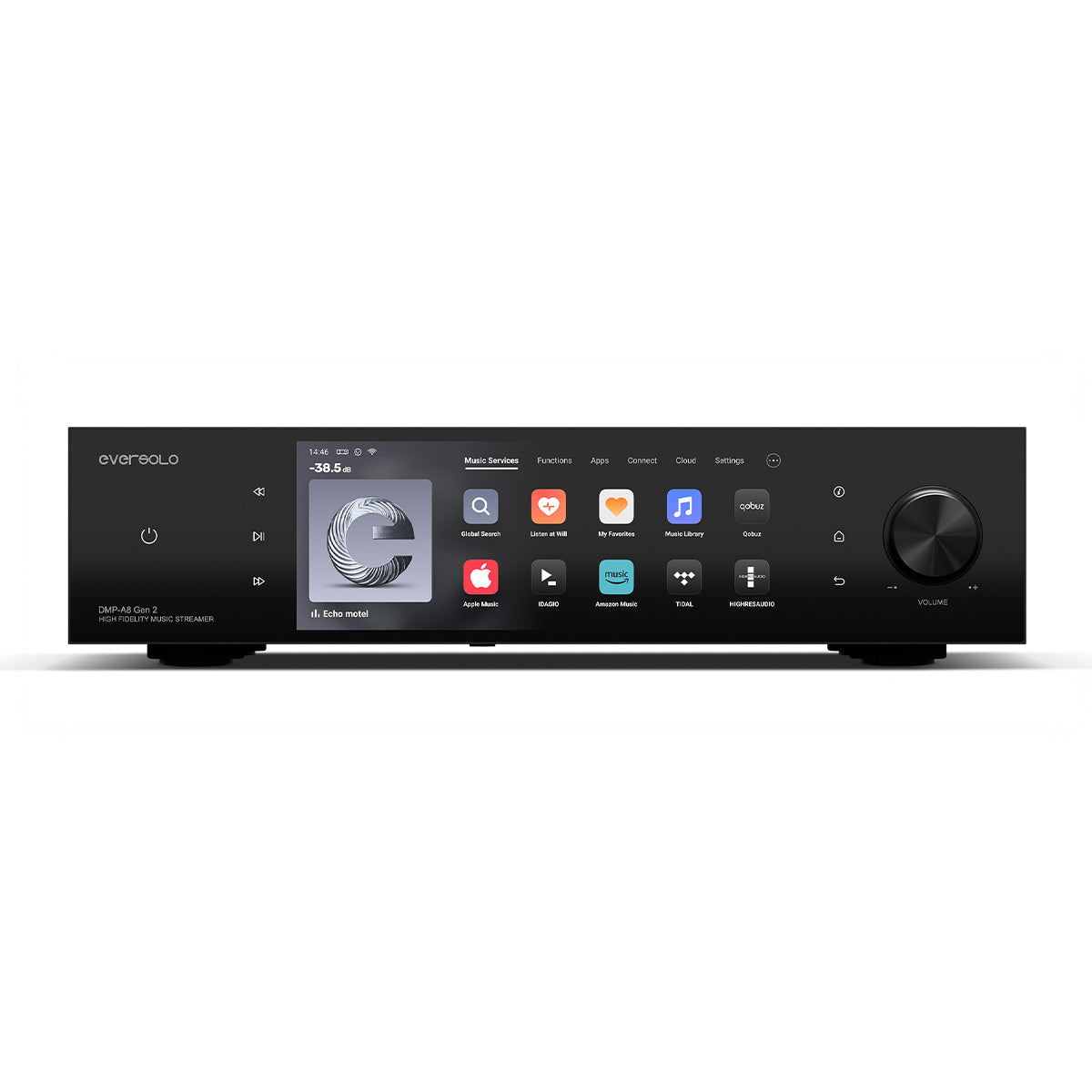
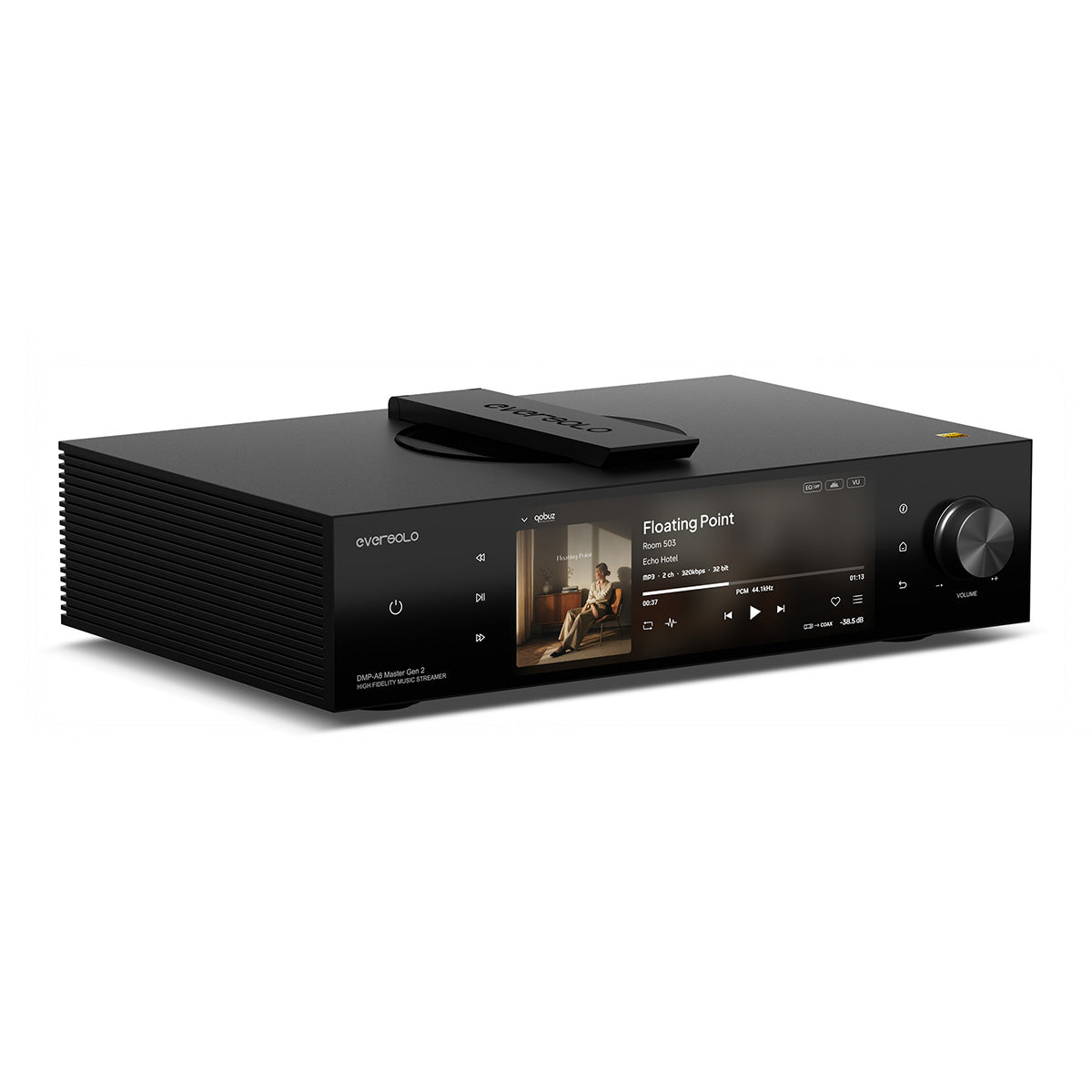
What Sets the Master Gen 2 Apart: The Clock
If you're deciding between the standard Gen 2 and the Master Gen 2 and don't care about CD playback, the clock is the biggest difference. Both units use quality clocking, but the Master Gen 2 steps up to an oven-controlled crystal oscillator (OCXO) with PLL correction.
Digital audio depends on precise timing to reconstruct the original signal. When that timing wavers, even slightly, it creates jitter, and jitter introduces errors between samples that blur the presentation, softening transients and dulling instrument definition. An OCXO holds the crystal oscillator at a constant temperature, since temperature changes cause the crystal to drift and drift causes jitter. By removing that variable, the Master Gen 2's OCXO keeps jitter under 50 femtoseconds.
The Master Gen 2 also adds a 10 megahertz external clock input with adaptive syncing. Eversolo's upcoming C10 Precision Master Clock is built to feed this input directly, and if you're running other Eversolo gear like the T10 streaming transport or Z10 DAC, all three units can lock to the same reference clock at once.
That kind of system-wide synchronization usually shows up on gear well above this price point. If you're running a simple setup without an external clock, you may never touch this input. But it gives you a path toward one later without needing to replace the unit.
Built-In CD Player (Master Gen 2 Only)
The Master Gen 2 is the first A8 model to include a built-in top-loading CD mechanism. For playing discs, it's convenient. For ripping a CD collection, it's a real bonus, since it removes the need for an external USB drive. The system rips losslessly to WAV or FLAC, handles metadata and album art automatically, detects duplicates, and saves to local storage or a network drive.
For playback, the built-in mechanism sounds good for what it is. It won't compete with a dedicated CD transport, but it's a capable, convenient disc player that earns its spot in the chassis. If you still have a disc collection, this removes a box and a cable from your rack.
Connectivity, Streaming, and Room Correction
Both units cover the same rear-panel connections. USB audio output supports DSD512 native and PCM up to 768 kilohertz at 32 bit. An I2S output offers eight selectable pin modes, and you also get AES/EBU, coaxial, and optical digital connections, plus HDMI ARC and eARC for TV audio. A dedicated subwoofer output with an adjustable crossover rounds things out, and Wake-on-LAN plus a 12-volt trigger let the unit power on automatically with the rest of your gear.
For streaming, both models run Eversolo's usual lineup of services natively and are Roon Ready. Room correction moves up to Eversolo's evotune PRO system on both units, which adds customizable target curves and stronger bass-range control over the original evotune. It pairs FIR filtering with a 20-band parametric EQ for manual adjustment and another 20 bands dedicated to automated room correction. You measure with a phone mic or a dedicated USB measurement mic, and evotune PRO builds the correction filter from there. System-wide fade in and fade out across local playback and streaming services is new for this generation too.