
At Audio Advice, we’ve always felt that the best audio gear is built on a simple foundation: get the basics right, keep the design honest, and let the sound do the talking. SVS has followed this playbook for decades, starting as a small group of enthusiasts in a garage in Ohio and growing into a global force that has changed the way we think about bass. For years, the SVS 3000 Series was the "sweet spot" in their lineup—the line where you got a taste of flagship power without needing a forklift to move the cabinet or a second mortgage to pay for it.
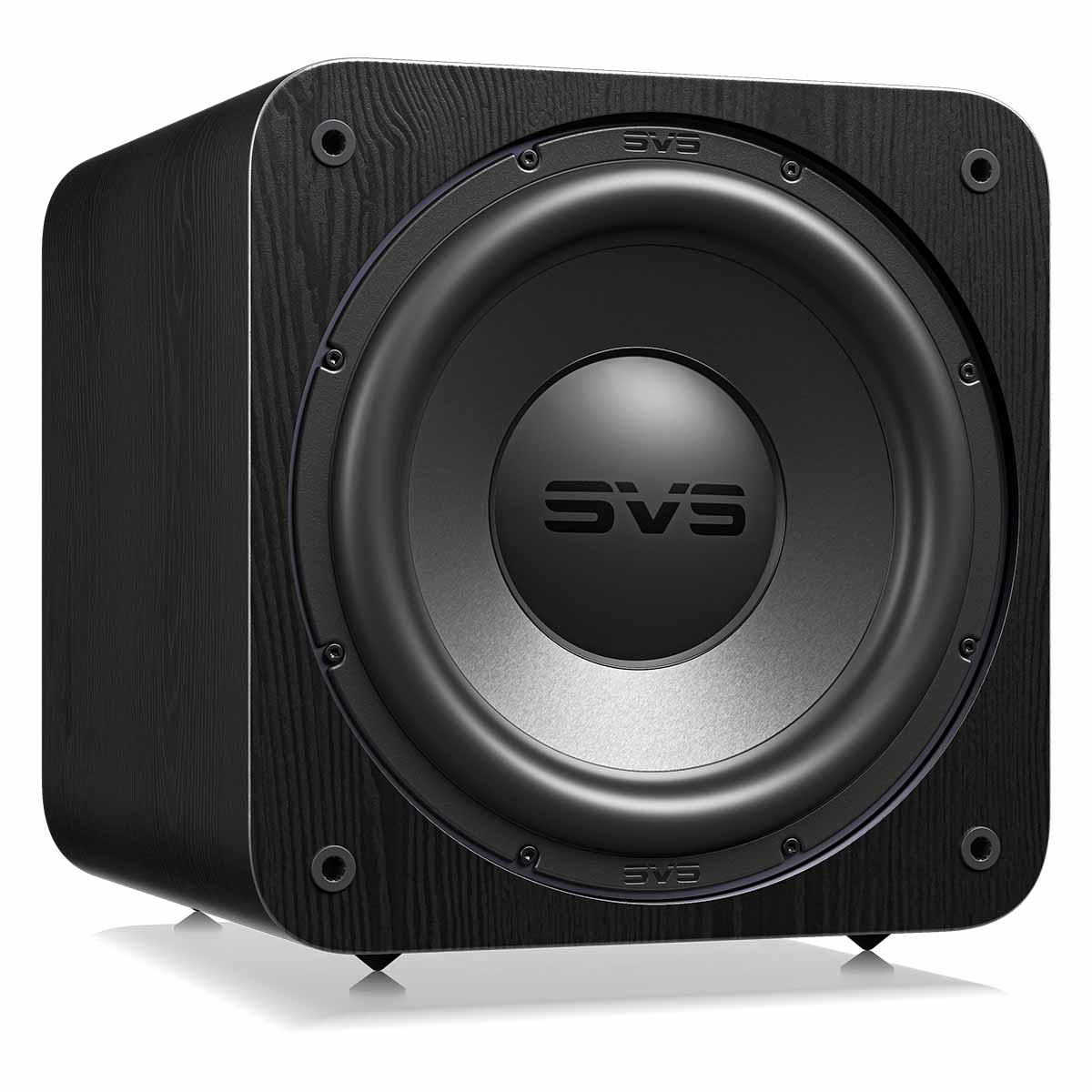
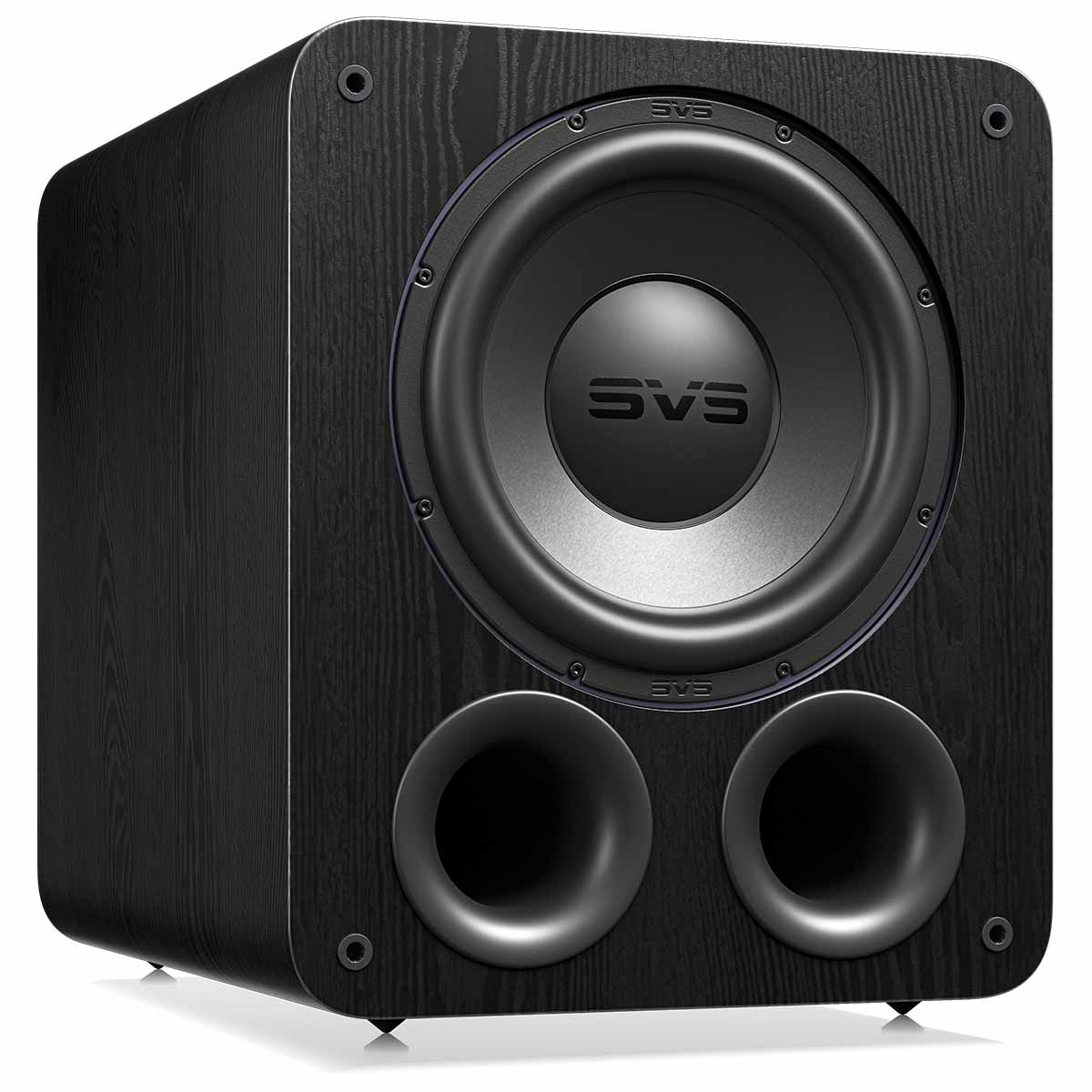
Today, we are looking at the next chapter: the brand-new SVS 3000 R|Evolution Series. This isn't just a minor refresh or a change in finish. SVS has taken the core engineering and high-speed processing from their massive 17-Ultra R|Evolution subs and "trickled it down" into a package that actually fits into a real-world living room. In this article, we’re going to break down the tech, talk about why SVS is calling this their next big step forward, and help you decide whether the sealed SB-3000 R|Evolution or the ported PB-3000 R|Evolution is the better match for your room.
To understand why this series matters, you first have to understand the SVS design philosophy. SVS doesn't just build "woofers"; they build complete low-frequency systems. The original 3000 Series was a game-changer because it introduced a 13-inch driver and a high-current MOSFET amplifier to a price point that was previously dominated by generic off-the-shelf parts and underpowered amplifiers.
With the R|Evolution update, SVS is focusing on composure. It’s one thing to make a subwoofer play loud—anybody can do that with enough wattage and a big box. But making a subwoofer play loud while maintaining the subtle texture of a double bass or the sharp, percussive crack of a cinematic explosion is where the real engineering happens. This new series is all about more headroom, more precision, and more authority. It’s about ensuring that the subwoofer never becomes the "limiting factor" in your system, regardless of whether you’re listening to a delicate jazz trio or the latest Hollywood blockbuster.
The heart of the 3000 R|Evolution is the all-new STA-1200D2 Sledge amplifier. It’s conservatively rated at 1,200 watts continuous (RMS) with a staggering 4,000+ watts of peak power. But the headline here isn't the wattage—it's the MOSFET output stage.
Most affordable subwoofers use standard Class D "switching" amplifiers. While they are incredibly efficient and run cool, they often lack the instantaneous current needed to stop a massive 13-inch driver on a dime. MOSFETs (Metal-Oxide-Semiconductor Field-Effect Transistors) act like high-speed electronic valves. They can unleash massive amounts of current the millisecond the signal calls for it, but they also have the "brakes" to pull that driver back to center immediately.
This translates to bass that doesn't "smear" or linger. When you hear a kick drum on these subs, it sounds like a kick drum—a fast, physical impact—rather than a soft, boomy thump. This high-current capability is also what allows the sub to maintain its composure at very high volumes. On lesser amps, the bass starts to sound "thick" or "woolly" as you turn it up because the amp is running out of juice to control the driver. With the 3000 R|Evolution, the bass stays as tight at 100dB as it does at 70dB.
If the amplifier is the muscle, the 295 MHz Analog Devices DSP is the brain. This is a massive leap in processing power for this category. SVS moved from a 50 MHz chip in the previous generation to this 295 MHz platform to handle more complex tasks in real-time.
The DSP is constantly monitoring the relationship between the amp and the driver. It uses 56-bit double-precision filtering to maintain a flat frequency response and manages thermal conditions to ensure the sub never runs too hot. But the most important job it has is managing the driver's excursion. As a sub tries to hit those subterranean 16Hz notes, the driver has to move further. Without a "smart" DSP, the driver can easily move out of its linear range, leading to distortion or even mechanical damage. This new processor acts like a high-speed guardrail, keeping the bass clean and predictable even when you’re pushing the system to its absolute limits.
To handle 4,000 watts of peak power, SVS couldn't just use an off-the-shelf woofer. They developed an entirely new 13-inch high-excursion driver with a redesigned motor structure.
The standout feature here is the flat-edge wound split-wind voice coil. Most voice coils use round wire, which leaves tiny gaps of air between the strands. By using a flat wire, SVS can pack more copper into the magnetic gap. This maximizes the magnetic force even when the driver is at its furthest point of travel. Usually, as a driver moves out, it loses "grip" and begins to wobble or distort; this design ensures it stays linear.
The driver also features a dual toroidal ferrite magnet motor and a rigid aluminum cone. Aluminum is a great choice here because it’s stiff enough to prevent the cone from flexing under the massive pressure inside the cabinet, but light enough to remain responsive to those fast musical transients. The result is a driver that is musical enough for your favorite jazz records but strong enough to pressurize a massive home theater.
One of the reasons SVS subs are so easy to recommend is the SVS Subwoofer Control App. It allows you to adjust volume, phase, and 6-band parametric EQ from your listening chair. No more crawling behind the sub with a flashlight or trying to read a tiny dial while squeezed into a corner.
However, we have to talk about the elephant in the room: SVS Auto Room EQ. SVS has been promising this feature via a firmware update for quite a while now. While we know they are taking their time to ensure the smartphone-based measurement system is robust and accurate across different phone models, it’s fair to say they’ve been "dragging their feet" a bit on the final rollout. In a world where we expect instant software updates, this wait has been a bit of a frustration for those of us who want the easiest possible setup.
The good news is that SVS has recently confirmed that the update is finally slated for a Q1 2026 release. This will allow you to use your phone's microphone to automatically map your room's acoustic peaks and nulls and apply corrective filters. It’s going to be a fantastic "set it and forget it" tool once it arrives.
In the meantime, don't let the lack of an "Auto" button hold you back. The manual** 6-band parametric EQ** in the app is still the most powerful tool in your arsenal. You can use a simple SPL meter app or even just your ears to identify "boomy" spots in your room and cut them out with surgical precision. If you buy from Audio Advice, our team is always here to help walk you through that manual calibration process so you can get incredible results while we wait for the software to catch up to the hardware.
The SB-3000 R|Evolution is the sealed model. If you’ve followed us for a while, you know we have a soft spot for sealed subs in music-first systems. In a sealed cabinet, the air inside acts like a natural "spring" that pushes back against the driver. This helps the driver return to zero faster than a ported design.
The SB-3000 is rated at 17Hz to 230Hz (+/- 3dB). It’s remarkably compact—roughly a 15-inch cube—but it plays with a sense of authority that defies its size. This is the model for the listener who wants the bass to "disappear" into the speakers. It’s fast, textured, and incredibly accurate. If you listen to a lot of music with complex bass lines—like upright bass or rapid-fire kick drums—the SB-3000 is the tool for the job.
If the SB is the surgeon, the PB-3000 R|Evolution is the sledgehammer. It’s a ported design, which means the cabinet is significantly larger to accommodate the internal air volume and the dual 3.5-inch ports.
The PB-3000 is for the home theater enthusiast who wants to feel the air pressure when a building collapses on screen. Ported subs use the energy from the back of the driver to move more air, which creates a massive increase in output in the "bass-head" region (between 18Hz and 35Hz). It digs slightly deeper, down to 16Hz, but the real difference is the sheer "slam" it provides. If you have an open-concept room where the bass energy escapes into a kitchen or hallway, the PB-3000 is the tool you need to pressurize that space. It even includes foam port plugs, allowing you to "tune" the sub—running it with both ports open for maximum output, or one port plugged for deeper, more controlled extension.
We often get asked if the jump to the 5000 R|Evolution Series is worth the extra cost. The 5000 Series is designed for "no-compromise" theaters. It features a larger cabinet, a 15-inch driver, and even more headroom.
However, for most real-world homes, the 3000 R|Evolution is the true "Goldilocks" choice. It has the same 295 MHz DSP and high-current MOSFET tech as the flagships, but in a size that fits on a standard equipment wall or next to a media console. If you have a massive room (over 4,000 cubic feet), we usually recommend going with dual 3000s over a single 5000. Two subs placed in different parts of the room will give you much smoother bass across every seat, eliminating those annoying "dead zones" where the bass simply disappears due to room acoustics.
SVS doesn't cut corners on the enclosure. Both models use a thick, rigid MDF cabinet with extensive internal bracing. When you're dealing with 4,000 watts of peak power, the last thing you want is the cabinet vibrating along with the music. That vibration is essentially "stolen energy" that colors the sound. By making the cabinet acoustically inert, SVS ensures that 100% of the amplifier's energy is going into moving the driver, not the box.
The PB-3000 also features a dual-port design with high-flow ports that are rounded at both ends. This is crucial for preventing "port noise" or "chuffing"—that huffing sound you hear from cheap subs when air moves too quickly through a small opening. On the PB-3000, even during the most intense action scenes, the air moves smoothly and silently.
Buying the sub is only half the battle; the other half is integration. Here are a few "pro-tips" from our setup team to help you get the most out of your 3000 R|Evolution:
The SVS 3000 R|Evolution Series represents exactly what we love about this hobby: taking complex, high-end technology and making it accessible and reliable for everyone. SVS didn't try to reinvent what made the 3000 line popular; they just tightened up the parts that matter most—more control when things get loud, more consistency down low, and more headroom for those "wow" moments.
While we're still patiently waiting for SVS to cross the finish line with their Auto Room EQ software, the hardware itself is undeniably world-class. It’s a modern, high-current platform that will anchor your system for a decade. If you want a sub that is clean, quick, and easy to integrate, the SB-3000 R|Evolution is the safe bet. If you want maximum weight and scale for movie night, the PB-3000 R|Evolution is the one that’s going to make you grin. Either way, you’re getting a piece of gear that is built by people who love this stuff as much as we do.
And remember, if you need help deciding which one is right for your specific room or if you're planning a dual-sub layout, our team at Audio Advice is always here to help you get it right. We've set up thousands of these systems, and we'd love to help you get the best bass of your life.
If you have further questions, contact our experts via chat, phone, or email. Or simply visit one of our world-class showrooms to experience speakers, projectors, TVs, and everything in between for yourself before you make a purchase!
If you’re planning your home theater or media room, check out our Home Theater Design page, where we have everything Home Theater related, including our FREE Home Theater Design Tool.
When you buy from Audio Advice, you’re buying from a trusted seller since 1978. We offer Free Shipping, Lifetime Expert Support, and our Price Guarantee. We look forward to serving you!
You'll be among the first to know about product launches, exclusive online deals, and the hottest audio trends.