













Soundbar or Separate Home Theater System: Which Is Right for You?
If you've ever sat in front of your TV and thought "this sounds terrible," you're not alone. The dirty little secret of the flat panel revolution is that as TVs got thinner and more beautiful, their sound got worse. Physics is cruel that way, because there's just no room in a sleek two-inch panel for speakers that can do justice to your favorite movies and music.
Today's flat panel TVs are engineering marvels, but their speakers are almost an afterthought. They're small, they fire sideways or downward, and they simply can't move enough air to give you any real bass, any real dynamics, or any real sense of the space a movie or piece of music was recorded in. Dialogue can be hard to follow. Action sequences sound thin. Music sounds flat. If you've been putting up with TV speakers, you already know this.
The good news is that even a modest upgrade makes an enormous difference, and there are more good options today than ever before. Let's walk through them so you can figure out which path makes the most sense for you.

What Is a Soundbar, Really?
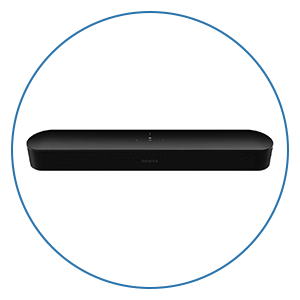
A soundbar is essentially a long, slim speaker cabinet designed to sit in front of or below your TV. It replaces your TV's built-in speakers with something dramatically better: more drivers, more power, and in most cases a separate wireless subwoofer to handle the bass. Many systems also include wireless rear speakers, so you can get a genuine surround sound experience without running a single wire through your room.
Most soundbars today support Dolby Atmos, which means they can process the latest surround sound formats. Some even have upward-firing drivers built in to bounce height effects off the ceiling. Some of the better models also include room calibration, where the soundbar plays test tones, a microphone measures how your room responds, and the system adjusts itself accordingly. It's gotten remarkably easy, and it makes a real difference in how they sound.
The jump from TV speakers to a good soundbar is not subtle. You get real bass, cleaner dialogue, and a much wider sense of sound. For a lot of people, it's the perfect solution.
The Case for a Soundbar
Let's be honest about where soundbars shine, because there are real situations where they are absolutely the right call.
Simplicity is a legitimate priority. Not everyone wants to think about speaker placement or component matching. If you want to press one button and have great sound without any fuss, a soundbar is designed for exactly that. Setup is usually 20 minutes, tops, and with wireless rears and a wireless sub, there's almost no wiring to deal with at all.
Some rooms just aren't built for a full system. If you're in an apartment, a small living space, or a bedroom, a soundbar may be the most practical option. Soundbars were practically invented for these situations.
You don't want visible equipment. Some people, and some significant others, simply do not want a rack of components and speaker stands in their living room. That's a completely valid preference. A soundbar can essentially disappear under your TV.
Budget is limited. A very good soundbar can be had for $500-$1,000. To build a comparable-sounding separate system, you're going to spend more. If you're not ready for that investment, a quality soundbar is a great place to start.
If any of these describe you, don't feel like you're settling. A well-chosen soundbar is a real upgrade and there's no shame in it being the right answer for your life.

What a Separate Home Theater System Gives You
A separate home theater system means a home theater receiver and a carefully chosen set of speakers working together. Specifically, you're typically looking at:
- Left and right front speakers: the foundation of your sound
- A center channel speaker: dedicated entirely to dialogue and on-screen action
- A pair of surround speakers: placed to the sides or behind you
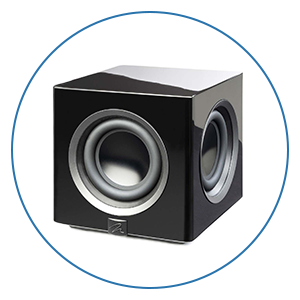
- A subwoofer: for deep, room-filling bass
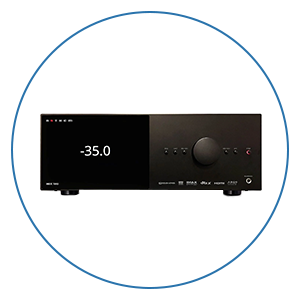
The receiver is the brain of the whole system. It processes the audio from all your sources, handles your HDMI inputs, powers your speakers, and in most good modern receivers, runs sophisticated room correction software to tune everything to your specific space.
This is what movies were mixed for. When a director and sound mixer work on a film's audio, they are building it for a system with speakers in front of you, to the sides, behind you, and overhead. A separate system lets you experience that work the way it was intended.
The difference in immersion is not subtle. We have watched people sit down in front of a well-set-up home theater system for the first time and just go quiet. When the sound is coming at you from all directions, real directions and not simulated ones, something clicks. It stops feeling like watching a movie and starts feeling like being in one.
Dialogue clarity is one of the biggest differences most people notice. A soundbar has to pack all of its drivers into a slim, discreet cabinet, which means those drivers are small. A dedicated center channel speaker has a real woofer and tweeter designed specifically to reproduce the human voice with complete clarity. Even on the best soundbars, dialogue simply doesn't have the presence, the naturalness, and the intelligibility you get from a good center channel. If you've ever turned on subtitles because you couldn't follow what people were saying, a proper center channel speaker will likely solve that completely.
Music is a completely different experience. With a quality receiver and a good pair of stereo speakers, music comes alive in a way that's genuinely hard to describe until you've heard it. You can close your eyes and point to where each musician is sitting. The space between the notes becomes something you can feel. If music matters to you at all, this is worth every penny.
You can grow into it. One of the great things about a receiver-based system is that it's modular. You can start with a receiver, front speakers, and a center channel, then add a subwoofer, then surrounds, and eventually ceiling speakers for a full Dolby Atmos experience. You build it over time as your budget and enthusiasm allow. You don't have to do it all at once.
Not Ready for a Full System, But Want More Than a Soundbar?
Here's an option most people never consider, and it's a shame because for a certain type of listener it's really the sweet spot.
If what you just read about a separate home theater system appeals to you, but the full surround setup feels like more than you need right now, or if music is your first love and movies are secondary, there's a middle path worth knowing about.
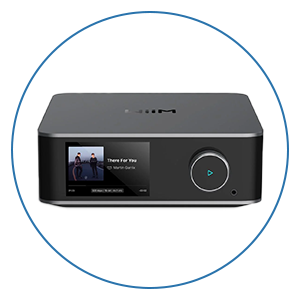
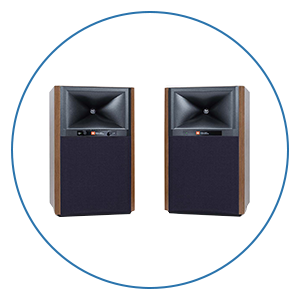
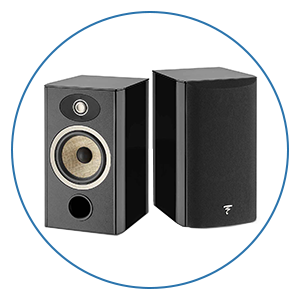
Today there are some outstanding powered speakers, meaning the amplifier is built right into the speaker cabinet, that can connect directly to your TV through the same HDMI connection a soundbar would use. Your TV sends audio out through this connection, the speakers receive it, and you get stunning stereo sound plus deep bass from a matched subwoofer. No receiver required. Very few boxes. And sonically, you're in a completely different league from any soundbar.
Brands like KEF, Klipsch, and Focal make powered speaker systems like this that are genuinely remarkable. The music performance from a great pair of powered speakers with a quality subwoofer can match, and in some cases surpass, what you'd get from a separate receiver and speakers. The best ones are that good. For TV watching, you'll have outstanding sound and excellent dialogue clarity from real speakers. What you give up is full surround sound. There are no rear speakers, no overhead Atmos speakers. If movie immersion is your primary goal, the full home theater system is still your answer. But if you love music first and want your TV to sound fantastic in a clean, minimal setup, this approach is absolutely worth serious consideration.
It's a particularly great fit for a listening room that doubles as a TV room, or anyone who wants high-end audio performance without building a home theater.

"I Already Have a Soundbar. Should I Upgrade?"
This is one of the questions we hear most often at Audio Advice, and we love it, because it means you already know what better sound can do for you.
If you've gone from TV speakers to a soundbar, you've already heard the difference a real audio upgrade makes. The jump from a good soundbar to a well-set-up home theater system, or even to a great pair of powered speakers, is at least as dramatic as that first upgrade, and in most cases it's bigger.
It's worth noting that at the very high end, some premium soundbars do a surprisingly good job with music. If music quality matters to you and you're committed to staying with a soundbar, spending more gets you meaningfully better results. But they still can't give you true stereo separation, the sense of musicians spread out in their own space in front of you, because that requires two speakers physically placed apart in a room. No amount of processing fully substitutes for that.
The honest answer is: if you have a room where you can place speakers, and you care about the experience of watching movies and listening to music, you will not regret making the move. The soundbar was a great first step. But once you hear what a proper set of speakers can do, it's very hard to go back.
That said, the timing has to be right. If your room situation is limiting, your budget isn't there yet, or you're still getting a lot of enjoyment from your current soundbar, there's no urgency. It'll still be an amazing upgrade when you're ready.
Practical Considerations Before You Decide
Room size matters.
Separate home theater systems shine in rooms that give you space to place speakers properly. For medium to large rooms, anything over 200-250 square feet, a separate system will almost always sound better. Smaller rooms may be well served by a soundbar. As for powered stereo speakers, it really depends on the model. Some are quite compact and perfect for a smaller space, while others are substantial speakers that can fill a large room beautifully. That's part of what makes them such a flexible option.
Budget.
You can put together a very solid entry-level home theater system, receiver, front speakers, center channel, and a subwoofer, for under $2,000. That's more than a mid-range soundbar, but the performance difference justifies it. As your budget grows, so does the experience.
Setup matters.
Getting the most out of a separate system means getting the speaker placement right and running the room correction properly. It's not complicated, but it does make a meaningful difference, and it's something we take very seriously at Audio Advice.
How Audio Advice Can Help
Choosing between these options isn't always straightforward, and we've spent over 40 years helping people figure out exactly what's right for their room, their budget, and how they listen. Whether you're deciding between a soundbar and a powered speaker system, or you're ready to build a full home theater and want to make sure you get it right, our team is here for all of it.
What sets us apart is what happens after you buy. Our Tech Team provides real hands-on support to help you get the absolute best sound out of your system. That means FaceTime calls to walk you through speaker placement and settings, and for more complex setups, our team can actually dial into your computer remotely to help you configure room correction software and dial everything in perfectly. We want your system to sound as good as it possibly can, not just arrive at your door in a box.
If you have questions about any of this, what might work best in your room, where to start with your budget, or what a particular system actually sounds like, contact our experts via chat, phone, or email. Or simply visit one of our world-class showrooms. We love talking about this stuff, and we're always happy to help you find your way to great sound.


