
Sony BRAVIA 2026 Lineup Review: True RGB Is Finally Here

Sony BRAVIA 2026 True RGB Overview video cover
Play

There's been a lot of buzz around Sony's True RGB technology, and after years of anticipation, it's finally here in the 2026 BRAVIA lineup. We've had these units in our own test labs at Audio Advice, and we can tell you the hype is earned. In this article we're going to break down exactly what True RGB is, why it matters, how it stacks up against the competition including OLED, and which model is the right fit for your room.


What Is Sony True RGB?

True RGB is Sony's name for their new mini LED backlight technology that uses three independently controlled red, green, and blue LED diodes per zone, rather than the blue-based backlight found in conventional mini LED TVs. The goal is to generate color directly at the light source rather than filtering it from white or blue light, which results in purer colors, higher brightness, better viewing angles, and more natural-looking blooming artifacts compared to any conventional mini LED TV on the market.

Sony has been developing this technology for years. The 2026 BRAVIA 7 II, BRAVIA 9 II, and BRAVIA 9 II PRO are the first consumer TVs to feature it.


How Do Conventional LED LCD TVs Work?

Before getting into why True RGB is different, it helps to understand how most modern LED LCD TVs work today, including excellent ones like the previous BRAVIA 9.

Most LED LCD TVs use a backlight made up of blue LEDs. That light travels through a quantum dot film, which converts some of that blue energy into red and green light, giving you a broader color foundation. From there it hits the LCD panel, where color filters on each individual pixel block out everything except the specific color that pixel needs at that moment. The result is a full-color image that can look fantastic, especially with the best mini LED implementations.

The fundamental limitation is this: you're starting with white or blue light and filtering it down to the color you want. Filtering is a lossy process. You're blocking energy rather than directing it. If you want pure red on screen, the backlight lights the entire zone and the color filter blocks out the green and blue at the pixel level. That costs more power, limits how pure and saturated your colors can get, and creates a white or bluish halo around bright objects in dark scenes. This is what's known as blooming, and we'll come back to it in more detail shortly.

Sony's RGB History: The Qualia 005

Sony has actually been working on this concept for over two decades. In 2004, they built the Qualia 005, the first LCD TV ever built with red, green, and blue LEDs as independent light sources. It was an expensive prototype that essentially no one bought, but it proved the concept: put red, green, and blue LEDs in the backlight and you can generate color at the source rather than filtering it from white light. You want red, you turn on the red LEDs. The result is purer color, higher brightness with less power, and dramatically better color volume at the kind of high brightness levels where quantum dot and color filter systems start to struggle.

So why did it take over 20 years to bring this to a consumer TV? The hardware only gets you started. Making it actually work is something else entirely.


Why Is True RGB So Hard to Get Right?

This is the question that explains why Sony is the first manufacturer to deliver on the full promise of RGB backlighting, and why others have struggled.

A modern TV processor is already doing an almost incomprehensible amount of work before a single frame hits your screen. It's generating pixel data that doesn't exist to upscale HD content to 4K. It's managing hundreds of local dimming zones while making sure those zones don't crush shadow detail or bleed into neighboring areas. Motion processing, HDR tone mapping, noise reduction, color gradient smoothing: all of that's happening continuously, in fractions of a second, before the processor even starts thinking about the backlight.

Now add True RGB to that job. With a colored backlight, that same processor has to independently control three separate LEDs per zone, each one with its own color characteristics, its own efficiency curve, and its own thermal behavior. It has to coordinate what the backlight is doing at the zone level with what the color filters are doing at the pixel level, simultaneously. And it has to do all of this without color crosstalk, where a red backlight zone bleeds into neighboring areas and tints things that should look neutral or white. All of that while keeping the picture accurate to what the people who made the content intended it to look like.

This is exactly why other manufacturers who've brought what they're calling RGB mini LED or micro-RGB to market have had such a hard time delivering on the promise.


What Makes Sony's True RGB Different from Competitors?

Square Dimming Zones

Part of Sony's advantage is in the hardware design itself. Their dimming zones are square rather than rectangular, which matters more than it sounds. A rectangular zone can end up covering two very different areas of the image at once, like a green military uniform sitting next to skin tones, forcing the backlight to make a compromise. Square zones give the processor more precise control over exactly where the color is going.

22-Bit Processing

Sony's XR Processor handles each LED channel at 22-bit precision. No competitor has matched that. It's what allows the fine-grained coordination between the backlight and the color filters to actually work at the level True RGB requires.

The Competitor Comparison

Here's the part that really got our attention when we saw the demonstration. Sony bought and physically tore apart competitors' RGB TVs to show the difference side by side. Several of those competing models do have real RGB LEDs in their backlights. They've got the hardware. But when the content gets complex, when you've got multiple colors on screen at once or a high contrast scene that requires managing all three channels across dozens of zones at the same time, those TVs give up. The backlight goes white. It falls back to behaving like a conventional mini LED TV.

You're buying an RGB TV, and in the moments that matter most, it stops being an RGB TV.

You can actually see this with the front panel removed on both the 7 II and the 9 II, watching the actual backlight while content plays. Sony's True RGB stays in color mode through complex scenes, every time. It doesn't fall back to white. That's what makes it True RGB: not just the hardware, but a control system sophisticated enough to actually use that hardware on any content.

The Sony Advantage: Lens to Living Room

The reason Sony can pull this off comes down to something no other TV company in the world can claim.

Sony doesn't just make consumer televisions. They make the Venice 2, one of the most respected cinema cameras in Hollywood, used on major films and series right now. They make the BVM reference monitors that colorists and directors sit in front of when they're making final decisions about what an image should look like before it's released to the public. Those BVM monitors run around $30,000 apiece and are the standard that every professional display in Hollywood is measured against.

When Sony's engineers built the control algorithms for True RGB, they pulled from the same control philosophy behind those professional mastering monitors. The precision that allows a $30,000 pro display to hold color accuracy under extreme conditions is part of what the BRAVIA 9 II is doing in your living room. No other TV company can say that, because no other TV company owns the full chain from content capture to content display.

Sony calls this lens to living room. What it means for you at home is that the gap between what a filmmaker approved in a grading suite and what you're actually seeing on your TV is smaller than it's ever been on an LED LCD display.


How True RGB Improves Your Viewing Experience

Blooming

One of the most visible improvements is in how blooming behaves. On a conventional mini LED TV, a bright red light source against a dark background produces a white or bluish halo around it. Your brain knows it's wrong because red light sources in the real world scatter red light, not white. On the True RGB models, the bloom picks up the color of the source. A red light halos in red. It's subtle, but it looks right in a way the white halo never does. You notice it the first time you see it in person and it's hard to unsee.

Brightness

Sony's True RGB TVs are pushing toward 4,000 nits peak brightness. When Sony tested competing RGB mini LED models on an HDR clip mastered at 4,000 nits, those competitors landed somewhere between 700 and 2,200 nits. Sony's True RGB held close to the full 4,000 nit target. That's not just a better number on a spec sheet. That's the difference between seeing what the cinematographer intended and seeing a compressed version of it.

And because the color is coming from the light source rather than being filtered down from white, you're hitting that brightness more efficiently. Higher peak output, lower power draw. It's not a tradeoff.

Viewing Angles

VA panel LCD TVs, which most high-end LED displays use for their contrast performance, have always had a weakness off-axis. The image looks great from directly in front, but color and contrast shift noticeably when you're sitting to the side. Sony has worked around this for years with X-Wide Angle technology, but there's a ceiling on how much you can compensate when the light source itself is white.

With RGB backlighting, the color is built into the light itself, so it holds up much better from the side. The BRAVIA 7 II and 9 II both pair X-Wide Angle Pro with the True RGB backlight, and the result is a consistent image across the whole room, not just for the person in the center seat. We tested this ourselves in our Experience Centers and off-axis performance is usually where LED LCD gives something back. Not here.


2026 Sony BRAVIA Lineup: Which Model Is Right for You?

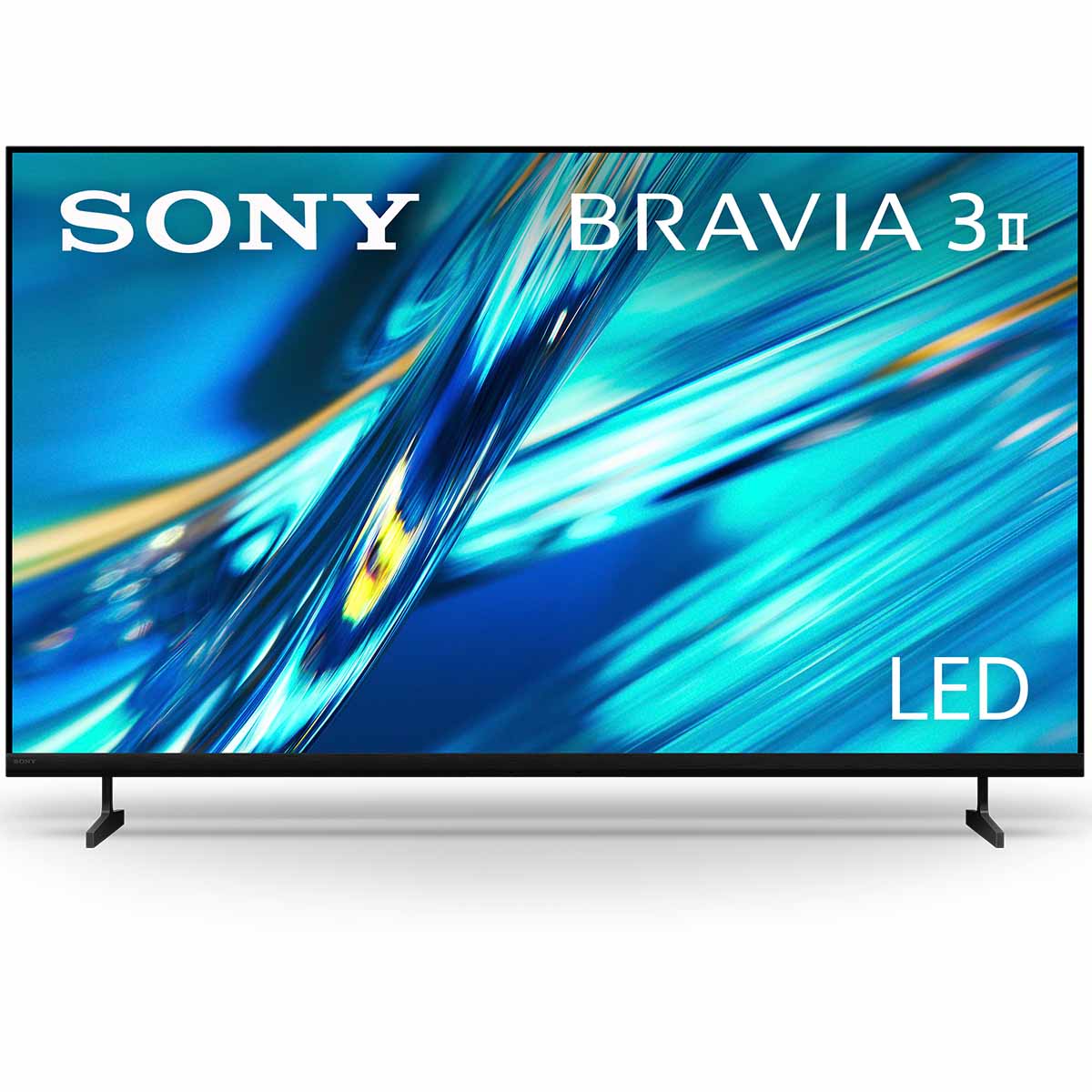
Sony BRAVIA 3 II TV

Sony BRAVIA 3 II

The BRAVIA 3 II is Sony's entry-level option and a solid everyday TV. It features the XR Processor, 120Hz, Dolby Vision and Atmos, Google TV with Gemini, and four HDMI 2.1 ports in sizes from 43 to 100 inches. It does not include True RGB backlighting, but it's a capable and well-priced option for anyone who wants Sony's processing and smart TV platform without the premium picture technology.
Sony BRAVIA 7 II Television

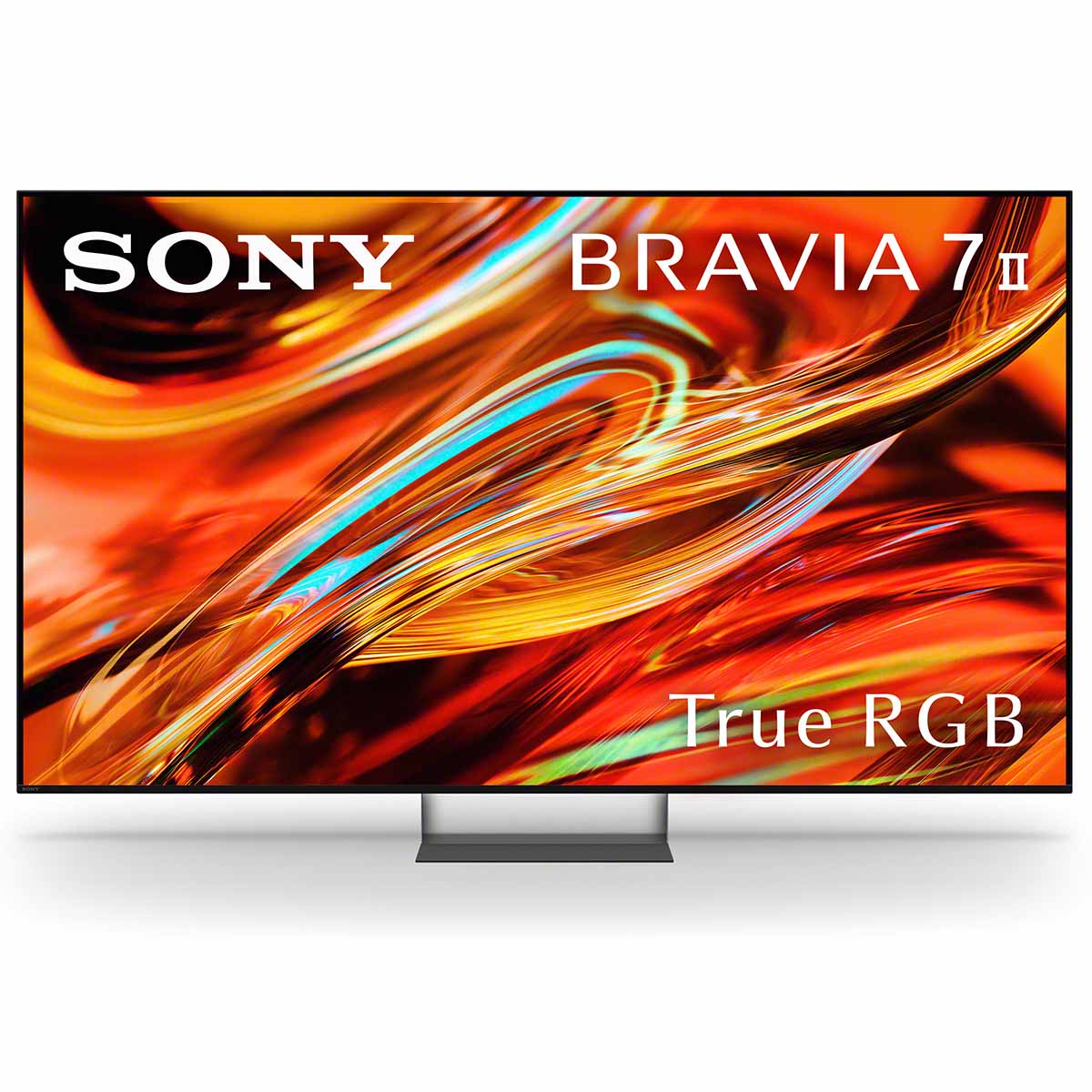
Sony BRAVIA 7 II

The BRAVIA 7 II is the entry point into True RGB, which makes this a significant release. True RGB technology is no longer exclusive to a flagship-only price point.

Available sizes: 50, 55, 65, 75, 85, and 98 inches

Key features:

  • True RGB backlight
  • XR Processor with AI scene recognition
  • XR Motion Clarity for sports and fast action
  • XR Contrast Booster for deeper blacks and stronger highlights
  • XR Clear Image AI upscaling
  • Acoustic Multi-Audio Plus
  • Dolby Vision and Dolby Atmos
  • IMAX Enhanced and DTS:X
  • Studio Calibrated picture modes
  • Full HDMI 2.1 with 4K at 120Hz, VRR, and ALLM
  • X-Wide Angle Pro
  • Transparent center stand with optional Mirage Stand upgrade
  • BRAVIA Gallery art display mode
  • Google TV with Gemini, Apple AirPlay 2, Google Cast
Who it's for: Anyone who wants True RGB picture performance at a more accessible price point. This is a lot of TV for the money.

Sony BRAVIA 9 II Television

Sony BRAVIA 9 II

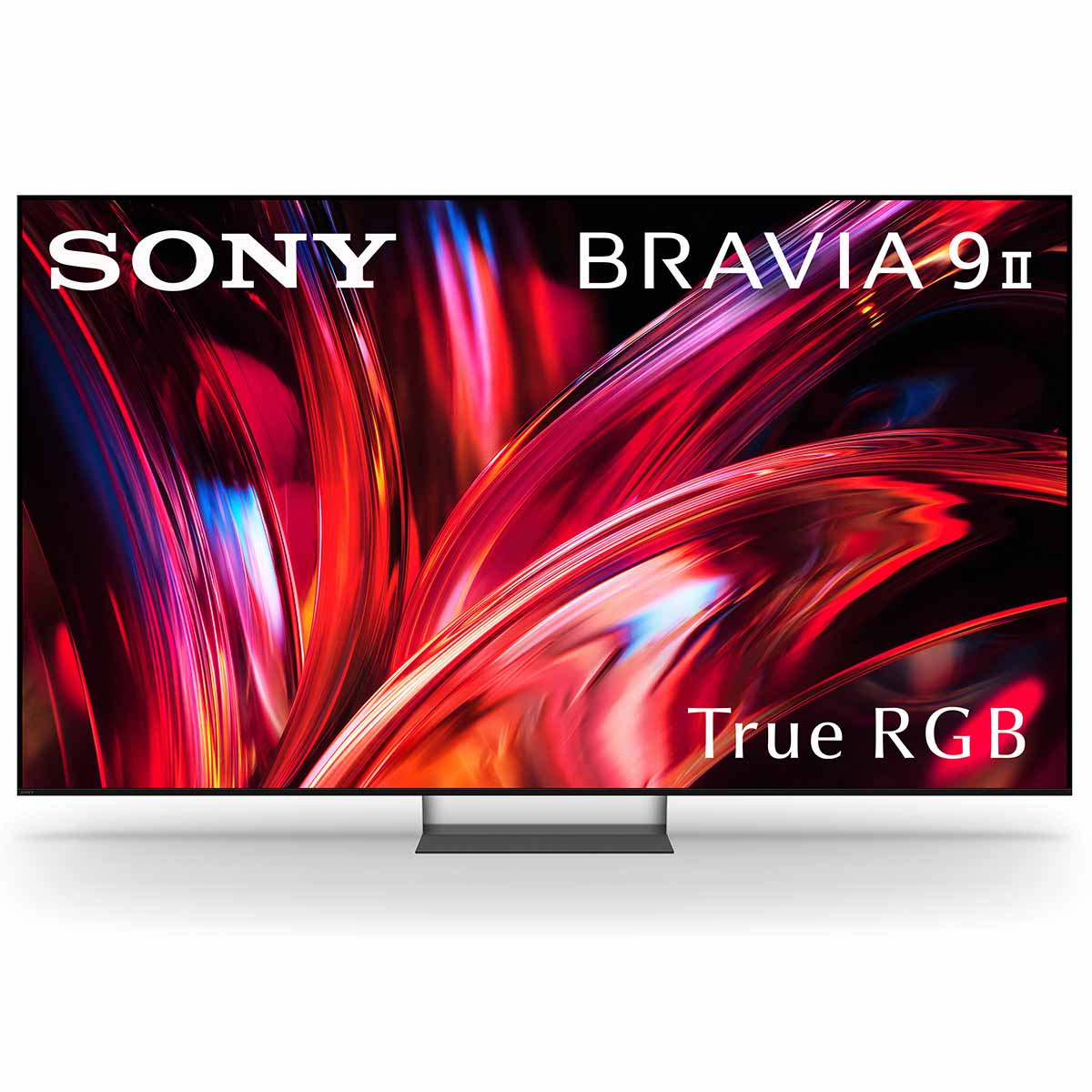
The BRAVIA 9 II is Sony's flagship True RGB model and steps up the overall package significantly.

Available sizes: 65, 75, 85, and 115 inches

Key features, in addition to everything in the 7 II:

  • Immersive Black Screen Pro anti-glare treatment
  • Beam Tweeter for improved height and spatial audio
  • Individual factory panel calibration, one unit at a time
  • 10 Sony Pictures Core credits with 24-month subscription

A note on Sony Pictures Core: This is a streaming platform that delivers content at up to 80 Mbps, dramatically higher than what Netflix or Prime Video deliver and much closer to what you'd get from a physical Blu-ray disc. More detail, better audio, and optimized for Sony's own panels.


Who it's for: Someone who wants the complete package. The Immersive Black Screen Pro makes a real difference in rooms with ambient light, the individual panel calibration ensures you're getting the best unit Sony can produce, and the 115-inch size option is in a class of its own.


Sony BRAVIA 9 II PRO

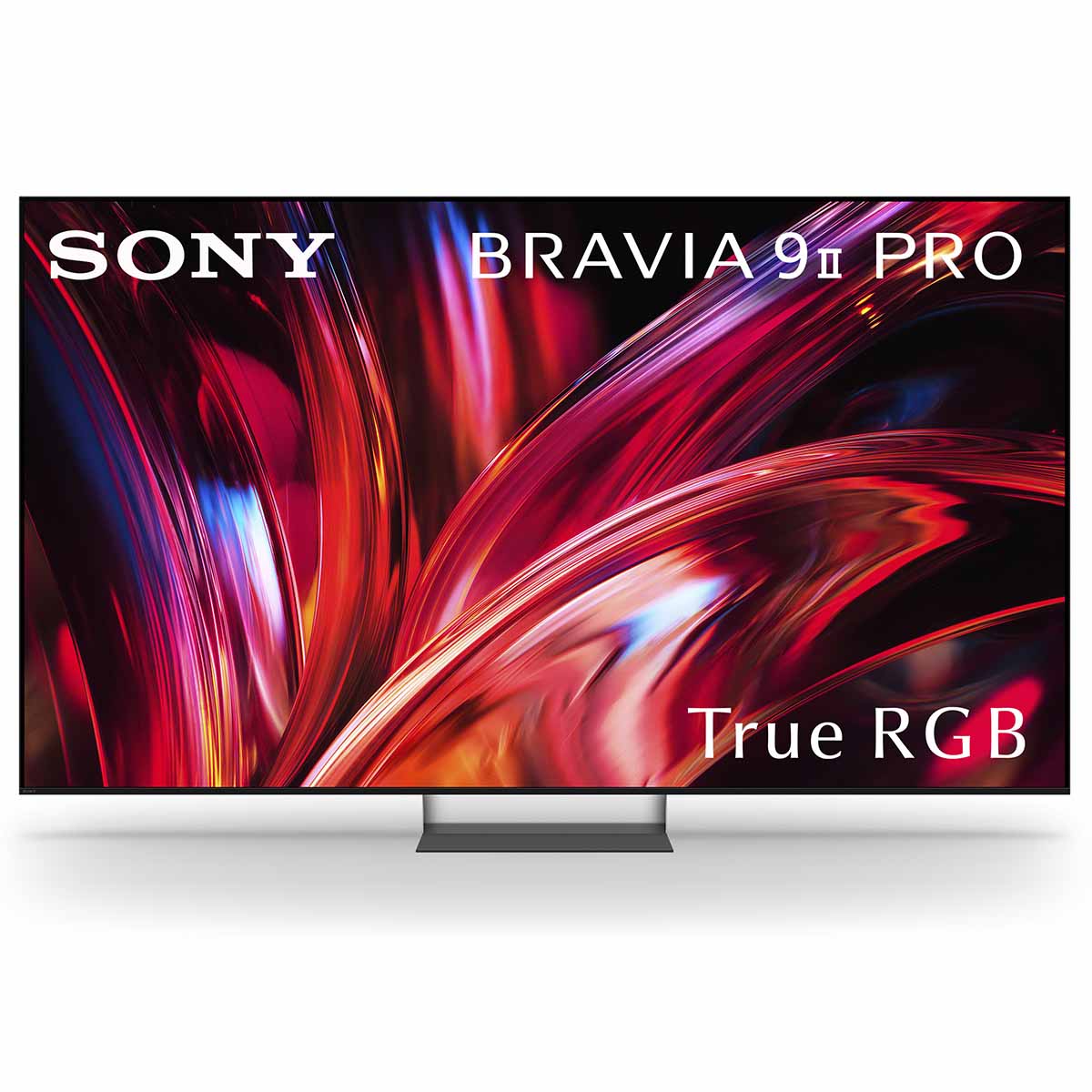
The 9 II PRO starts with the same foundation as the 9 II, and we want to be upfront about what that means: the picture quality is identical. Same panel, same True RGB backlight, same processor. What you're paying for is the ownership experience on top of that.
What the PRO adds:

  • Backlit remote with Remote Finder function
  • Three-year enhanced exchange warranty
  • 15 Sony Pictures Core credits vs. 10 on the standard 9 II
  • My Cinema presets for one-tap picture and sound optimization by environment and time of day
  • Voice Zoom 3 Enhancer (upgraded from Voice Zoom 3)
  • Quick Settings integration with AV receivers, not just soundbars

That last point is worth explaining. On the standard 9 II, the Quick Settings menu lets you control a connected soundbar without picking up a second remote. The PRO extends that same convenience to AV receivers, so if you're running a Denon, Marantz, or any other AVR via eARC, you can control volume and settings right from the TV remote.

Who it's for: Dedicated home theater rooms and serious setups with a separates AV system. If you're purely after the best picture, the standard 9 II gets you there. If you want the premium ownership experience and the extended warranty on a high-end purchase, the PRO is worth it.
True RGB vs. OLED: How Does It Compare?

This is the question we know is coming, and it deserves an honest answer.

Sony has been clear that True RGB isn't meant to replace OLED, and we think that's the right framing. OLED still has advantages in absolute black levels and per-pixel precision that LED LCD can't fully replicate. When every pixel is its own light source, you get a level of precision in dark scenes that a backlit display can only approximate.

But True RGB closes the gap in color accuracy and adds things OLED can't offer: higher peak brightness, no size limitations, and no burn-in risk. If you've always wanted OLED-level color accuracy but needed the brightness for a bright room, or the larger size options that LED gives you, this is the closest we've seen to having both.

We carry the BRAVIA 8 II OLED at Audio Advice as well. If you're an OLED person, we have a full breakdown on that model and our team can help you compare the two.


How Does Sony True RGB Compare to Samsung, TCL, and Hisense RGB TVs?

Samsung, TCL, and Hisense all have RGB backlit TVs in the market right now and some of them look quite good. Based on the comparisons Sony ran, with physically exposed backlights from competitor units playing real content next to the True RGB system, the processing here is on a different level. Competitors that revert to white backlighting during complex content aren't getting the benefit of the technology when it counts most. Sony's True RGB doesn't do that. It stays in color mode because the processing is strong enough to keep it there, on every scene, not just the easy ones.

It's also worth noting that Sony is the only TV manufacturer that owns the full pipeline from professional cinema cameras to mastering monitors to consumer displays. That depth of imaging expertise is baked into the True RGB control algorithms in a way competitors simply can't replicate.


Frequently Asked Questions

What is Sony True RGB? True RGB is Sony's mini LED backlight technology that uses three independently controlled red, green, and blue LED diodes per backlight zone. It generates color at the light source rather than filtering it from white or blue light, resulting in purer colors, higher peak brightness, and better off-axis viewing.

Which Sony TVs have True RGB in 2026? The BRAVIA 7 II, BRAVIA 9 II, and BRAVIA 9 II PRO all feature True RGB backlighting. The BRAVIA 3 II does not.

Is True RGB better than OLED? They each have different strengths. True RGB offers higher peak brightness, no burn-in risk, and larger size options. OLED has superior absolute black levels and per-pixel precision. True RGB closes the color accuracy gap significantly compared to previous LED LCD technology.

What's the difference between the BRAVIA 9 II and 9 II PRO? The picture quality is identical. The PRO adds a backlit remote with Remote Finder, a three-year enhanced exchange warranty, five additional Sony Pictures Core credits, My Cinema presets, Voice Zoom 3 Enhancer, and Quick Settings integration with AV receivers.

Does True RGB have better viewing angles than regular mini LED? Yes. Because the color is generated at the light source rather than filtered from white light, it holds up better when viewed from off-axis positions. The BRAVIA 7 II and 9 II also include X-Wide Angle Pro on top of the True RGB backlight.

How does True RGB achieve 4,000 nits? By generating color directly from the backlight rather than filtering it through quantum dot film and color filters, True RGB reaches high brightness levels more efficiently. Sony's testing showed competitors landing between 700 and 2,200 nits on an HDR clip mastered at 4,000 nits, while True RGB held close to the full 4,000 nit target.

What is Sony Pictures Core? Sony Pictures Core is a streaming platform that delivers content at up to 80 Mbps, dramatically higher than standard streaming services and close to physical Blu-ray quality. All three True RGB BRAVIA models include Sony Pictures Core credits.


Final Thoughts

The 2026 Sony BRAVIA lineup represents the most significant step forward in LED LCD picture quality we've seen in years. True RGB delivers on a promise the industry has been chasing for over two decades, and Sony's professional imaging heritage is the reason they're the first to actually get it right.

The BRAVIA 7 II is the right call if you want True RGB technology at a more accessible price. The BRAVIA 9 II is for someone who wants the complete flagship package. And the BRAVIA 9 II PRO is for dedicated rooms and serious setups where the warranty, AV receiver integration, and ownership upgrades matter.


We’re Here to Help!

If you have further questions, contact our experts via chat, phone, or email. Or simply visit one of our world-class showrooms to experience speakers, projectors, TVs, and everything in between for yourself before you make a purchase!

If you’re planning your home theater or media room, check out our Home Theater Design page, where we have everything Home Theater related, including our FREE Home Theater Design Tool.

When you buy from Audio Advice, you’re buying from a trusted seller since 1978. We offer Free Shipping, Lifetime Expert Support, and our Price Guarantee. We look forward to serving you!