Everything You Need to Know Before Buying Your First Turntable
If you’re moving up from an all-in-one record player or ready to buy your first real turntable, this is the article for you. A quality turntable isn’t just about better sound — it’s about protecting what will quickly become your biggest investment: your record collection.
Those close-and-play systems with built-in speakers may look convenient, but most use heavy tracking forces and basic tonearms that can actually wear out your records over time. A properly designed turntable, set up correctly, will treat your vinyl properly and reveal everything that’s hiding in those grooves.
In this article, we’ll help you choose your first nicer turntable — one that sounds great, protects your records, and fits seamlessly into your system. If you’d like to go deeper into the finer details, you can check out our full Turntable Buyer’s Guide.
Understanding the Phono Connection
Before picking out a turntable, take a look at what you’ll be connecting it to.
A turntable’s output signal is extremely small, far lower than anything else in your system, so it needs a special circuit called a phono preamp to boost that signal and apply equalization that makes records sound natural.
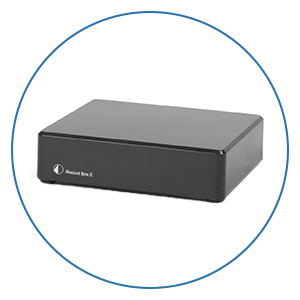
If your amplifier, receiver, or powered speakers have inputs labeled PHONO with a little ground screw nearby, you already have a phono stage built in. If not, you’ll need either a turntable with a built-in phono preamp or a small external phono stage between the turntable and your amp.
Most built-in stages are designed for moving-magnet cartridges, which is exactly what almost every entry-level and midrange turntable uses. Once you know how you’ll handle that connection, you can move on to the next big decision.
Manual vs Automatic Turntables
turntable gives you the purest mechanical design. You lift the tonearm, lower it into the lead-in groove, and raise it again when the record ends. Because there are no gears or motors tied to the arm, there’s less friction and less chance of vibration getting into the sound.
A semi-automatic turntable works almost the same, but adds a mechanism that lifts the tonearm and stops the platter at the end of a record. It's nice to have if you tend to fall asleep listening or just want peace of mind that your stylus won’t sit in the run-out groove for hours.
Finally, a fully automatic turntable does everything with one button — cueing, lowering, playing, and returning the arm when it’s done. It’s perfect if you want maximum convenience and zero fuss.
There’s no wrong choice here, but bear in mind you’ll find far more great turntables in the manual category. And usually, the semi-automatic and automatic ones are more basic and not as much focused on performance.
Belt Drive vs Direct Drive
Next is how the platter spins. Most home turntables use a belt-drive system, in which a small motor turns the platter via a flexible belt. That belt acts as a shock absorber, isolating motor vibration so what you hear is smooth and stable. Belt drives are known for quiet backgrounds and accurate pitch, perfect for giving you that live music feel.
Direct-drive turntables place the motor directly under the platter. They start instantly and usually have a speed adjustment control to change the pitch, which makes them the best choice for DJs.
At the higher end, a well-designed direct-drive can sound outstanding, but at entry-level prices, belt-drive usually delivers quieter, more natural playback. But there are some great direct drive turntables out there, once you get above $1,000 or so.
Cartridges and Stylus Types
At the end of the tonearm is the cartridge. This is a tiny transducer that converts the microscopic groove movements into an electrical signal. Most turntables in this category will come with a cartridge already installed and aligned, which is ideal for beginners.
These are almost always moving-magnet cartridges, which are typically reliable, musical, and easy to replace when the stylus wears out. Moving-coil cartridges can offer even greater detail, but they’re more expensive and need a more specialized phono preamp that isn’t normally found in an integrated amp or powered speakers. For your first turntable, a good moving-magnet cartridge will deliver excellent sound and make setup simple.
In addition, stylus shape affects how much detail you’ll hear. A basic spherical tip is durable and forgiving, while an elliptical stylus traces the groove more accurately and brings out noticeably better clarity. More advanced line-contact designs exist, but you’ll rarely find those on turntables below the $2,000 mark. For most listeners starting out, an elliptical moving magnet is the perfect balance of performance and practicality.
Tonearms and Adjustability
The tonearm’s job is to let the stylus track the grooves with minimal friction so it can extract all of those fine details deep in the grooves. Look for tonearms that move freely and don’t have wobble in the tonearm bearings, which are at the rear of the arm. Almost all decent turntables, unless they are preset for a specific included cartridge, will have adjustable tracking, which is the downward force, and antiskating, which keeps the stylus centered in the groove. Some may have what is called adjustable VTA, whic,h down the road, could give you more choices in cartridge upgrades.
You’ll see both fixed and removable headshells, which is the part on the end of the tonearm. Removable makes changing things easy, which DJs really love, and there are a lot of aftermarket headshells out there for rolling your own, but most decent turntables will have a fixed headshell.
Many belt drive turntables will have you physically moving the belt to change from 33 to 45. But there are a lot that do have electronic speed control, where you can change it with a switch. If you have a lot of 45 LPs, and remember a lot of audiophile LPs are now in 45, you should consider this.
Platter Design and Isolation
A heavy well well-damped platter will ensure your speed stays more consistent as it provides a flywheel effect. Heck, some high-end tables have 50-pound platters! You’ll see glass, acrylic, and metal platters; they all work well if they are damped and have some heft.
Many turntables will also have nice isolation feet, with some offering adjustability to get things level.
Convenience Features
A dust cover is always worth having if your turntable sits in an open room, and almost all in the entry category will include one.
Bluetooth and USB outputs are convenient extras, great for streaming to powered speakers or archiving your records, but wired playback will always sound best.

Setup Tips for Better Sound
Once you’ve picked your table, placement and setup make a big difference. Keep it level on a sturdy surface away from big speakers or subwoofers. Connect the RCA cables securely, and attach the ground wire if there is one.
Then balance the tonearm and set the tracking force according to the manufacturer’s recommendation. And bear in mind why logic would seem to say the lighter you track, the less wear, it's actually the opposite, so we suggest you track at the top end of the suggested range. Then set the antiskat to the same number.
If all this sounds tricky, we have set up guides for almost every single turntable we sell and are just a phone call away for help.
Taking Care of Your Vinyl
With the cost of vinyl today, your collection can quickly surpass the price of your turntable. Take care of it and it’ll reward you for decades. If you can, clean each new or used record once with a wet cleaning system like the Spin-Clean or Knosti, then use an anti-static brush before every play. After almost every record, give the stylus a quick back-to-front swipe with a brush such as the Pro-Ject Clean-It or MoFi Stylus Brush. Do these steps, and your records will last a long tim,e plus you will extend the life of your stylus.
Final Thoughts
Choosing your first turntable doesn’t need to be complicated. Start with a design that protects your records, fits your system, and matches how you like to listen. Set it up carefully, keep your records clean, and you’ll experience the same warmth and realism that made vinyl special in the first place. For deeper details — from tonearm geometry to cartridge upgrades — check out our complete Turntable Buyer’s Guide at AudioAdvice.com.
Thanks for reading, and we hope you enjoy this great vinyl hobby as much as we do!
We’re Here to Help!
If you have further questions, contact our experts via chat, phone, or email. Or simply visit one of our world-class showrooms to experience speakers, projectors, TVs, and everything in between for yourself before you make a purchase!
If you’re planning your home theater or media room, check out our Home Theater Design page, where we have everything Home Theater related, including our FREE Home Theater Design Tool.
When you buy from Audio Advice, you’re buying from a trusted seller since 1978. We offer Free Shipping, Lifetime Expert Support, and our Price Guarantee. We look forward to serving you!