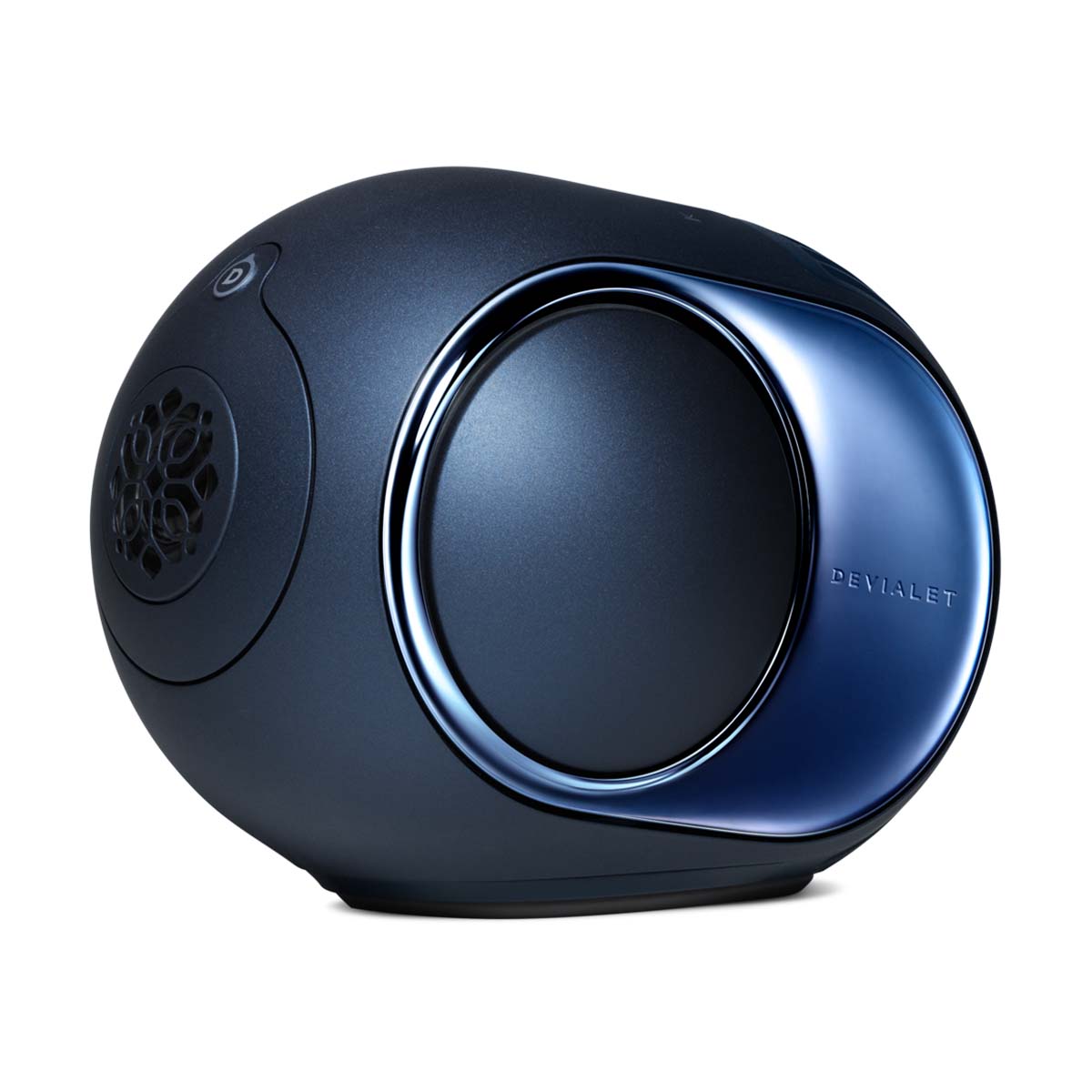
Devialet Phantom Ultimate

youtube cover image
Play

In this article, we are going to discuss the new Devialet Phantom Ultimate lineup of speakers.

Devialet has never been shy about breaking the mold, and the new Phantom Ultimate lineup shows just how far the idea has come since the first Phantom shook up the audio world in 2015. These latest models bring the same sculptural design and room-filling scale people expect, but with refinements that make them easier to live with and better sounding than ever.

Before we get into the details of design, connectivity, and performance, let’s start with a quick look at the two models that make up the Phantom Ultimate range.

Devialet Phantom Ultimate Line up

108 dB vs 98 dB

The Phantom Ultimate 108 dB has a three-way array with a new generation aluminum tweeter, mid drivers, and redesigned woofers. It’s rated at 14 hertz to 35 kilohertz with 1100 watts total amplification and a 108 dB peak. It measures roughly 10.0 by 9.7 by 13.5 inches and weighs 24.5 pounds. It plays louder, holds together better at party levels, and paints a wider, taller front stage in big rooms.

The Phantom Ultimate 98 dB is the ultra compact model that uses a full range aluminum dome flanked by two aluminum woofers. It’s rated at 18 hertz to 25 kilohertz with 400 watts total amplification and a peak level of 98 dB at one meter. It measures about 6.6 by 6.2 by 8.6 inches and weighs 9.5 pounds. When two are paired for a true stereo setup, it’s more than enough for a medium living room and will embarrass most soundbars for both music and TV.

Devialet Phantom Ultimate

Design & Build Quality

The Phantom’s distinctive form is not just about looks. Its spherical acoustic architecture reduces cabinet edge diffraction and helps the speaker project a wide, even sound field. The body combines an ABS outer shell with a glass fiber reinforced polycarbonate inner shell, tied together by an aluminum central spine that also helps wick heat to the rear. With no large flat panels, cabinet resonance is kept out of the midrange, which gives voices and instruments a cleaner and more natural presentation.

On the 108 dB model, the woofer redesign is more than cosmetic. The removal of the dust cap creates a sleeker front, but the bigger changes are under the surface. A new under-hung motor and lower stiffness suspension let the cones travel farther without losing control, so bass stays tuneful and precise even when the speaker is pushed hard.

They also refined the smaller details of Phantom Ultimate to balance design and performance. The tweeter grille has been reimagined with cleaner lines and a higher open area ratio, letting more high frequency energy through while also giving the speaker a sleeker look. This grille went through months of research and countless iterations to strike the right balance between aesthetics and acoustic transparency. The result is a cleaner treble response and a more seamless faceplate design.

Devialet Phantom Ultimate front grill view

The overall silhouette has also been subtly updated. They describe it as a pursuit of absolute purity and precision, where even the smallest changes in assembly were reworked to achieve a more seamless and uninterrupted form. The 108 dB in particular feels more sculptural and more intentional in its presence.

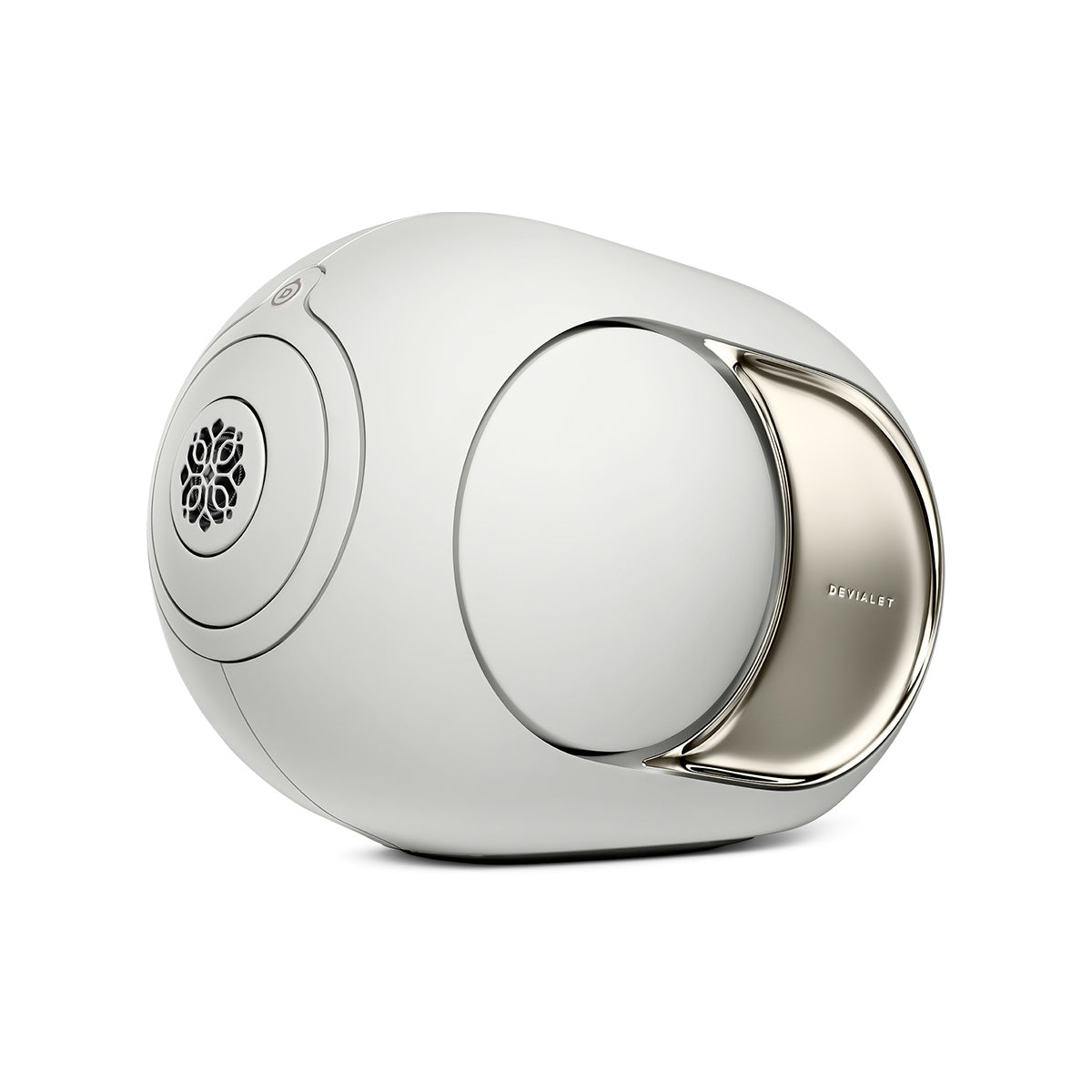
Phantom Ultimate is available in three finishes, each with a distinct personality. Light Pearl has a soft matte off white tone with an ultra matte feel that looks clean and modern without appearing stark. Deep Forest is a dark green black that blends into dim rooms but reveals a subtle green reflection under daylight, and on the 108 dB black chrome detailing adds to its bold character. The Opéra de Paris edition is the most dramatic, with hand applied 22 carat Moon Gold leaf on the side plates crafted in partnership with Parisian gilding workshops. This finish turns the Phantom Ultimate into a statement piece of design as much as a speaker.

While the finish does not change the sound, it changes how the speaker inhabits a space, whether you want it to blend quietly into your décor or stand out as a centerpiece.

Devialet Phantom Ultimate finishes

Features & Technology

Phantom Ultimate carries forward the proprietary engineering that has defined the Phantom line since its debut, but with key refinements that make these new models both cleaner and more powerful than before.

At the heart of every Phantom is ADH amplification. This stands for Analog Digital Hybrid, a unique approach that combines the musicality of a pure Class A amplifier with the efficiency and current delivery of multiple Class D stages. In practice, the Class A section defines the voltage and sets the character of the sound, while the Class D stages follow in real time to supply current without strain. In Phantom Ultimate, the control algorithms between these two stages have been improved, especially in the high frequencies above 3 kHz, where small timing errors in earlier designs could add a hint of hardness. Now, treble stays smoother and cleaner at higher levels, and the system feels more relaxed even when pushed.

The second major technology is Speaker Active Matching, or SAM. SAM constantly models the drivers and the small sealed enclosure in real time, tracking displacement, velocity, and acceleration without adding latency. The updated version in Phantom Ultimate pairs with the redesigned woofers in the 108 dB model, allowing them to extend deeper with less distortion. Bass now maintains pitch better on long notes, and it stops more abruptly on drum hits or plucked bass strings, which makes rhythms feel tighter and more lifelike.

Heart Bass Implosion, or HBI, is another signature Phantom technology. By using opposing high-excursion woofers that move in perfect symmetry, the speaker is able to generate extreme air pressure in a small cabinet. The result is bass response that dives as low as 14 Hz in the 108 dB model. It’s the kind of infra-bass you don’t just hear but feel in your chest, which is why a pair of Phantoms can make it seem like there’s a compact subwoofer hidden in the room.

The new lineup also adds Adaptive Volume Level, or AVL, which debuted in their Dione soundbar. AVL automatically adjusts volume in real time depending on content. For movies it keeps dialogue intelligible without sacrificing impact, and for streaming TV it tames the jump in volume between quiet scenes and loud commercials. This is one of those background technologies that makes day-to-day use easier, and it’s a welcome addition to the line.

Under the hood, Phantom Ultimate also benefits from a new processor platform built around the NXP i.MX 8M Nano system-on-a-chip. This upgrade improves energy efficiency and responsiveness, but it also gives the speakers more headroom for advanced streaming protocols. That’s why the new models support AirPlay, Google Cast, Spotify Connect, Tidal Connect, UPnP, and Roon Ready, all running on a unified operating system called DOS3. Linking two Phantoms for stereo is nearly instantaneous, and firmware updates now apply smoothly in the background.

Finally, their power supply design has been reworked to feed the amplification stages more efficiently and with better thermal stability. In practice, that means Phantom Ultimate can sustain higher volumes for longer sessions without the soft compression some owners noticed in earlier generations.

Together, these technologies explain why Phantom Ultimate sounds calmer, cleaner, and more precise than the models it replaces. The 98 dB benefits from refinements across the board, while the 108 dB takes full advantage of the redesigned drivers and expanded bandwidth to deliver a presentation that feels bigger and more controlled in large rooms.

Setup, Connectivity, and Daily Use

Setup only takes a few minutes with the updated Devialet app. The new DOS3 platform runs on a fresh software stack that makes pairing and stereo linking uneventful, and firmware updates now install in the background without retries. On top of the speaker, you’ll find four touch controls for volume, play/pause, and Bluetooth. Double tap skips forward, triple tap goes back, and a long press on the Bluetooth icon opens pairing. The status LED glows green during boot and solid white when ready. A quick press on the power button wakes the speaker instantly, a two-second hold shuts it down, and a seven-second hold resets it. These simple onboard controls are new to Phantom Ultimate and make everyday use easier than past models.

Streaming support has also expanded. In addition to AirPlay, Spotify Connect, UPnP, Roon Ready, and Bluetooth, Phantom Ultimate now adds Google Cast and Tidal Connect. Bluetooth has also been upgraded from version 4.2 on the Phantom I to 5.3 here, which means stronger range, faster pairing, and fewer dropouts when you just want to hand off music quickly. Wi-Fi or Ethernet are still the best options for high-resolution listening, but this Bluetooth update makes everyday use much smoother. When you link two Phantoms, they lock together over Devialet’s DOS3 sync at 96 kHz / 24-bit, keeping stereo imaging solid across a wide room.

Devialet Phantom Ultimate 98db back view
Devialet Phantom Ultimate 108db back view

The 98 dB runs on Wi-Fi 5 while the 108 dB steps up to Wi-Fi 6. In our showroom, with multiple devices hammering the same network and the speakers placed far apart, the 108 dB still held a strong signal and never dropped out. That extra bandwidth matters in larger stereo setups, where the left and right channels need to stay in perfect sync without breaking connection. Multiroom playback is supported as well, so you can spread multiple Phantoms around the house under one control system.

For TV use, we connected a Samsung OLED over optical and set the TV output to PCM stereo. With Phantom Ultimate, you only need to run the optical cable into one speaker, left or right, and the pair automatically plays in stereo. Switching between optical, AirPlay, and Tidal Connect was instant and reliable. There’s no HDMI ARC, but the optical connection proved simple and solid in daily use.


Compatibility with Other Devialet Products

Phantom Ultimate works best within its own ecosystem. You can run them solo, in a stereo pair, or in multiroom setups with other Phantoms through Devialet’s DOS3 platform, which keeps everything locked at 96 kHz / 24-bit with perfect sync. That is the native environment designed for Ultimate, and it delivers the tightest imaging and timing when Phantoms are paired together.

If you own other products like the Mania portable speaker or the Dione soundbar, you can still group them with Phantoms in multiroom playback using AirPlay 2 or Roon. This is great for spreading the same music across the house, but it doesn’t use the same lossless DOS3 stereo link. The Phantoms give you the most precise soundstage when paired with each other, while Mania and Dione remain complementary options for different spaces and use cases.

The App and Audio Modes: How To Get the Most From It

The Devialet app is more useful now. There are four listening modes and one optional overlay. Music Mode is the natural choice for critical listening. Movie Mode increases dialogue clarity and keeps effects dynamic. Podcast Mode focuses on intelligibility for long voice sessions at a lower volume. Monitoring Mode is flat and disables dynamic sweeteners, which is handy if you want to create your own EQ curve from scratch. Night Mode can be added on top of any main mode and applies a coordinated version of Bass Reducer plus Adaptive Volume Level, so late-night viewing doesn’t wake the house.

There is also a six-band graphic EQ with presets for Default, Soft, Clear, and Dynamic, plus a full Custom option across each band. You can keep a different EQ per mode, and even per room, so it’s easy to leave Music flat, give Movie a gentle upper mid trim in a bright space, and use Soft for Podcast. Loudness is available and helpful for low-level listening. We kept it on for background sessions and off when listening at normal levels.

The app itself feels smoother and more responsive than before, with faster navigation and simpler pairing. It also pushes firmware updates directly to the speakers, which means Phantom Ultimate can keep getting better with time. Adaptive Volume Level is available across modes, not just Night Mode, so volume jumps between sources are kept in check whether you’re streaming music, switching apps, or using optical for TV.

Performance

The new 98 dB has meaningful updates of its own. Treble stays cleaner at higher volumes, and bass has more grip and control than the previous generation. In small and medium rooms, a single 98 dB sounds bigger than its size suggests, and when you pair two in stereo, the soundstage expands into a true hi-fi presentation. Music feels more balanced, with voices clearer in the mix and instruments easier to follow. It is the compact model to choose if you want a system that can double as both your main music setup and your everyday TV speakers without taking up much space.

But the real story in larger spaces is the 108 dB. A single unit can comfortably fill a big living room, and a stereo pair transforms into a front stage that rivals full-size systems. The bass digs deeper, but it is the top end and overall composure that set it apart when you push the volume. On Dua Lipa’s “Don’t Start Now” the bass line stayed elastic without losing grip, and the hi-hat remained crisp even as the chorus stacked up. Switch to orchestral recordings and the hall air feels more obvious, with layers of detail holding together where past Phantoms would start to blur. During a weekend gathering we pushed the 108 dB pair high and the top octave stayed intact, something that was not always true with the last generation in the same room.

Movies with a pair of 108 dB units were even more convincing than expected. The front stage was tall and wide and held together off axis, making it easy to cover a big sectional. The opening of Blade Runner 2049 landed with the kind of chest impact that felt almost like having a compact sub in the room, while still keeping enough articulation to follow subtle environmental effects. If you are coming from a soundbar, the stereo imaging and scale will be a revelation. And if you already own powered bookshelf speakers, the sheer authority of the low end will surprise you. In short, the 98 dB is refined, compact, and ideal for smaller spaces, while the 108 dB is the choice when you want real scale and live-performance punch in a larger room.


Phantom Ultimate vs Previous Phantom I and II

If you already own a Phantom I 108 dB and enjoy listening at higher levels, the new 108 dB is the most meaningful upgrade. The smoother treble, tighter bass, and improved platform make it feel calmer and more composed in real rooms, especially when pushed hard or used in busy homes.

If you own a Phantom I 103 dB, the new 98 dB is not a direct replacement in terms of sheer headroom. However, two 98 dB units in stereo will sound more open, more refined, and more coherent than a single 103 dB, even if the older model still has raw power.

If you own a Phantom II and use it in a small room at modest levels, you don’t need to rush to upgrade. The new 98 dB is more refined, with cleaner treble, tighter bass, and a smoother platform, but the older Phantom II still sounds very good in that context. If you are in a medium room or find yourself hitting the limits of a single unit, stepping up to a stereo pair of the new 98 dB models makes the most sense. The difference shows up as a cleaner midrange, a wider stereo stage, and more controlled bass.

Buying Advice by Room Size, Habits, and Accessories

For large open-plan spaces and entertaining, the 108 dB is the one to go for. The extra headroom and composure keep the treble from collapsing even when the room is full of people and the volume is high. On Trees, centered with a slight toe-in, they image with surprising precision and deliver bass that feels complete even without a separate subwoofer. If you’d rather wall-mount them, the Gecko bracket is the right solution, keeping the footprint off the floor while still letting the Phantoms breathe.

If your space is deeper than eighteen feet, has a vaulted ceiling, or you like to push music to concert levels, the 108 dB is the smarter choice. A pair on the full-size Tree stand is especially striking here, both visually and sonically, since the added stability and height get the drivers right where they should be for serious listening.

For a typical family room or a living room that opens into a kitchen, a stereo pair of 98 dB units is the sweet spot. They’re compact, clean-looking, and still deliver real hi-fi performance.

In a bedroom, office, or small den, start with a single Phantom Ultimate 98 dB. Place it on a rigid stand or shelf and keep it at least eight inches from the back wall for the cleanest sound. If you end up hosting friends or want more stereo depth, you can always add a second 98 dB later to create a true pair. For these setups, the compact Treepod stand works beautifully, raising the Phantom to the right height and making it feel intentional in the room without taking up too much space.


What We Would Like To See Next

The Phantom Ultimate platform is mature and already easier to use than past versions, but there are still areas where it could go further. A simple guided room correction feature in the app would help people who don’t want to dive into EQ menus but still want their system tuned to the space.

We also wish Devialet had taken integration a step further. Imagine if Phantom Ultimate models could serve as wireless rear speakers for Dione, or if you could build a full front stage with a left, right, and Phantom center channel wirelessly. That would have been an incredible feature. It is technically possible to build a full home theater with Phantoms over Dante, but that requires extra setup and networking gear. A native wireless option would make the experience far simpler and even more compelling.

Along the same lines, while Phantoms already dig deep enough that most listeners will not miss a subwoofer, it would be exciting to see a dedicated sub out or even a matching wireless sub in the future. That kind of expansion would take Phantom Ultimate from being one of the best stereo and multiroom solutions on the market to a true all-in-one path for high-end wireless home theater.

Devialet Phantom Ultimate

Final Take

The 108 dB is the one that turns a modern living space into a true listening room and movie night destination with nothing more than two sculptural objects and power cables. The 98 dB is the compact model that can anchor small and medium rooms without clutter and with real hi-fi tone.

Let the room and your habits decide. One 108 dB fills a big room with authority. Two 108 dB do the full front stage without blinking. If you already own a Phantom I 108 dB and you listen loud, the new 108 dB is the meaningful upgrade. One 98 dB in a small room is a delight. Two 98 dB in a medium room make more sense than a soundbar and sub for people who care about music. If you own a Phantom II and listen at modest levels, enjoy it for now and plan for a move to a 98 dB stereo pair when you want more stage and headroom.

If you own a Phantom I 103 dB, remember that two 98 dB units in stereo will sound more open, more refined, and more coherent than a single 103 dB, even if the older model still has raw power.

When you are ready, we can help you choose stands, dial in placement, and set the app for the way you actually listen. That last five percent is where these speakers feel alive.


Frequently Asked Questions

Is Phantom Ultimate good for TV without a subwoofer?

Yes. Run optical from your TV, set the TV to PCM, use Movie Mode with Adaptive Volume Level, and place a stereo pair on stands. You get a tall, wide front stage with real punch and clear dialogue. Night Mode keeps late sessions neighbor-friendly.

Can I mix models in a multi-room setup?

Yes. You can run a 108 dB pair in the main space and a 98 dB in smaller rooms. The voicing remains consistent, so you keep a unified feel across the house.

Do I need Ethernet?

Wi-Fi works well. Ethernet gives you the most robust connection if your router is far away or your network is very busy. We used Ethernet in a large room and Wi-Fi elsewhere with no stability issues.

How loud do they get without sounding harsh?

The 98 dB pair is comfortable for daily listening and casual gatherings. The 108 dB pair holds together at true party levels in a large room. The new amplification and driver work keep treble intact when you turn it up, which is the biggest audible change from older models.
Which finish should I pick?

Choose Light Pearl if you want the speakers to read like modern ceramics. Choose Deep Forest if you want them to disappear visually. Choose Opéra de Paris if you want a design statement that reads as art as much as audio.