
Bowers & Wilkins 800 Series Diamond D5: Everything That's New

Bowers & Wilkins 800 Series Diamond D5 Overview video cover
Play

Bowers & Wilkins just launched the 800 Series Diamond D5, and right up front, this is not a minor refresh. The motors, the cabinet bracing, the plinth, the crossover mounting, and the tweeter housing all got touched in this generation. One of those changes, Space Frame Bracing, is a structural addition that wasn't in the D4 or even the D4 Signature. After spending time with the new range, it's clear the Bowers & Wilkins engineering team in Southwater has been doing a lot more than it looks like from the outside.

This year is Bowers & Wilkins' 60th anniversary, and they're calling the D5 launch "60 years in the making." The original 801 showed up in 1979 and became the reference monitor at Abbey Road Studios almost immediately, and Bowers & Wilkins speakers have held that role in that room ever since. A later version, the Nautilus 800, went on to record the Star Wars soundtracks. That's not a coincidence or a marketing favor. Recording engineers pick speakers that don't add anything of their own to the sound and don't leave anything out either, since their job depends on hearing exactly what's on the recording, not a flattered or colored version of it. That's a harder thing to build than it sounds, and it's the same standard Bowers & Wilkins is holding itself to with the D5.

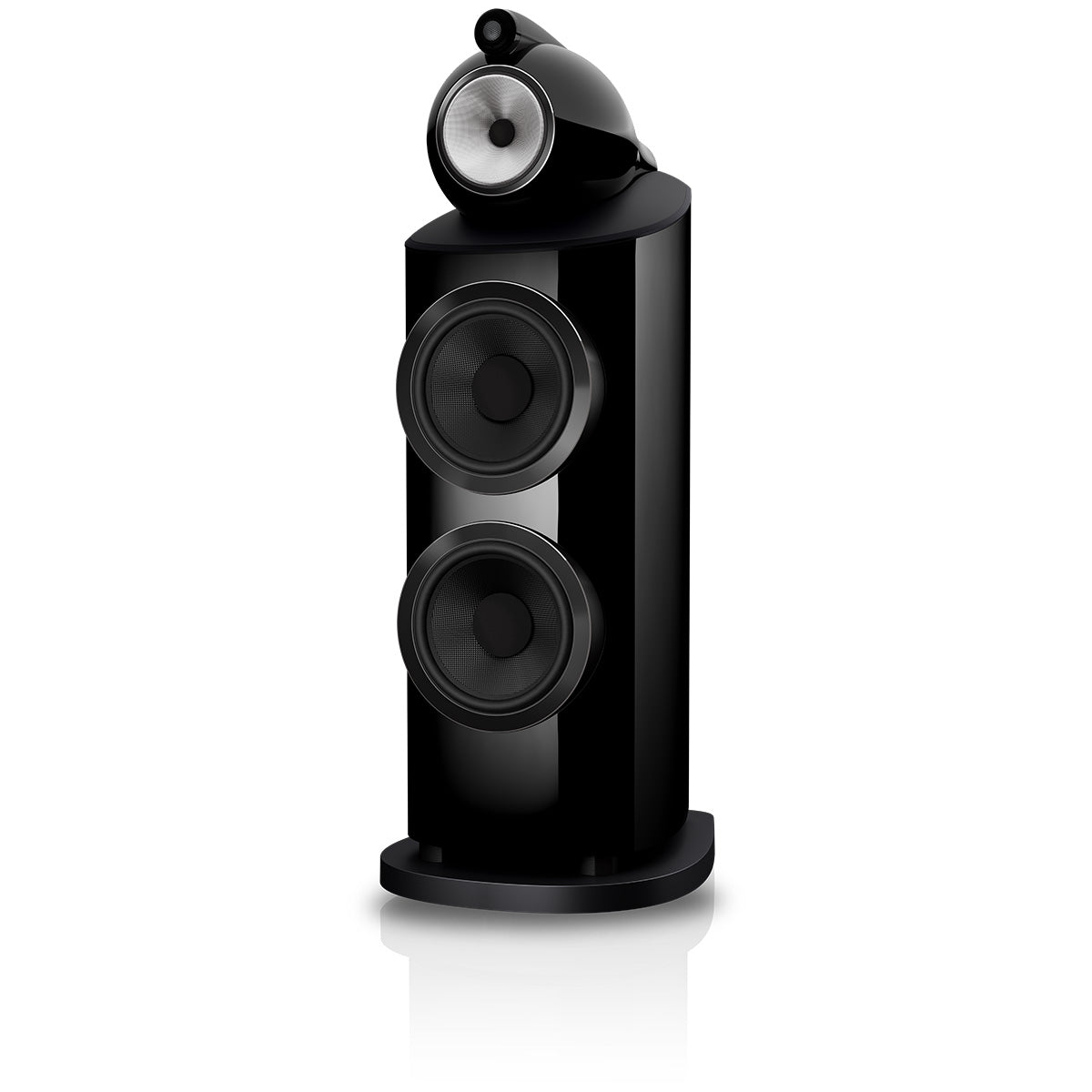
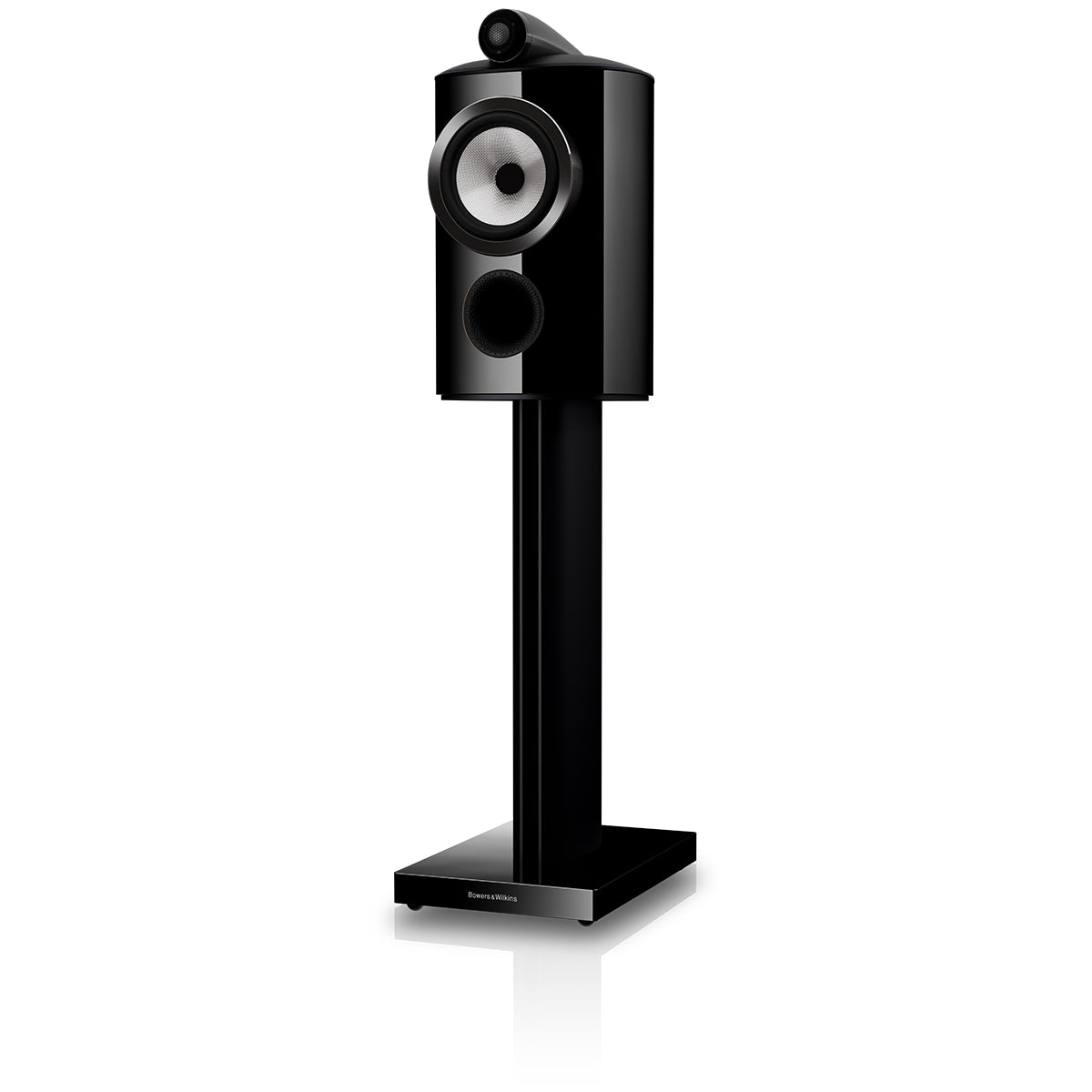
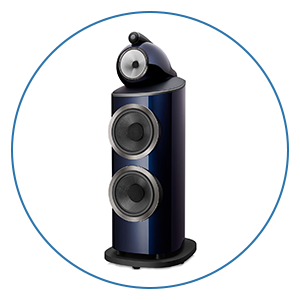
Bowers & Wilkins 801 D5

Nearly fifty years of the same recording studios trusting this speaker, and Bowers & Wilkins is still finding new things to improve on it. By their own account, each generation takes about five years to develop, and the team had already started on the next one before this one even shipped. Some of that comes down to how Bowers & Wilkins measures a speaker in the first place. Their engineering team was among the first to use laser analysis to study how a cabinet actually behaves under real playback, watching exactly where a panel flexes and where energy leaks out instead of guessing at it. A lot of what's new in the D5's cabinet traces straight back to that kind of measurement.

Audio Advice is one of the first places in the country where you can hear the full D5 range in person. We've got it in our showrooms now, and we'll have it again at Audio Advice Live in Raleigh this August.

Bottom line: The 800 Series Diamond D5 keeps the same five-speaker, two-center-channel lineup as the D4, but upgrades the motors with Signature-derived technology, adds an entirely new layer of cabinet bracing called Space Frame Bracing, and gives the 804 floorstander a dedicated midrange enclosure it never had before. Pricing runs from $15,000 to $65,000 per pair, and it starts shipping worldwide in September 2026.


The 800 Series Diamond D5 Lineup

The D5 range follows the same structure as the D4: five speaker models and two center channels. Bowers & Wilkins's existing DB Series subwoofers, the DB1D, DB2D, and DB3D, remain the recommended companion subs for the range. They aren't new for this launch, but they're built around the same Aerofoil driver technology and are designed to match the D5 cabinets.

ModelTypeMidrangeBass DriversSensitivityPrice (pair)
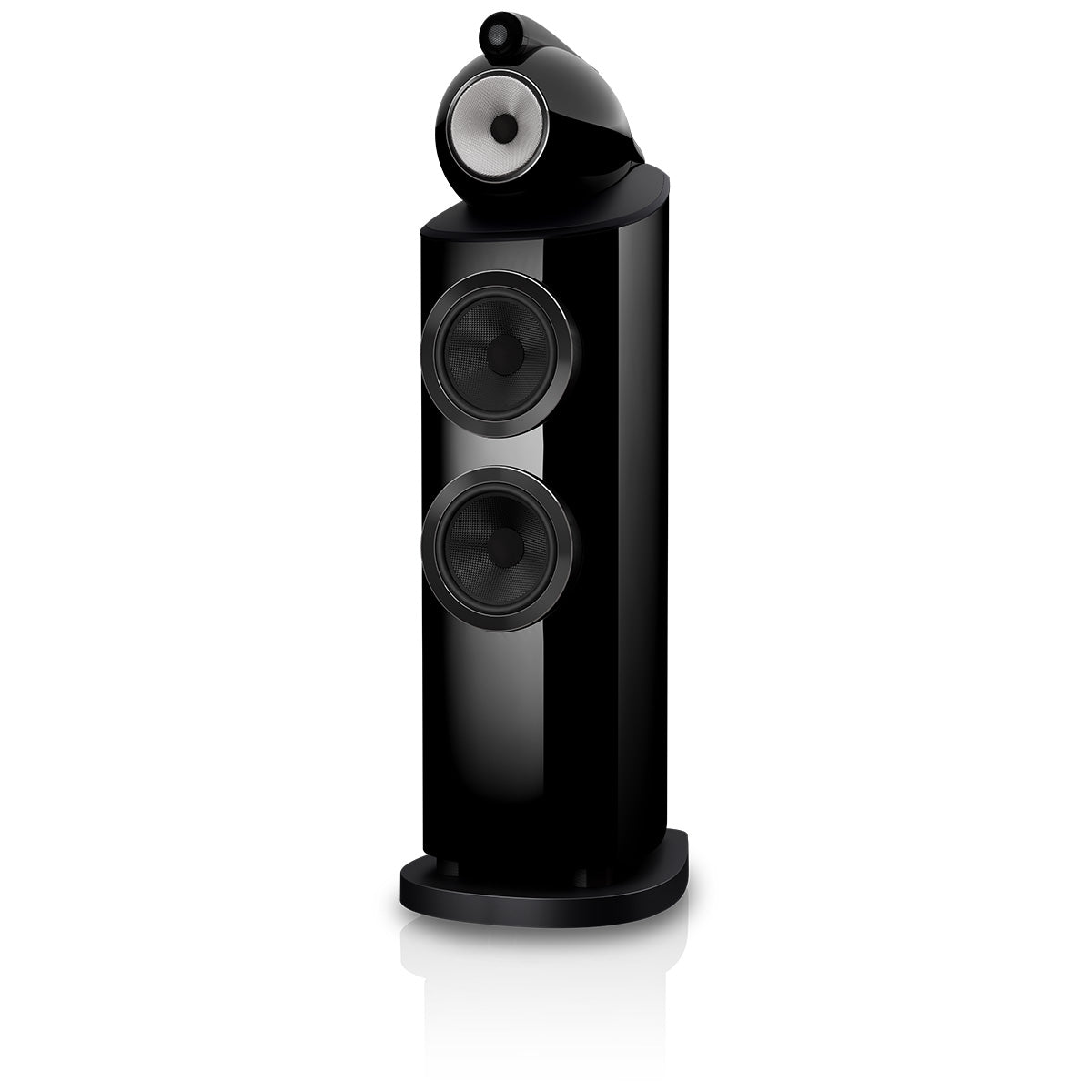
801 D5Floorstander6" Continuum FST (Turbine Head)Dual 10" Aerofoil90dB$65,000
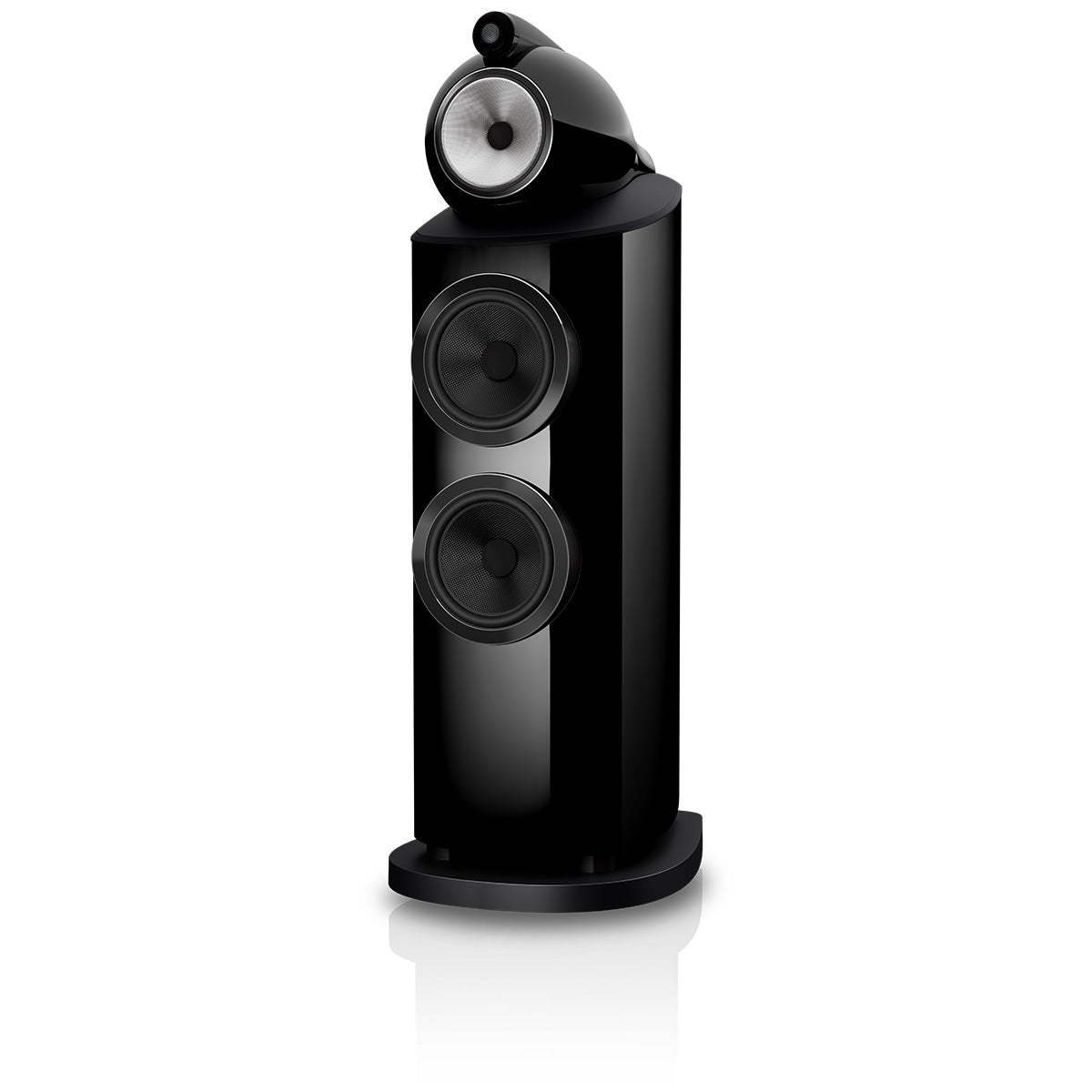
802 D5Floorstander6" Continuum FST (Turbine Head)Dual 8" Aerofoil90dB$45,000
803 D5Floorstander6" Continuum FST (Turbine Head)Dual 7" Aerofoil90dB$35,000
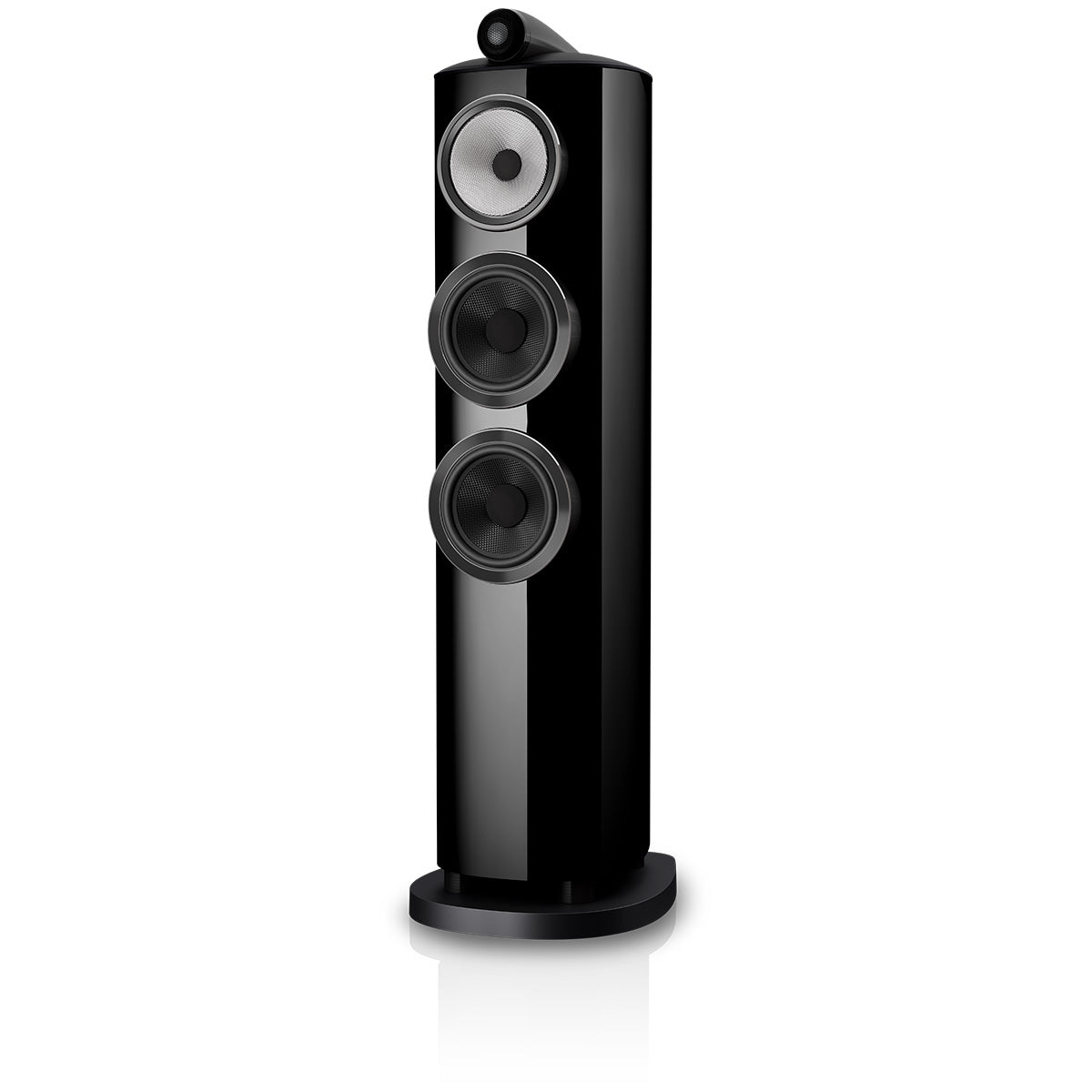
804 D5Floorstander5" Continuum FST (new aluminum enclosure)Dual 6.5" Aerofoil89dB$25,000
805 D5Standmount6.5" Continuum cone (combo driver)N/AN/A$15,000

The 801 D5 is the flagship, a three-way design with dual 10-inch Aerofoil bass drivers, a six-inch Continuum cone FST midrange in the Turbine Head, and the Diamond dome tweeter. It's rated at 90dB sensitivity, 8 ohm nominal impedance with a minimum of 3.5 ohms, and Bowers & Wilkins recommends 50 to 1000 watts into 8 ohms. It rewards spending money upstream. It's also a large speaker in person: 50.1 inches tall, 17.6 inches wide including the plinth, 23.5 inches deep, and 234.6 pounds each. Worth measuring your room and doorways before you commit

The 802 D5 and 803 D5 both keep the Turbine Head and the same 6-inch Continuum cone FST midrange as the 801. The 802 runs dual 8-inch Aerofoil woofers, while the 803, the most compact floorstander to use the Turbine Head, steps down to dual 7-inch woofers, making it a strong option for rooms that can't accommodate the bigger models. The 804 D5 is the more conventional floorstander without the Turbine Head, running a 5-inch Continuum cone and dual 6.5-inch Aerofoil woofers.

The 805 D5 is the standmount, a two-way design with the reverse wrap cabinet, Diamond dome tweeter, and a 6.5-inch Continuum cone mid-bass driver handling both jobs at once.

Sensitivity runs 90dB for the 801, 802, and 803, and 89dB for the 804, the same pattern the D4 had. None of these are hard to drive, though all of them reward a serious amplifier.

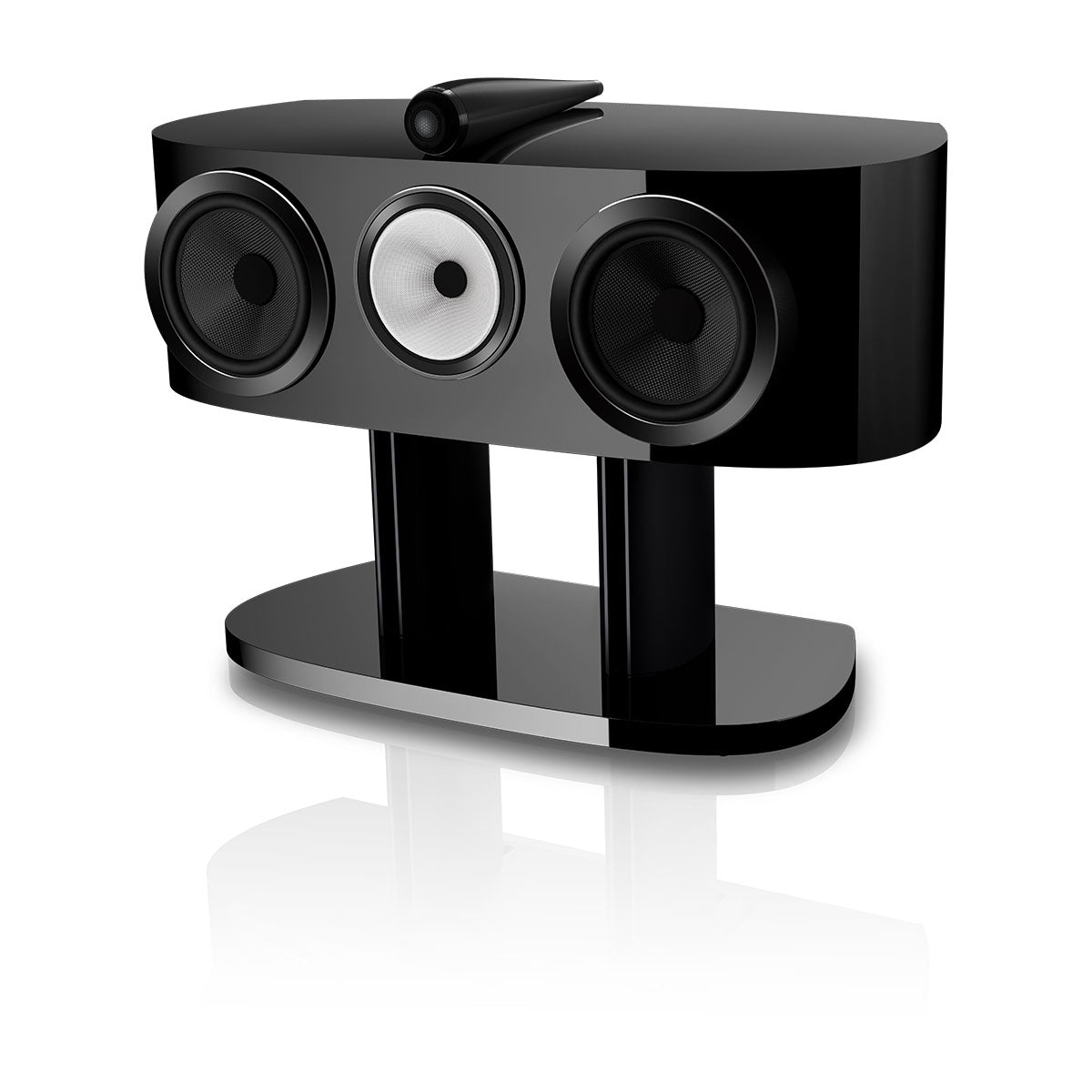
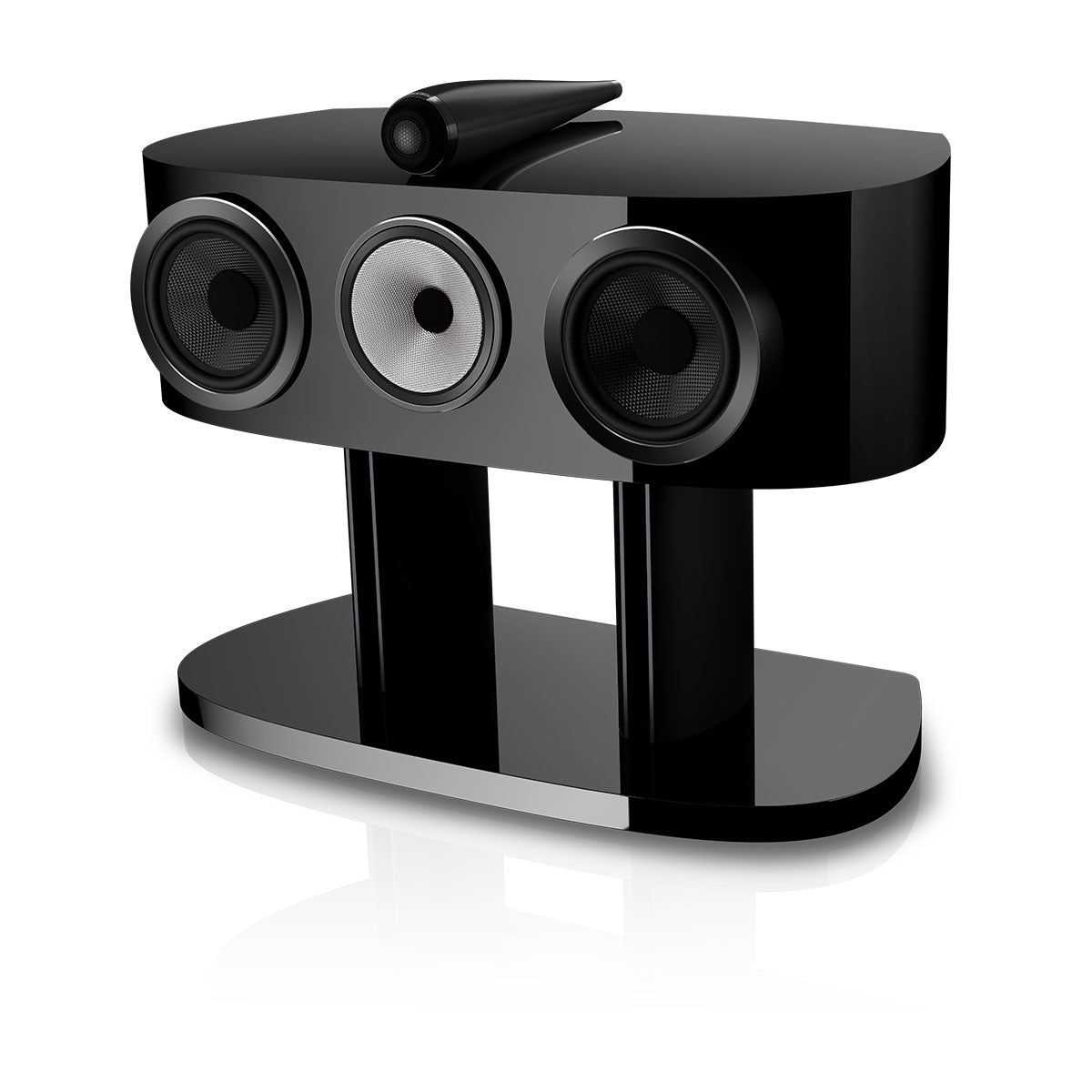
Both center channels match specific pairs in the range. The HTM81 belongs with the 801 or 802 and runs the same 8-inch bass and 6-inch midrange sizing as those two. The HTM82 pairs with the 803 or 804. That pairing isn't something to ignore if you're building a home theater around any model in this range.

What's New: D4 to D5

This is the part that matters most if you're comparing the two generations or deciding whether to upgrade. At the reveal, Bowers & Wilkins's own engineering lead put it almost exactly the way we would: once you make a speaker good enough for world-leading recording studios and serious listeners, you'd think that would give you room to coast. It does the opposite.

Motor systems. Every drive unit across the D5 range gets upgraded motor systems derived directly from the Bowers & Wilkins Signature models, the absolute top-tier versions of the 800 Series. Motors determine how cleanly a drive unit converts electrical signal into physical movement. Better motor design means less distortion, more accurate excursion, and a more revealing presentation across the board. Bowers & Wilkins says the D5 drive units deliver cleaner, lower-distortion sound compared to the D4, and that tracks with what we heard in our testing.

Space Frame Bracing. This is completely new to the D5. Bowers & Wilkins added aluminum Space Frame Bracing rails to the rear of each cabinet, parallel rails reinforced both longitudinally and transversely that bolt directly to the rear of the Matrix inside the cabinet. The reverse wrap cabinet and Matrix bracing were already doing their jobs. Space Frame Bracing adds a third layer of mechanical control specifically targeting the rear panel, where vibration is hardest to eliminate. Bowers & Wilkins calls the result the most mechanically quiet enclosure they've ever built.

Refined Matrix. In the D4, B&W introduced aluminum pieces into the Matrix bracing to address low-frequency flex measured in the cabinet front. In the D5, the Matrix design goes further, combining solid plywood construction with aluminum bracing targeted at the highest-stress points in the structure.

Tuned plinths. The D4 moved to aluminum plinths with constrained layer damping across the floorstander lineup. The D5 goes further still. All D5 floorstanders now use tuned mass dampers inside the plinth, individually optimized to the mechanical resonances of each specific speaker model. The 801 D5's plinth is tuned differently than the 804 D5's, because the resonant behavior of those two cabinets isn't the same.

External crossovers. The D4 brought external crossovers to the full stereo range for the first time. In the D5, those crossovers mount on stiffer aluminum spines, isolating the sensitive capacitors from air pressure movement inside the enclosure and giving the electronics a more stable mechanical home. Revised wiring harnesses contribute to greater resolution throughout the listening range.

Tweeter housing. The D4 elongated the Solid Body Tweeter-on-Top housing considerably compared to the D3. The D5 continues that direction with a longer tube-loading system and a new grille design that Bowers & Wilkins says is more acoustically transparent while still protecting the dome, with higher resolution and better off-axis dispersion. The housing is still milled from a single solid block of aluminum and decoupled from the cabinet so mechanical noise can't reach the tweeter.

The 804's new midrange enclosure. This is specific to a single model, and it's one of the most interesting changes in the entire generation. The 804 D5 gets a dedicated aluminum enclosure for its Continuum cone FST midrange driver, new for this model specifically. The 804 has always been the floorstander without the Turbine Head, which meant its midrange driver never got the isolated aluminum housing the 801 through 803 have always had. The Bowers & Wilkins answer is a thick-walled aluminum enclosure with critical internal damping built into the 804's cabinet, doing the same job: mechanically isolated, properly damped, a proper home for the midrange driver. It's not a totally new idea for Bowers & Wilkins. Their center channel speakers have used a similar separated enclosure for years, since they can't fit a Turbine Head into that shape either. But it's the first time a floorstanding 804 has gotten that treatment. Bowers & Wilkins own team said it best at the reveal: this speaker now sounds a lot more like a Turbine Head model than it ever could before. If you've always felt the 804 was the value compromise in the range, this upgrade changes that conversation.


Our Take on the D4-to-D5 Changes

Almost everything Bowers & Wilkins touched in the D5 is aimed at getting the cabinet out of the way of the sound. Space Frame Bracing, the refined Matrix, the tuned plinths, the stiffer crossover spines, even the 804's new midrange enclosure, all of it is mechanical noise control. The one exception is the motors, a straight upgrade to the drive units themselves rather than anything to do with the cabinet around them. Both matter. They're just solving different problems.

What Carries Over From the D4

Everything that made the D4 great is still here. The Turbine Head, the aluminum housing sitting on top of the cabinet on the 801 through 803, isolates the midrange driver completely from the rest of the cabinet, and its rounded shape cuts down on cabinet diffraction, the sound waves bouncing off sharp edges and smearing the image, which is a big part of why these speakers image the way they do.

Inside that head sits the Continuum cone, introduced in the D3 generation as a real departure from how midrange cones had been built before. Most cone surrounds add coloration and distortion right at the edge, and Bowers & Wilkins spent years of R&D trying to eliminate that problem instead of just living with it. The Continuum cone is even decoupled from its own housing through a rod attached to the rear of the head, so mechanical noise can't sneak back in that way either.

The Aerofoil woofer is built from a carbon fiber composite over a syntactic foam core that varies in thickness across the cone, which is what lets it stay stiff and lightweight at the same time, the combination you want for bass that's fast and accurate instead of just loud. On the floorstanders, that woofer also gets an Anti-Resonance Plug, a small addition that keeps the driver from flexing as frequencies drop, another piece of the accurate, low-distortion bass this range is built around.

The Reverse Wrap Cabinet, where multiple sheets of material are bonded and bent into a one-piece shell with no flat front and fewer joins, is on all stereo models. The Diamond dome tweeter, which pushes the break-up frequency to 70kHz through chemical vapor deposition, remains unchanged, as do the FST midrange design and the Biomimetic Suspension. The D4 was a comprehensive platform. The D5 is a more refined and materially upgraded version of it.


New Finishes

Bowers & Wilkins has updated the color palette for the D5. You now have Stealth Black, Warm White, Light Walnut, and Dark Walnut. The aluminum top plate on all stereo models uses Leather by Connolly trim, black leather on the Stealth Black and Dark Walnut cabinets, and light grey leather on the Warm White and Light Walnut. The Leather by Connolly detail came in with the D4, but it's been updated here to complement the new finishes. All four options are in our showrooms if you want to see them in person before you decide.

How the D5 Sounds

Bowers & Wilkins built their own demo around a specific handful of tracks, Eric Clapton's "After Midnight" from the Unplugged sessions and Thom Yorke's "Black Swan" among them, chosen to show off bass scale and integrity, exactly the kind of thing Space Frame Bracing and the new tuned plinths were engineered to deliver. That tells you what Bowers & Wilkins itself thinks changed the most in this generation, but it's not the full story.

Having now heard the full range, here's our take. Right from the first listen, this is far and away the best sounding 800 Series we've heard. They sounded great across the board, and in specific ways that line up with what the engineering would predict. The bass response on the 801 and 802 is the most immediately noticeable change from the D4. Space Frame Bracing and the individually tuned plinths are clearly doing their job, and there's a level of control and definition in the low end that feels different from D4, not just cleaner but more composed, like the speaker isn't fighting itself to get there. The midrange struck us as more organic and less clinical than what we remember from the D4, with less of the dry edge that's occasionally made these speakers feel a touch serious for their own good.

800 Series Diamond D5 Pricing

Here's what the range costs:

  • 801 D5: $65,000 per pair
  • 802 D5: $45,000 per pair
  • 803 D5: $35,000 per pair
  • 804 D5: $25,000 per pair
  • 805 D5: $15,000 per pair

None of that is cheap, and we're not going to pretend otherwise. You're paying for motors derived from the Signature line, an entirely new layer of cabinet bracing, individually tuned plinths on every floorstander, and a development process that takes about five years per generation with a team of engineers working the whole time. That's real cost behind the number, not just a price increase for its own sake.

Should You Upgrade?

If you're still running D2s or D3s, this is a much easier call than deciding between D4 and D5. Two or three generations is a long time for this speaker. You'd be picking up the Biomimetic Suspension and the full external crossover work that came with the D4, plus everything new in the D5 on top of that: Space Frame Bracing, the Signature-derived motors, the tuned plinths. That's a lot of accumulated engineering to skip past in one move.

If you're deciding between the D4 and D5, the engineering improvements are real, not cosmetic, and the right call depends on what you're running upstream and how much further you want to take a system you're presumably already happy with. That's a conversation worth having with us directly before you commit.

800 Series Diamond D5 FAQ

When does the Bowers & Wilkins 800 Series Diamond D5 release? Bowers & Wilkins has these shipping worldwide starting in September 2026.

How much does the Bowers & Wilkins 801 D5 cost?

The 801 D5 is $65,000 per pair. The full range starts at $15,000 for the 805 D5 and runs up to $65,000 for the flagship 801 D5.

What's the difference between the D4 and D5?

The D5 adds Signature-derived motors across every drive unit, an entirely new layer of cabinet bracing called Space Frame Bracing, a further-refined Matrix and plinth design, stiffer external crossover mounting, an updated tweeter housing and grille, and a new dedicated midrange enclosure for the 804 specifically. Everything from the D4 that already worked, the Turbine Head, the Continuum cone, the Aerofoil woofer, the Diamond dome tweeter, carries over unchanged.

Is the 804 D5 worth it?

Yes, arguably more than any other model in the range gets from this generation. The 804 D5 is the only model getting a completely new midrange enclosure, closing a long-standing gap between it and the Turbine Head models above it.

Should I upgrade from the D4 to the D5?

That depends on what you're running upstream and how much further you want to take a system you're already happy with. The engineering improvements are real, not cosmetic, but it's a closer call than upgrading from a D2 or D3, where you'd be picking up multiple generations of accumulated technology at once.

Where can I hear the Bowers & Wilkins 800 Series Diamond D5?

Audio Advice showrooms carry different models from the range, so check which location near you has the one you want to hear. Audio Advice Live in Raleigh, August 7 - 9, 2026, will also have the D5 range on demo.


Where to Hear the D5

You don't have to take our word for any of this. Bowers & Wilkins has these shipping worldwide starting in September. Our showrooms each carry different models from the range, so check which location near you has the one you want to hear before you make the trip. If you can't get to one of our locations, Audio Advice Live is happening August 7th through 9th at the Sheraton in downtown Raleigh, one of the very first chances anyone in this country will have to hear the D5 range outside of a Bowers & Wilkins showroom.


We're Here to Help!

If you have further questions, contact our experts via chat, phone, or email. Or simply visit one of our world-class showrooms to experience speakers, projectors, TVs, and everything in between for yourself before you make a purchase!

If you're planning your home theater or media room, check out our Home Theater Design page, where we have everything Home Theater related, including our FREE Home Theater Design Tool.

When you buy from Audio Advice, you're buying from a trusted seller since 1978. We offer Free Shipping, Lifetime Expert Support, and our Price Guarantee. We look forward to serving you!