Features & Technology
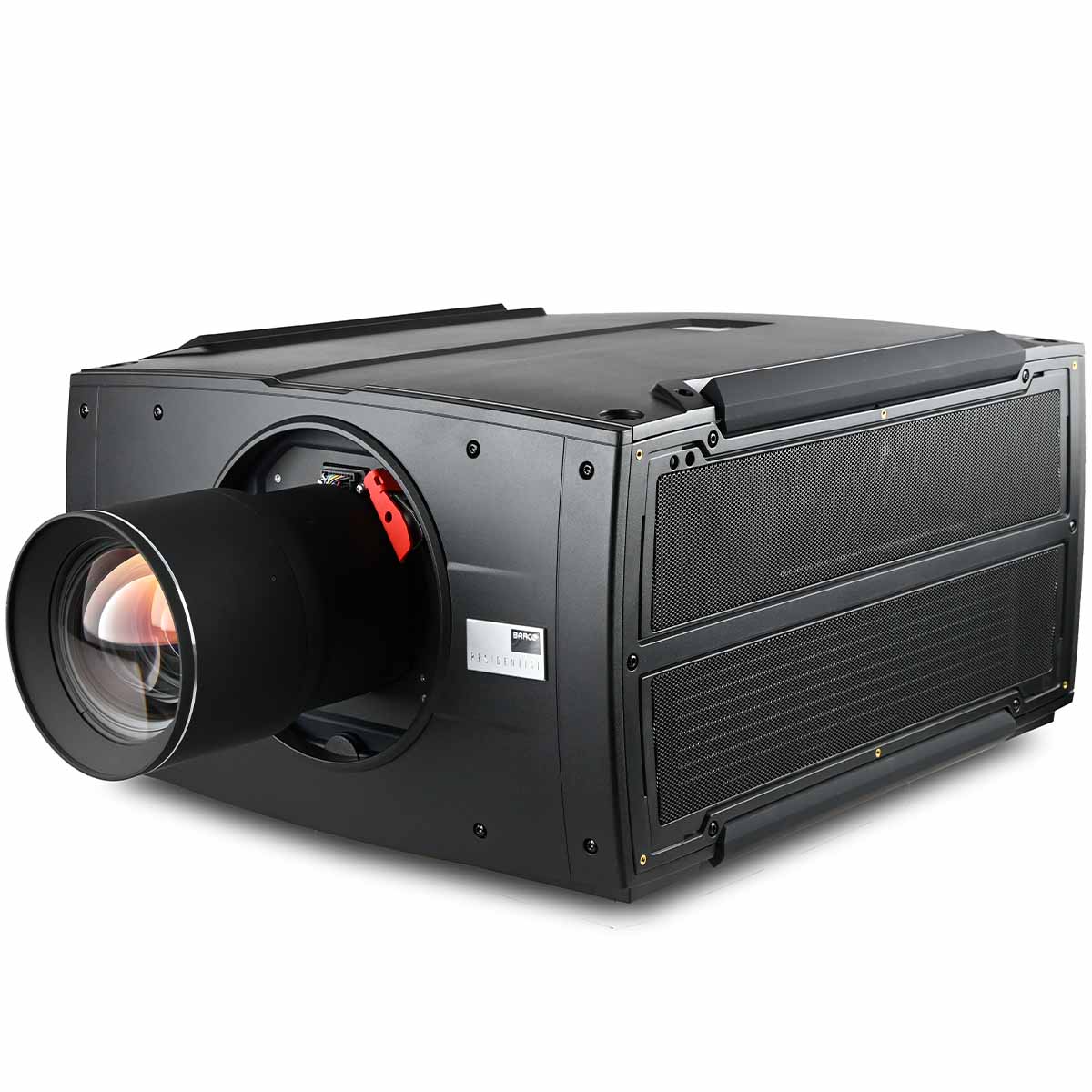
The Heimdall uses a native 4K 0.98 inch DLP chip that renders 4096 by 2176 pixels. The engine behind it is a solid state RGB laser light source with separate banks of red, green, and blue lasers. This isn’t a blue laser shining through a phosphor wheel. It’s discrete primaries with precise modulation, which means there is no spinning color wheel and no rainbow artifacts that often appear on many single chip DLP designs. The quoted light output is 6,000 ANSI lumens for Heimdall Plus. The standard Heimdall variants are rated lower at 4,500 lumens. That level of brightness is a big deal because output always drops once you add elements like large or acoustically transparent screens, lower-gain materials, calibration adjustments, and port glass. HDR also demands more light for proper highlight detail, especially in rooms that aren’t completely dark. The Heimdall has the horsepower to handle all of those scenarios while keeping image punch and contrast intact. The laser light source is rated for around 25,000 hours, giving you years of performance and consistent picture quality.
Color is a headline feature here. The RGB engine allows coverage of 98 percent of Rec. 2020, with full support for Rec. 709 and DCI P3. That’s a very wide palette for a projector, and it shows on modern HDR titles. In practice, that means very rich reds, saturated greens, and clean blues without color washout at high brightness levels. Modern HDR films and animation especially benefit, with more lifelike skin tones and clean color gradients across the frame.
Contrast is handled in multiple ways. The optical path includes dual aperture elements designed to reduce stray light and raise native on-off performance compared to older single chip engines. The 0.98 inch DMD architecture itself has been tuned for higher native contrast. On top of that, Barco’s DynaBlack system analyzes each frame and uses ultra fast laser pulsing to deepen dark scenes and lift bright scenes. The end result is strong depth and contrast in real content, especially with HDR movies and games. While different projector technologies approach black level in different ways, Heimdall’s mix of brightness, intra-scene contrast, and dynamic laser control creates a very engaging and cinematic image on screen, even on large theater-sized screens.
Processing and control come from Barco’s Pulse platform. The idea behind Pulse is a short, efficient signal path with advanced processing that avoids artifacts and keeps latency very low. Heimdall can accept 4K signals at up to 120 Hz over HDMI 2.1 while maintaining native resolution. That makes it a rare projector that can display true 4K at high frame rates for gaming and future content without feeling like a scaled workaround. Pulse also provides Single Step Processing with geometry correction, warping, and blending.
Heimdall also covers the modern connectivity bases with HDMI 2.1, which allows for high-frame-rate 4K playback and gaming, and integration support for the major control systems used in luxury theaters. You can drop it into a Control4, Crestron, Josh.ai, RTI, or Savant environment without workarounds, and it even supports active 3D for rooms built around that format.
Where Barco really shows its cinema DNA is in how it handles HDR. Tone-mapping is one of the most important parts of HDR playback on a projector, because unlike TVs, projectors do not have thousands of nits of peak brightness to throw at highlights. The trick is balancing the bright moments that give HDR its magic with shadow detail and mid-tone texture so scenes stay dimensional and natural. Barco’s HDR engine, paired with the horsepower of a pure RGB laser light source, gives Heimdall the headroom it needs to preserve highlight sparkle without crushing darker scenes or washing out color. Bright sequences feel energetic and punchy, while moody, low-light scenes hold onto shadow detail instead of turning flat or muddy.
This is a projector that respects the intent of HDR filmmakers. When the director wants a candle flame to feel like a spark in a dark room, it does. When night scenes need subtle texture instead of noise and banding, it handles them cleanly. That balance only works because the processing and the light engine are engineered together.
How Barco Pulls This Off With A Single-Chip DLP
Most single-chip DLP projectors rely on a spinning color wheel to create red, green, and blue. That approach can limit color performance. Barco takes a completely different path. Heimdall uses a pure RGB laser light engine, with independent red, green, and blue laser banks firing directly into the imaging system. Since the light starts as pure color, there is no color wheel, no rainbow fringing, and a significant boost in color performance. This is how Heimdall reaches up to 98 percent of the Rec. 2020 color gamut while staying incredibly bright and clean.
For context, brands like Sony and JVC use a technology called LCoS (Liquid Crystal on Silicon), which splits the image across three separate imaging panels. That approach can produce very deep blacks and a smooth, film-like look in dark rooms. It also requires precise panel alignment over time and can have slightly softer motion and lower ANSI contrast in mixed scenes.
Barco approaches the problem differently. Heimdall pairs its native 4K DLP chip with precision optics and Barco’s dynamic laser system (DynaBlack) to deepen shadows and add dimensionality. While a flagship LCoS projector can still take the crown in a pitch-black test frame, Heimdall delivers excellent real-world contrast, especially on large screens where brightness, clarity, and color volume matter just as much as black floor.
In short, Heimdall gives you the sharpness, motion clarity, and punch DLP is known for, without the usual tradeoffs of single-chip systems, and it brings enough color range and dynamic contrast to confidently stand alongside the best three-chip home theater projectors available today.